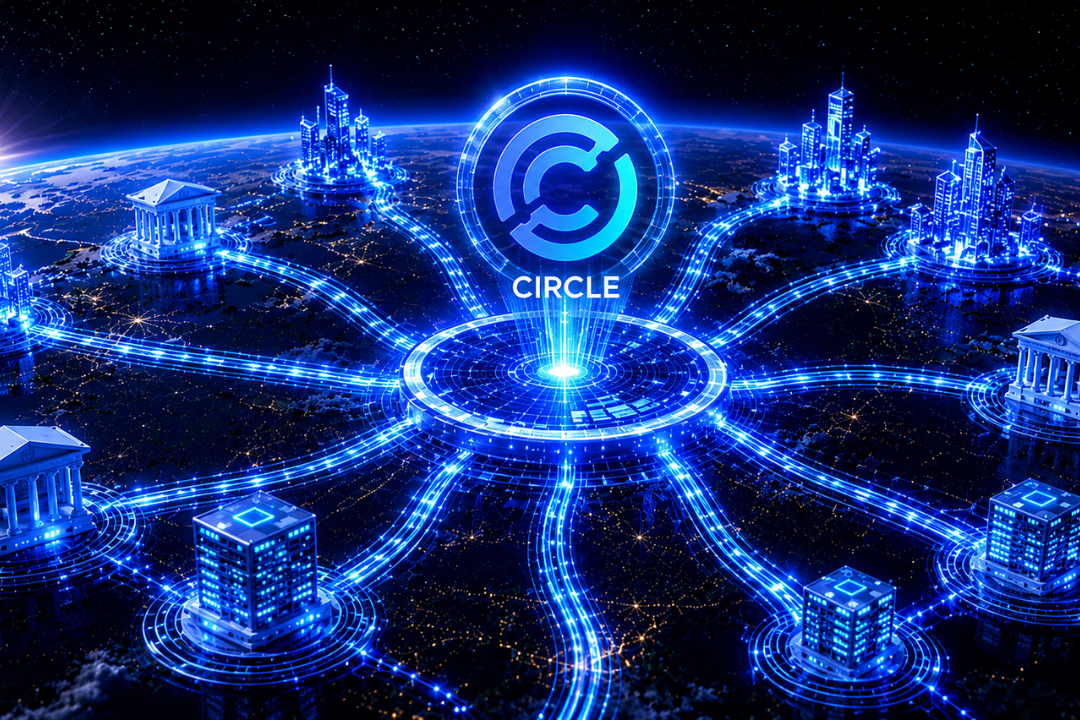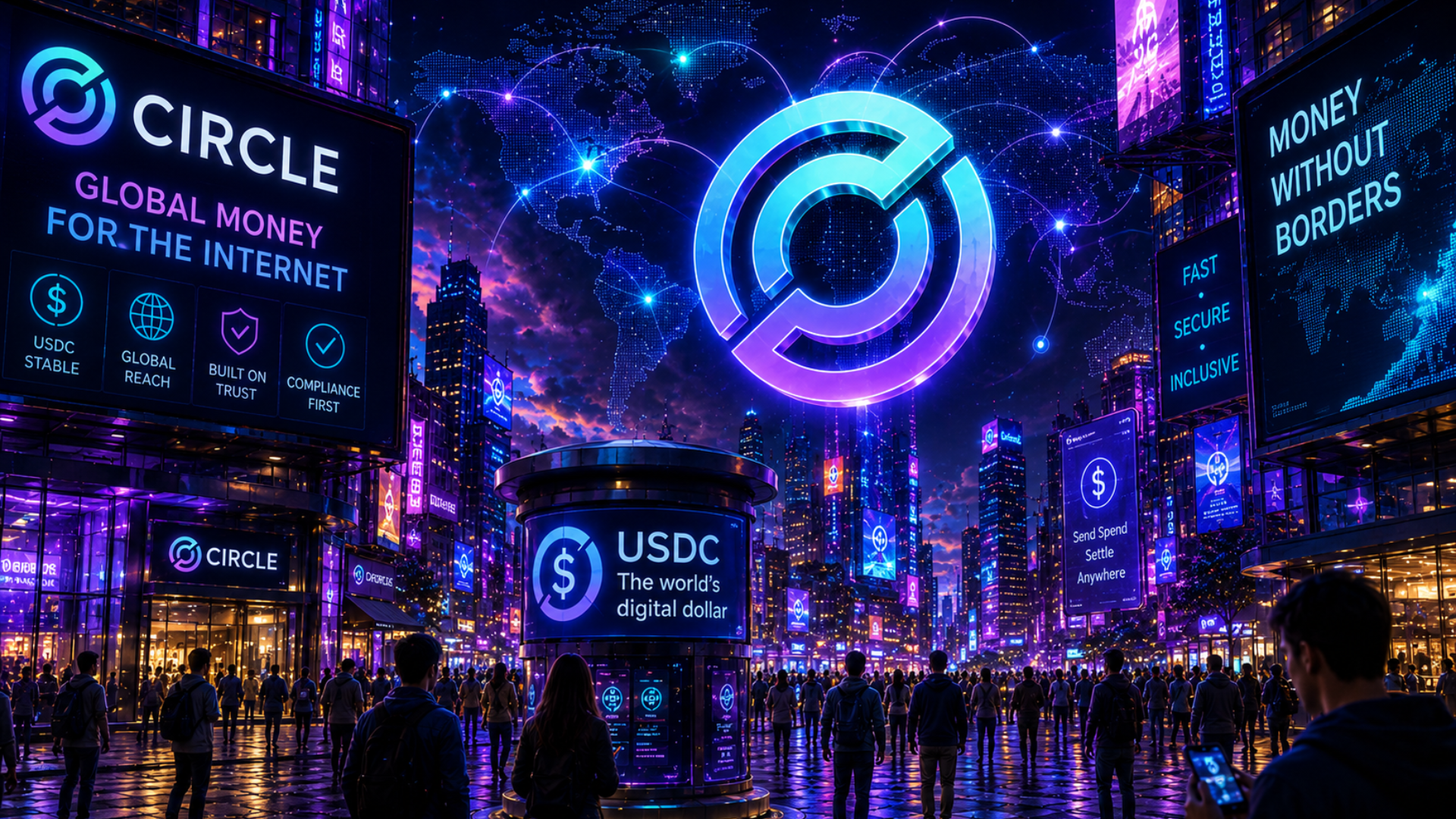


Circle, the company behind the USDC stablecoin, is preparing for a major international expansion as demand for digital dollar payments continues to grow.
The company plans to target approximately 40 emerging and developing markets, with a particular focus on Southeast Asia, Latin America, Africa, and the Middle East.
Circle CEO Jeremy Allaire revealed the strategy during an interview with Reuters on October 16, 2026, highlighting the company’s ambition to make USDC more accessible worldwide.
The announcement signals another step toward connecting blockchain technology with traditional financial systems.
However, while Circle has established partnerships and payment infrastructure across multiple regions, it has not yet revealed the complete list of 40 countries or confirmed when services will launch in each market.
Circle USDC Expansion Targets Emerging Economies
Circle’s latest expansion strategy focuses on regions where businesses and consumers may benefit from faster, more accessible cross-border payments.
In many emerging economies, sending money internationally can involve high transaction fees, lengthy processing times, and complicated banking procedures.
Stablecoins such as USDC offer a potential alternative by allowing digital dollar transfers across supported blockchain networks.
Unlike cryptocurrencies such as Bitcoin, whose market values can fluctuate significantly, USDC is designed to maintain a value of approximately one US dollar.
This makes it particularly useful for businesses seeking predictable dollar-denominated payments.
Allaire identified Southeast Asia, Latin America, Africa, and the Middle East as important regions for future growth.
However, Circle has not disclosed which individual countries will form part of its planned expansion.
The company has also not confirmed specific regulatory approvals or launch dates for the proposed markets.
USDC Is Already Available Across More Than 185 Countries
According to Circle’s product information, USDC is accessible in more than 185 countries.
However, this figure should not be confused with the number of markets where Circle provides direct banking, payment, or redemption services.
There is an important difference between holding USDC in a cryptocurrency wallet and using it to receive money in a local bank account.
For example, someone may be able to receive USDC through a crypto exchange but still lack access to a local payment provider that converts those tokens into domestic currency.
Similarly, a business operating in one country may be able to transfer USDC internationally without having direct access to Circle’s minting and redemption services.
Therefore, Circle’s target of approximately 40 additional markets represents its future business ambitions rather than 40 confirmed new payment corridors.
For the expansion to become commercially meaningful, local payment infrastructure and regulatory permissions will be essential.
Tazapay Acquisition Could Strengthen Global Payment Infrastructure
A key part of Circle’s international strategy is its planned acquisition of Singapore-based payment infrastructure company Tazapay.
Circle announced the agreement in September 2026, with the transaction expected to close in 2027, subject to regulatory approval and other customary conditions.
The deal, valued at approximately $400 million in stock, could significantly strengthen Circle’s ability to connect stablecoin transfers with traditional financial systems.
Tazapay already operates local payout infrastructure across more than 100 markets and maintains relationships with over 60 banking and fintech partners.
The company also reported annualized payment volume exceeding $25 billion, with approximately 60% of its transaction volume involving stablecoins.
These figures demonstrate the scale of Tazapay’s existing business.
However, they should not be interpreted as new payment volume generated by Circle or as evidence that the acquisition has already been completed.
Once finalized, the transaction could provide Circle with additional banking relationships and local payout capabilities.
This infrastructure may help businesses convert digital dollar payments into local currencies more efficiently.
How USDC Can Improve Cross-Border Payments
Cross-border transactions are one of the most important potential applications of stablecoins.
Traditional international payments often depend on multiple banks, financial intermediaries, and settlement systems.
These processes can increase costs and delay payments, particularly when businesses operate across different currencies.
USDC introduces a blockchain-based method of transferring dollar-denominated value between participating institutions.
For example, a company making an international supplier payment could use the following process:
- A participating financial institution obtains USDC.
- The USDC is transferred across a supported blockchain network.
- A receiving payment provider converts the digital dollars into the required local currency.
- The beneficiary receives the payment through an eligible domestic banking system.
This approach could simplify certain parts of international payments.
However, successful blockchain settlement does not automatically guarantee immediate local bank payouts.
Currency conversion, identity verification, compliance checks, banking hours, and domestic payment processing can still affect the final transaction.
The exchange rate and fees charged by participating providers also determine how much money a recipient ultimately receives.
Circle Payments Network Shows Growing Institutional Activity
Circle is already building financial infrastructure to support stablecoin-based payments.
One of its major initiatives is the Circle Payments Network, which connects financial institutions and payment providers using digital assets.
According to Circle’s second-quarter 2026 disclosures, the network had 175 enrolled financial institutions as of June 30.
That represented a 29% increase compared with the previous quarter.
The network also reported approximately $14.7 billion in annualized transaction volume, calculated using activity from the preceding 30 days.
This was a 76% increase from the previous quarter.
These figures suggest growing institutional interest in stablecoin payment infrastructure.
However, enrolled institutions are not necessarily active across every payment corridor.
The annualized volume also represents a projected yearly pace based on recent activity, rather than transactions completed over an entire year.
For Circle’s international expansion, the more meaningful indicators will be the number of operational payment routes, active participating institutions, and completed local currency payouts.
Circle and Binance Partnership Could Expand USDC Adoption
Circle’s growth strategy also includes strengthening USDC distribution through major cryptocurrency exchanges.
In September 2026, Binance made a $100 million equity investment in Circle alongside a five-year commercial arrangement.
The partnership aims to increase USDC integration and visibility across Binance’s platform, particularly in emerging markets.
Greater exchange availability could make it easier for users to access USDC and potentially improve liquidity.
This may support businesses and individuals who want to hold or transfer digital dollars.
However, access through a cryptocurrency exchange does not automatically provide direct redemption services or local bank payment capabilities.
Those services depend on the exchange, payment providers, financial institutions, and applicable regulations.
The Binance agreement therefore supports Circle’s broader distribution strategy, but it should not be counted as evidence that all 40 proposed markets have operational payment services.
USDC Circulation Reached $72.7 Billion in October
Circle’s reserve disclosures provide another indication of USDC’s existing market scale.
According to its October 12, 2026, reserve report, approximately $72.7 billion in USDC was circulating, backed by around $73 billion in reported reserves.
During the preceding seven days, Circle reported:
- $8.6 billion in USDC issuance.
- $10.1 billion in USDC redemptions.
- $1.5 billion in net redemptions exceeding issuance.
These figures show substantial activity across the USDC ecosystem.
However, changes in total circulation cannot be directly linked to Circle’s proposed emerging-market expansion.
USDC is used for several purposes, including cryptocurrency trading, institutional liquidity management, decentralized finance, and international payments.
Without detailed country-level transaction data, it is difficult to determine how much existing USDC activity comes from specific emerging markets.
European Regulation Adds Another Layer of Oversight
Regulation will play an important role as Circle continues expanding its international operations.
In the European Union, USDC operates within the Markets in Crypto-Assets Regulation, commonly known as MiCA.
European regulators have designated USDC as a significant electronic money token.
Beginning November 12, 2026, the European Banking Authority is scheduled to assume direct responsibility for certain supervisory requirements related to USDC.
These include aspects of reserves, liquidity, capital requirements, and recovery and redemption planning.
Other regulatory responsibilities will remain with the relevant French authorities.
This framework could strengthen oversight of USDC within Europe.
However, European regulatory recognition does not automatically authorize Circle to offer payment services in other jurisdictions.
Each country may have separate rules governing stablecoin issuance, digital asset custody, payment services, and local currency conversion.
As Circle moves into emerging markets, securing the necessary local permissions will remain a crucial part of its strategy.
Circle’s Financial Performance Remains Closely Linked to USDC Reserves
Circle’s expansion also has important implications for its business model.
A significant portion of the company’s revenue comes from income generated by the assets backing USDC.
According to its second-quarter financial results, Circle reported approximately $668 million in reserve income.
That represented a 5% increase from the previous year.
Meanwhile, average USDC circulation increased by 25%.
The difference reflects how changes in interest rates can influence Circle’s financial performance.
The company attributed part of the slower reserve income growth to a decline in its reserve return rate.
Circle also reported approximately $34 million in other revenue, including income from subscriptions and services.
Total revenue and reserve income reached approximately $701 million for the quarter, with minor differences in the components resulting from rounding.
Expanding payment infrastructure could potentially create additional business opportunities.
However, increased transaction volume does not always translate into equivalent growth in reserve income.
For example, USDC used for a payment and immediately converted into local currency may remain in circulation for a shorter period than tokens held as savings or trading balances.
Circle will also need to account for distribution expenses, transaction costs, and revenue-sharing agreements with business partners.
Why Local Banking Partnerships Matter
One of the biggest challenges facing stablecoin payment providers is connecting blockchain transactions with traditional financial services.
A USDC payment can move between compatible wallets, but a recipient who needs local currency must have access to a suitable conversion and payout provider.
This is where banks, fintech companies, and regulated payment businesses become essential.
Circle has previously identified payment integrations involving India, Singapore, the Philippines, the United Arab Emirates, the United States, and the European Union.
These arrangements involve providers such as Saber, Tazapay, Coins.ph, and LuLu.
Certain integrations connect with established domestic payment systems, including India’s IMPS and RTGS, Singapore’s FAST, and Europe’s SEPA infrastructure.
However, the existence of a payment integration does not mean every customer can use it under identical conditions.
Transaction limits, eligible customer types, processing times, and currency availability can vary significantly.
For Circle’s expansion to succeed, it will need reliable local partners capable of handling these operational requirements.
What Challenges Could Circle Face in 40 Markets?
Although Circle has outlined an ambitious growth strategy, its international expansion will involve several challenges.
Regulatory requirements may vary considerably between countries, with some jurisdictions imposing stricter rules on stablecoin services than others.
Local banking partnerships will also be necessary to connect blockchain payments with traditional financial systems.
Another challenge involves liquidity.
Payment providers must maintain sufficient access to both USDC and local currencies to process transactions efficiently.
Foreign exchange pricing will also influence whether stablecoin payments offer meaningful savings compared with existing services.
Finally, customer adoption will depend on trust, reliability, and practical benefits.
Businesses may be interested in faster international payments, but they will also require clear transaction records, predictable fees, and dependable settlement procedures.
Addressing these issues will be essential as Circle develops its presence in new markets.
What Comes Next for Circle’s Global Expansion?
The coming months could provide more information about Circle’s international strategy.
The company has not yet announced the complete list of 40 target markets or a country-by-country implementation schedule.
One major milestone will be the completion of its planned Tazapay acquisition, currently expected in 2027.
Circle’s future disclosures may also reveal additional local payment partners, supported currencies, and operational transaction routes.
Investors and businesses will likely pay close attention to several developments, including completed local payouts, regulatory approvals, active payment network participants, and changes in transaction volume.
These indicators will help determine whether Circle’s expansion is translating into practical financial services.
Circle’s plan to expand USDC into approximately 40 emerging and developing markets highlights the increasing role stablecoins could play in international finance.
By combining blockchain-based digital dollars with payment networks, exchange partnerships, and local banking infrastructure, Circle aims to make cross-border transactions more accessible.
Its proposed Tazapay acquisition and growing institutional network provide a foundation for that strategy.
However, the success of the Circle USDC expansion will depend on more than the number of countries mentioned in announcements.
Actual payment availability, regulatory approvals, local currency conversion, and customer adoption will ultimately determine its impact.
For now, Circle has laid out an ambitious global expansion plan, but the full extent of its practical benefits will become clearer as individual markets and payment corridors go live.