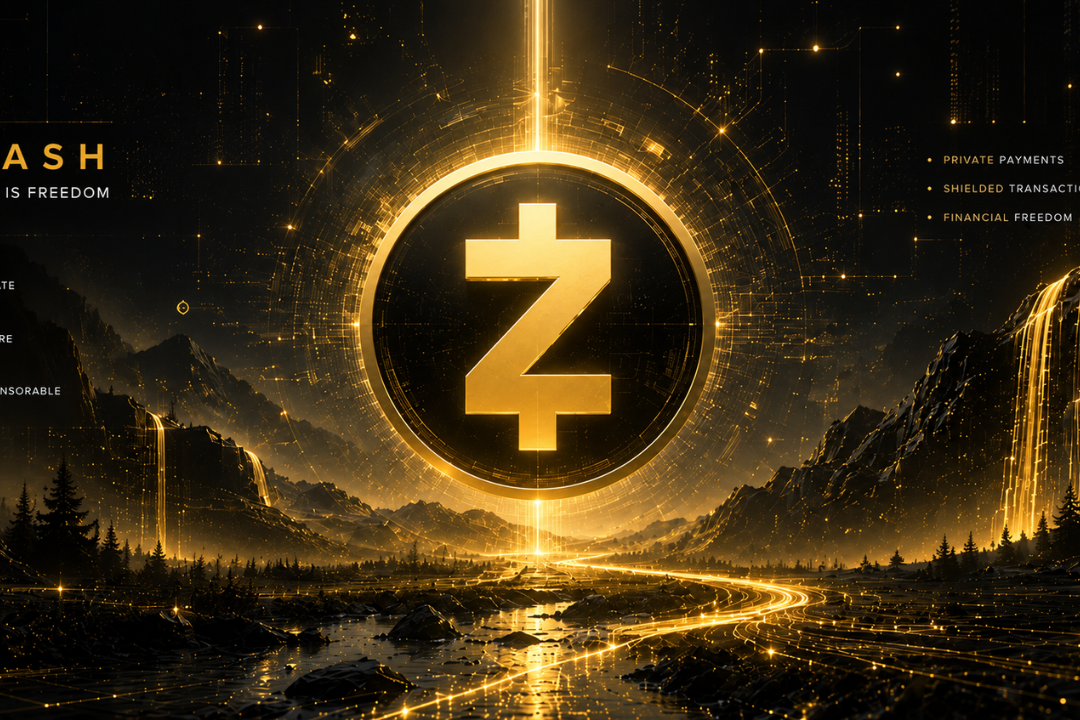


Grayscale has taken a major step for the privacy coin sector by converting its long-running Zcash Trust into the first U.S.-listed spot Zcash ETF.
The fund, trading under the ticker ZCSH on NYSE Arca, launched on Aug. 25 with approximately $304 million in assets under management. The listing sparked renewed interest in Zcash, with ZEC surging roughly 66% during the week surrounding the launch and reaching its highest price in about eight years.
Beyond the price rally, the launch raises a bigger question: can privacy-focused cryptocurrencies find a place within regulated traditional finance?
Grayscale Converts Its Zcash Trust Into an ETF
ZCSH did not start from scratch.
Grayscale originally launched the Zcash Trust in October 2017, making it one of the oldest single-asset crypto investment products in the United States.
For years, shares traded through over-the-counter markets and frequently moved at significant discounts to the value of the ZEC held by the trust. At times, that discount exceeded 40%.
Converting the trust into an ETF changes that structure.
Authorized participants can now create and redeem shares against the underlying ZEC, helping keep the ETF’s market price much closer to its net asset value.
Coinbase Custody International holds the underlying ZEC in cold storage. Importantly, the fund uses transparent rather than shielded Zcash addresses, allowing its holdings to remain visible and auditable despite Zcash’s privacy-focused technology.
This structure allows investors to gain exposure to a privacy coin through a traditional brokerage account while keeping the ETF itself transparent.
Why the SEC Allowed a Zcash ETF
The regulatory path for Zcash has been very different from the one experienced by some other privacy coins.
The SEC completed a formal review of the Grayscale Zcash Trust in January 2026 without taking enforcement action.
While that was not an official declaration that ZEC had received a regulatory safe harbor, the absence of enforcement action helped create a path toward the ETF conversion.
Another major factor is the way Zcash handles privacy.
Zcash gives users a choice between transparent and shielded transactions. Transparent transactions remain visible on the blockchain, while shielded transactions use zero-knowledge proofs to hide information such as the sender, receiver, and transaction amount.
Monero takes a different approach by making privacy the default for transactions.
That distinction can be important for regulated financial companies because exchanges and custodians can use Zcash’s transparent addresses when compliance requirements demand greater visibility.
Zcash Is Becoming More Private in Actual Use
While Zcash offers optional privacy at the protocol level, user behavior has increasingly shifted toward shielded transactions.
As of July 2026, approximately 90% of Zcash network activity involved shielded transactions. That figure was below 20% as recently as 2024.
One major reason has been improvements in wallet usability.
Zodl, a popular Zcash mobile wallet, introduced shielded transactions as the default option in late 2025. Instead of asking users to turn privacy on, the wallet now requires them to opt out if they want a transparent transaction.
The shielded pool has grown to approximately 4.2 million ZEC, representing around 30% of circulating supply.
This creates an unusual situation.
The ZCSH ETF holds ZEC transparently for regulatory purposes, while a growing majority of actual network activity takes place through shielded transactions.
Zcash ETF Creates a Privacy Coin Regulatory Paradox
The timing of the ETF launch is particularly interesting.
Earlier in August, the SEC proposed a broader regulatory framework that could introduce additional registration and disclosure requirements for digital asset offerings.
Just two weeks later, a U.S.-listed ETF providing direct exposure to a privacy-focused cryptocurrency began trading.
The two developments are not necessarily incompatible.
Securities regulation generally focuses on how assets and investment products are offered, sold, and managed. Grayscale’s ETF operates with a regulated structure, prospectus, audited financial information, and compliant custody arrangements.
The underlying Zcash network can still provide privacy functionality.
Internationally, however, privacy coins continue to face restrictions. At least 10 countries have reportedly banned or severely restricted privacy coins, while European exchanges face enhanced compliance requirements for cryptocurrencies with privacy features.
The ZCSH launch therefore sends a very different regulatory signal from the United States.
Why Zcash and Monero Face Different Futures
The difference between Zcash and Monero has become increasingly visible.
ZEC is available through major platforms and can now be accessed indirectly through a U.S.-listed ETF.
Monero remains largely dependent on decentralized exchanges, peer-to-peer markets, and a shrinking selection of offshore centralized exchanges.
Part of that difference comes from their respective organizational structures.
Zcash has organizations such as the Electric Coin Company and Zcash Foundation that communicate with regulators, develop compliance guidance, and maintain relationships with exchanges.
Monero development is considerably more decentralized and pseudonymous.
That structure supports Monero’s privacy-focused philosophy but makes traditional regulatory engagement more difficult.
The market has increasingly reflected this divergence, with ZEC overtaking Monero in market capitalization earlier in 2026.
ZEC Jumps 66% Around ETF Launch
The ETF launch also produced a major market reaction.
ZEC climbed from roughly $500 to above $850 during the week surrounding the listing.
The rally developed in several stages.
First, Grayscale filed its final amended registration statement with the SEC on Aug. 18. As traders interpreted the filing as removing a major procedural obstacle, ZEC climbed from around $510 to $640.
The second phase involved the collapse of the Grayscale Zcash Trust’s long-standing discount to net asset value.
As ETF conversion approached, arbitrage traders bought discounted trust shares while shorting ZEC. Once the ETF conversion allowed redemptions, some of those short positions needed to be closed, adding buying pressure.
ZEC subsequently moved from around $640 to $780 between Aug. 22 and Aug. 24.
When ZCSH officially started trading on Aug. 25, ZEC reached approximately $855, its highest level since January 2018. Centralized exchange trading volume exceeded $1.2 billion over 24 hours.
The rally pushed ZEC’s market capitalization above $14 billion.
Quantum Computing Presents a Long-Term Challenge
Despite the optimism surrounding Zcash, quantum computing represents an important long-term security issue.
Zcash’s current zero-knowledge proof system relies on cryptographic assumptions that could eventually become vulnerable to sufficiently powerful quantum computers.
This is not a problem unique to Zcash. Bitcoin, Ethereum, and many other blockchain networks also depend on elliptic-curve cryptography.
For a privacy network, however, the implications could be particularly serious.
A future cryptographic breakthrough could potentially threaten not only funds but also the privacy of historical transactions.
The Zcash development community has been researching lattice-based proving systems designed to resist quantum attacks, with a preliminary specification reportedly published during the second quarter of 2026.
No firm deployment timeline has been announced.
For institutions considering long-term ZEC exposure through the ETF, progress toward post-quantum security could therefore become increasingly important.
AI Could Increase Demand for Financial Privacy
Grayscale is also connecting its Zcash investment thesis to another rapidly developing technology: artificial intelligence.
The asset manager published research in August arguing that increasingly sophisticated AI systems could make public blockchain transactions easier to analyze.
Transparent blockchains permanently record transaction information. As AI-powered analytics improve, companies may become increasingly capable of clustering addresses, identifying patterns, and potentially connecting blockchain activity with real-world identities.
Zcash’s shielded transactions approach the issue differently.
Rather than depending on transaction information being difficult to analyze, zero-knowledge proofs are designed to cryptographically conceal key transaction details.
Grayscale argues that this distinction could make privacy technology increasingly valuable as blockchain surveillance becomes more sophisticated.
AI agents could add another dimension to the issue. Automated financial agents may eventually execute far more blockchain transactions than individual humans, potentially creating enormous amounts of publicly analyzable financial data.
Privacy-focused infrastructure could become more valuable if that scenario develops.
ZCSH Comes With a High Management Fee
Investors interested in ZCSH will also need to consider its cost.
The ETF carries an annual management fee of 2.50%, considerably higher than many Bitcoin and Ethereum ETFs, where competitive pressure has pushed some fees below 0.25%.
Grayscale currently faces little direct competition because ZCSH is the only U.S.-listed Zcash ETF and no competing product had been filed when the source article was published.
At approximately $304 million in assets under management, a 2.50% fee would generate around $7.6 million annually.
According to the article, management fee revenue is intended to support Zcash ecosystem development and marketing.
The high fee could become difficult to maintain if competitors eventually introduce cheaper Zcash ETFs.
What Comes Next for Zcash?
The first few months of ZCSH trading should provide a clearer picture of whether institutional investors have meaningful long-term demand for privacy coin exposure.
Trading volume will be one important indicator. Consistently strong activity would suggest interest extends beyond existing ZEC investors moving into the ETF structure.
The percentage of Zcash transactions using shielded pools will also matter. If shielded activity moves toward 95% or higher, regulators could take another look at the network even while the ETF remains publicly traded.
Another major question is whether asset managers attempt to introduce similar products for Monero or other privacy-focused cryptocurrencies.
European exchanges will also be worth watching. If ZCSH gains institutional acceptance in the United States, exchanges operating under European rules may face pressure to reconsider how they approach Zcash.
For now, the ETF represents an important milestone. Zcash has moved from being part of a crypto category frequently targeted for delisting to becoming the underlying asset of a U.S.-listed investment product.
That does not mean regulatory concerns surrounding privacy coins have disappeared. Instead, the ZCSH launch suggests regulators may increasingly distinguish between privacy technology itself and the way investment products using that technology are structured and managed.