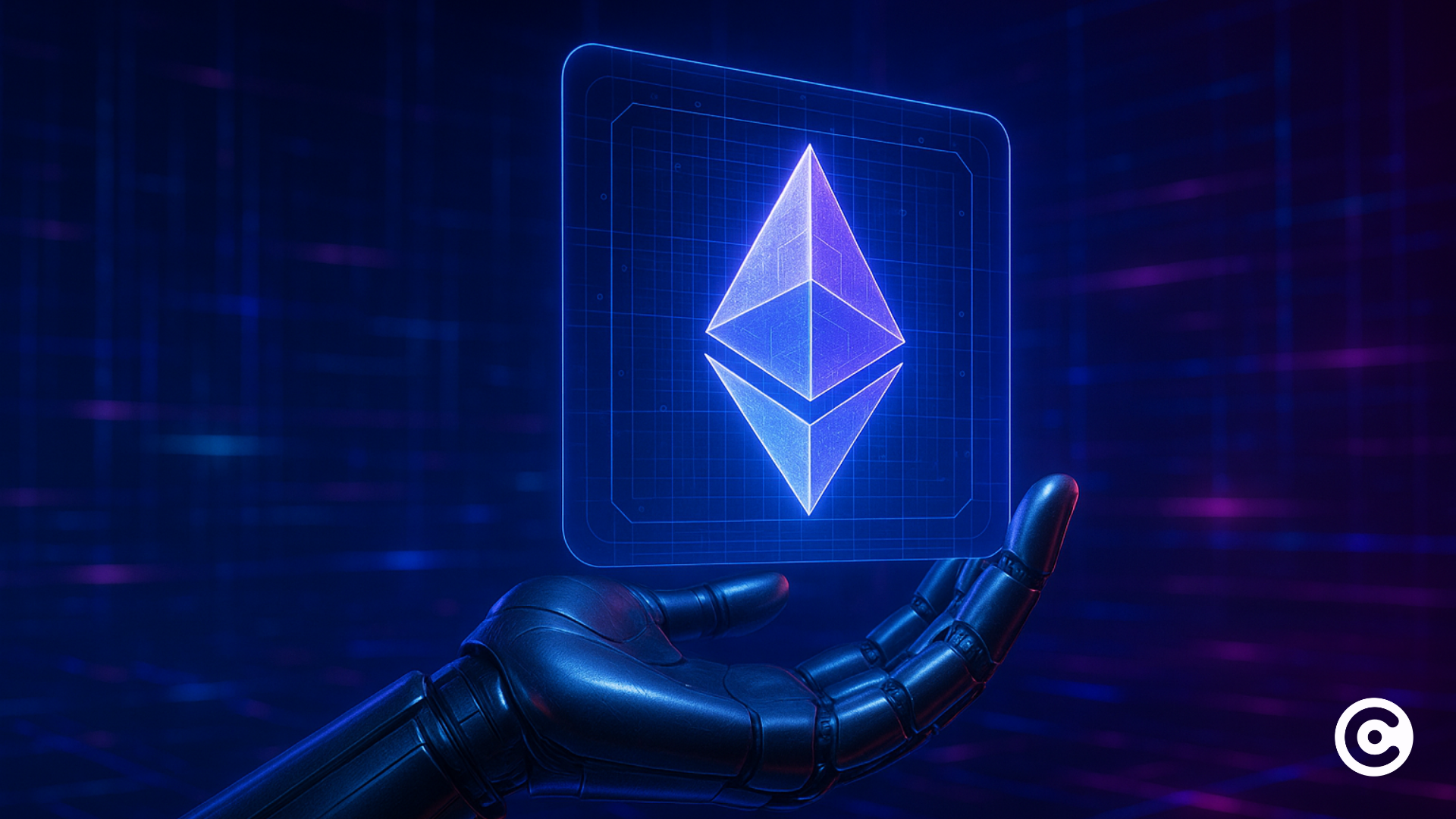


Ethereum’s Glamsterdam upgrade has officially gone live on the Sepolia testnet, bringing the network one step closer to the final stages of testing before a planned mainnet rollout.
The upgrade activated on Oct. 6 and introduces several major changes aimed at improving Ethereum’s Layer 1 scalability, block processing, transaction execution, and gas efficiency.
One of the most closely watched parts of the Sepolia deployment is a 200 million gas limit test, which significantly increases the amount of execution work Ethereum can potentially handle in each block.
The upgrade also introduces enshrined proposer-builder separation and block-level access lists, two changes designed to improve how Ethereum blocks are constructed, validated, and processed.
- Ethereum’s Glamsterdam upgrade activated on the Sepolia testnet on Oct. 6.
- Sepolia is testing a 200 million gas limit, more than three times the roughly 60 million level previously used.
- Glamsterdam introduces enshrined proposer-builder separation and block-level access lists.
- The upgrade aims to improve parallel execution and allow Ethereum clients to handle more Layer 1 activity efficiently.
- Developers will study Sepolia performance before scheduling the Hoodi testnet deployment.
- A final Glamsterdam mainnet activation date has not yet been confirmed.
- Ethereum development is expected to shift toward the Hegotá upgrade once Glamsterdam is deployed on mainnet.
According to Ethereum community contributor Pooja Ranjan, Glamsterdam activated on Sepolia on Oct. 6 at 1:53 p.m. UTC.
The test puts several major changes involving block production, execution, gas pricing, and parallel processing into a public network environment.
The Sepolia activation followed weeks of preparation after Ethereum developers scheduled the fork for Oct. 6 at 13:53:36 UTC.
Node operators were required to upgrade both their execution and consensus clients before the fork took place.
Developers will now study how the upgrade performs on Sepolia before deciding when to activate Glamsterdam on Hoodi, the next major testnet stage.
Ethereum has not yet confirmed a final mainnet activation date.
Ethereum Glamsterdam tests 200 million gas limit
One of the biggest changes being evaluated on Sepolia is Ethereum’s 200 million gas limit.
Before Glamsterdam testing, the network had been operating around a 60 million gas limit.
Increasing that figure to 200 million gives Ethereum considerably more capacity for transactions and smart contract execution inside each block.
However, a higher gas limit does not automatically mean transaction fees will fall.
Validators and Ethereum clients still need to process, execute, and verify the additional workload without creating excessive hardware, bandwidth, or networking requirements.
The main purpose of the test is therefore to determine whether Ethereum can safely handle much larger blocks under realistic public network conditions.
Developers had already tested the same higher-capacity configuration before moving it to Sepolia.
Glamsterdam Devnet 11 successfully completed its transition while increasing the gas limit from 60 million to 200 million.
That environment included roughly 84,000 validators running across several different Ethereum clients.
Sepolia now provides a more realistic test because it operates as a public network where developers have less control over user activity, node conditions, and overall network behavior.
This gives Ethereum researchers a better opportunity to study how client software performs when the larger gas limit is exposed to real-world network conditions.
The Ethereum Foundation previously identified 200 million gas as the minimum target for Glamsterdam testing.
Ethereum could eventually explore even higher limits as part of its long-term Layer 1 scaling strategy.
Any gas limit chosen for mainnet, however, will depend heavily on whether clients can safely process the increased workload without creating unacceptable performance problems.
Glamsterdam changes how Ethereum blocks are built
Glamsterdam introduces two major architectural changes: enshrined proposer-builder separation, known as ePBS, and block-level access lists.
The ePBS system is introduced through EIP-7732.
It brings the separation between block proposers and block builders directly into Ethereum’s consensus protocol.
Under the new design, the validator proposing a block does not necessarily need to be the same party responsible for assembling the block’s execution payload.
This separates consensus validation from execution validation.
One benefit is that validators can receive more time to verify execution payloads before completing validation.
Ethereum currently processes much of its transaction workload sequentially, meaning transactions are generally handled one after another.
That approach limits how much computation clients can process simultaneously.
Glamsterdam aims to move Ethereum closer to parallel execution, allowing clients to process more work at the same time rather than relying entirely on repeated gas limit increases.
Parallel execution could become especially important as Ethereum tries to increase Layer 1 throughput without placing unsustainable pressure on validators.
Public Sepolia testing also introduces new risks
Moving Glamsterdam into a public testnet provides developers with more realistic conditions, but it also introduces risks that are less common in controlled development environments.
Ethereum developers previously warned that block builders could potentially exploit Sepolia.
Because Sepolia test ETH is inexpensive and relatively easy to obtain, malicious builders could repeatedly participate in block auctions, win them, and then refuse to provide their execution payloads.
That could create abnormal network behavior.
Performing the same attack on Ethereum mainnet would carry significantly greater financial consequences because real ETH would be involved.
For that reason, some adversarial testing has continued on Ethereum’s longer-running Platåberget testing environment while Sepolia is used to assess the upgrade under broader public conditions.
Block-level access lists prepare Ethereum for parallel execution
Another major part of Glamsterdam is EIP-7928, which introduces block-level access lists, also known as BALs.
Block-level access lists provide information about the accounts and storage locations that will be accessed during a block.
They can also include relevant information about state changes taking place after transactions are executed.
Providing this information earlier allows Ethereum clients to identify which parts of the blockchain state will be needed before processing is complete.
That can help clients read data from storage in parallel instead of waiting for each transaction to reveal which data will be needed next.
Clients can also potentially execute eligible transactions concurrently.
The approach is intended to improve the efficiency of state-root calculation and overall transaction processing.
In simple terms, block-level access lists give Ethereum clients more information in advance, making it easier for them to process multiple parts of a block simultaneously.
This is an important part of Ethereum’s broader effort to move away from a completely sequential execution model.
Greater parallel processing could help Ethereum increase Layer 1 throughput while reducing its dependence on increasingly large gas limits as the only scaling mechanism.
Glamsterdam also changes Ethereum gas accounting
The upgrade is not only about increasing block capacity and parallel processing.
Glamsterdam also changes how some Ethereum operations are priced.
EIP-8037 introduces separate charges related to state creation.
This changes assumptions that some applications, wallets, and infrastructure providers have relied on for years.
A standard ETH transfer to an existing account can still use 21,000 gas.
However, transactions that create new blockchain state may require more gas under the new system.
That distinction matters because many applications currently use fixed gas assumptions.
Ethereum developers have warned that wallets and gas estimation tools using hardcoded limits could experience problems once Glamsterdam approaches mainnet.
Applications that rely on fixed gas stipends or assumptions about how much gas a specific transaction should consume may therefore need to update their logic.
Developers will need to carefully review gas estimation systems before the upgrade is deployed across Ethereum mainnet.
Why the 200 million gas test matters
Ethereum’s decision to test a 200 million gas limit highlights the network’s continued effort to increase Layer 1 throughput.
A larger gas limit allows more computation and more transactions to fit into a single Ethereum block.
That could ultimately provide users and applications with more block space.
However, increasing capacity creates a trade-off.
Larger blocks place additional pressure on validators, hardware, bandwidth, storage, and execution clients.
If Ethereum increases capacity too aggressively, validators with less powerful hardware could struggle to keep up.
That could potentially make operating Ethereum infrastructure more expensive and reduce the diversity of nodes participating in the network.
For this reason, developers are focusing not only on increasing the gas limit but also on improving the efficiency of how clients process transactions.
Parallel execution, access lists, and changes to Ethereum’s block-building architecture are intended to make additional capacity more manageable.
The Sepolia test will help developers understand whether those improvements are enough to support a 200 million gas environment safely.
Hoodi comes next before Ethereum mainnet
Sepolia is not expected to be the final testing stage for Glamsterdam.
After reviewing the current deployment, Ethereum developers are expected to determine a schedule for activating the upgrade on Hoodi.
Hoodi will provide another opportunity to test the upgrade before developers decide whether it is ready for Ethereum mainnet.
The results from Sepolia will therefore be important.
Developers will be watching client stability, validator performance, networking conditions, block processing, gas usage, and other technical indicators.
If major problems emerge, additional fixes or testing could be required.
If the Sepolia deployment performs as expected, developers can move forward with Hoodi and eventually set a final mainnet fork date.
At the moment, Ethereum has not announced that date.
Hegotá will follow Glamsterdam
Once Glamsterdam reaches Ethereum mainnet, developer attention is expected to shift toward Hegotá, the network’s next major upgrade currently planned for 2027.
Hegotá is being developed from a much larger pool of proposals.
Those proposals cover areas including privacy, censorship resistance, gas pricing, account abstraction, validator economics, and additional Layer 1 scaling.
Developers began reviewing 66 proposals for Hegotá in August before narrowing the potential upgrade package.
Not every proposal under consideration will necessarily make it into the final network upgrade.
Each proposal still needs technical development, implementation work, testing, and broader developer agreement.
EIP-8141 could make Ethereum transactions easier for users
One proposal already scheduled for Hegotá is EIP-8141, also known as Frame Transactions.
Frame Transactions would separate three major parts of an Ethereum transaction: authorization, execution, and fee payment.
Under the design, the person authorizing a transaction would not necessarily need to be the account directly paying its gas fee.
This could allow applications, companies, or other accounts to pay transaction fees on behalf of users.
Validators would still receive their fees in ETH.
For regular users, the change could make Ethereum applications easier to use.
A user could potentially interact with an application without first buying and holding ETH solely to cover gas costs.
The same system could also support sponsored transactions.
Other potential benefits include alternative signature methods, improved key rotation, and more flexible account structures.
These features form part of Ethereum’s broader work around account abstraction and improving the user experience of blockchain applications.
Privacy and censorship resistance remain part of Ethereum’s roadmap
Privacy is another major area being explored for Hegotá.
Ethereum researchers have studied transaction structures that could provide privacy-focused applications with greater flexibility around fee payments.
Developers are also considering Fork Choice Enforced Inclusion Lists.
These lists are intended to make it more difficult for block builders to deliberately exclude valid transactions from blocks.
That work fits into Ethereum’s wider effort to improve censorship resistance.
As more activity flows through specialized block builders and infrastructure providers, developers want to ensure that Ethereum remains open and resistant to centralized transaction filtering.
Hegotá proposals also address state growth, transaction pricing, network scalability, and validator economics.
The final package will become clearer as developers continue narrowing the list of potential changes.
Ethereum’s scaling strategy is becoming more ambitious
Glamsterdam shows that Ethereum developers are increasingly focusing on improvements that go beyond simply increasing transaction capacity.
The 200 million gas limit test provides significantly more block space.
At the same time, ePBS changes how blocks are constructed and validated.
Block-level access lists create a foundation for more parallel transaction processing.
Gas accounting changes attempt to better reflect the cost of creating and managing blockchain state.
Together, these changes aim to increase Ethereum’s Layer 1 performance while keeping the network manageable for validators and client software.
However, the success of the upgrade will depend on real-world testing.
Sepolia provides one of the most important opportunities to identify problems before Glamsterdam gets closer to mainnet.
Developers must still review Sepolia results, activate the upgrade on Hoodi, and determine whether any further changes are required.
Only after those stages are complete is Ethereum expected to confirm a final mainnet activation schedule.
For now, the successful Sepolia activation represents another major step in Ethereum’s 2026 scaling roadmap.