
As artificial intelligence becomes increasingly capable of generating realistic text, images, voices, and even digital identities, distinguishing real people from bots has become one of the biggest challenges on the internet.
This growing problem has fueled interest in Proof of Personhood (PoP)—a technology designed to verify that every online identity belongs to one real, unique human without necessarily revealing who that person is.
From protecting crypto airdrops and online voting to securing AI-powered applications, proof of personhood is emerging as a critical piece of digital infrastructure. However, while the technology promises greater trust and fairness online, it also raises important questions about privacy, biometrics, and decentralization.
Here’s everything you need to know.
What Is Proof of Personhood?
Proof of Personhood (PoP) is a cryptographic system that allows someone to prove they are a real and unique human being without revealing their personal identity.
The goal is simple:
- One real person equals one verified identity.
- No individual can create thousands of fake accounts.
- Personal information remains private.
Unlike traditional identity verification, proof of personhood focuses on uniqueness rather than identity.
Instead of asking “Who are you?”, it asks:
“Are you a real human who hasn’t already registered?”
That distinction makes proof of personhood especially valuable for decentralized applications and privacy-focused systems.
Why Proof of Personhood Matters Today
For years, websites relied on CAPTCHAs and simple verification methods to block automated bots.
However, advances in artificial intelligence have dramatically changed the landscape.
Modern AI can now generate:
- Human-like conversations
- Realistic profile pictures
- Convincing videos
- Synthetic voices
- Entire online personalities
As fake identities become cheaper and easier to create, many online systems have become vulnerable to abuse.
Proof of personhood aims to restore trust by making it significantly harder for automated systems or bad actors to impersonate thousands of unique users.
Understanding the Sybil Attack
At the heart of proof of personhood is a problem known as the Sybil attack.
A Sybil attack occurs when one individual creates many fake identities to gain unfair influence.
For example, a single person could create:
- Thousands of voting accounts
- Multiple crypto wallets
- Fake social media profiles
- Numerous accounts to claim rewards
If every fake account counts as a separate user, one attacker can manipulate systems designed to treat every participant equally.
Artificial intelligence has made these attacks far more effective by enabling bots to imitate real human behavior at scale.
Proof of personhood exists primarily to prevent this type of abuse.
What Makes a Good Proof of Personhood System?
An effective proof-of-personhood solution must balance several competing goals.
Uniqueness
Every real person should receive only one verified identity.
Privacy
Users should not have to expose personal information to prove they are human.
Security
The system should resist sophisticated attacks, including AI-generated fake identities.
Scalability
The verification process should work for billions of people across different countries and devices.
Balancing these requirements is challenging because improving one area often creates compromises in another.
Different Approaches to Verifying Humans
Several methods have emerged for proving personhood.
Each offers different advantages and trade-offs.
Biometric Verification
Biometric systems rely on unique physical characteristics such as:
- Iris scans
- Facial recognition
- Fingerprints
Because these biological traits are extremely difficult to duplicate, they provide strong guarantees that each person can register only once.
However, biometric systems also raise significant privacy concerns.
Social Trust Networks
Some projects verify users through networks of trusted individuals.
Existing verified users vouch for new participants, creating a web of trust that becomes increasingly difficult for attackers to manipulate.
This approach avoids collecting biometric information but may struggle to scale globally.
Credential-Based Verification
Other systems combine multiple signals such as:
- Government-issued documents
- Verified online accounts
- On-chain activity
- Reputation history
These credentials create confidence that an individual is unique without relying on a single verification method.
Zero-Knowledge Identity
Zero-knowledge proofs allow users to prove certain facts about themselves without revealing the underlying information.
For example, someone could prove:
- They are a verified human.
- They are over a certain age.
- They possess a valid credential.
All without revealing personal details.
This approach offers one of the strongest combinations of privacy and security.
World and the Orb
One of the most widely known proof-of-personhood projects is World, formerly known as Worldcoin.
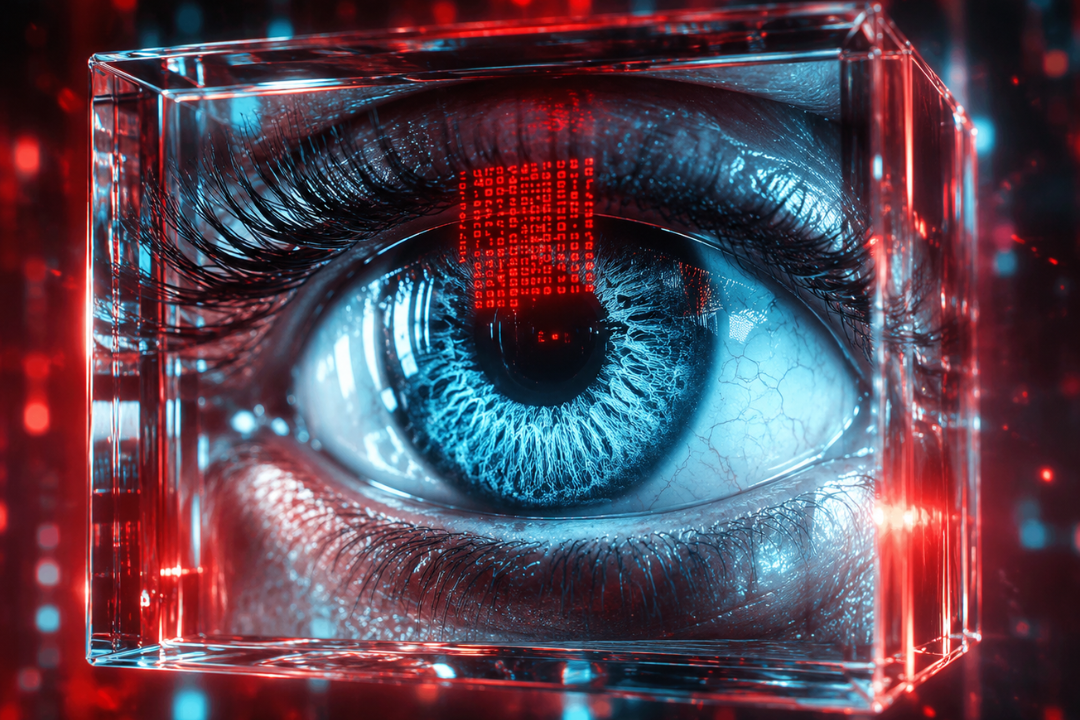
The project uses a specialized device called the Orb, which scans a person’s iris.
According to the project, the iris scan is converted into a unique cryptographic code, while the original image is deleted after processing.
Users then receive a World ID, allowing them to prove they are unique humans without repeatedly revealing biometric information.
World has already verified millions of users, making it one of the largest proof-of-personhood initiatives currently operating.
Despite its scale, the project has also attracted considerable regulatory scrutiny and public debate regarding biometric privacy.
Why AI Is Driving Demand
Artificial intelligence has significantly increased interest in proof of personhood.
As AI-generated content becomes nearly indistinguishable from human-created content, proving someone is genuinely human becomes increasingly valuable.
This need extends beyond social media.
Proof of personhood may become essential for:
- Online communities
- Digital governance
- Identity verification
- Financial services
- AI-powered platforms
Some projects are also exploring ways to verify AI agents themselves by linking them to authenticated human users, ensuring that autonomous software acts on behalf of real people.
Real-World Applications
Proof of personhood has several practical use cases.
Crypto Airdrops
Projects can distribute tokens fairly by ensuring each participant receives only one allocation.
Decentralized Governance
Voting systems become more resistant to manipulation when every verified person receives only one vote.
Online Communities
Social platforms can reduce spam and bot activity while preserving user privacy.
AI Agent Verification
Autonomous AI systems can be linked to verified human owners, improving accountability.
Universal Basic Income
Some researchers believe proof of personhood could eventually support digital distribution of universal income programs by ensuring each recipient is unique.
The Challenges and Criticism
Despite its promise, proof of personhood remains controversial.
Privacy Concerns
Collecting biometric information raises understandable concerns about surveillance and data security.
Many critics worry that biometric databases could become attractive targets for cyberattacks.
Centralization
Some systems rely on specialized hardware or centralized organizations to perform verification.
Critics argue this creates trusted gatekeepers, conflicting with decentralized ideals.
Regulatory Issues
Governments in several jurisdictions have investigated or restricted biometric identity projects due to concerns about privacy, consent, and data protection.
Accessibility
Not everyone has equal access to advanced technology or verification devices, creating potential barriers to participation.
Why Proof of Personhood Matters
As artificial intelligence continues evolving, the internet faces an increasing challenge: distinguishing genuine human participation from automated activity.
Proof of personhood offers one possible solution.
Rather than identifying individuals by name, it focuses on verifying uniqueness while preserving privacy.
This capability could become essential for maintaining trust across decentralized finance, online governance, digital communities, and AI-powered services.
Although no approach has yet solved every challenge, research continues to improve privacy, scalability, and security.
The Bottom Line
Proof of personhood is emerging as one of the most important technologies in the AI era.
By enabling individuals to prove they are real and unique without exposing unnecessary personal information, it has the potential to strengthen fairness, trust, and security across countless online systems.
However, every implementation involves trade-offs. Biometric systems provide strong protection against fake identities but raise privacy concerns, while alternative approaches prioritize decentralization or anonymity at the expense of stronger uniqueness guarantees.
As AI-generated identities become increasingly sophisticated, the demand for reliable human verification will only continue to grow.
Proof of personhood may not solve every challenge, but it is likely to play a central role in shaping the future of digital identity and online trust.
Disclaimer: This article is for educational purposes only and should not be considered financial, legal, or identity-security advice. Always research identity verification platforms carefully before sharing personal or biometric information.