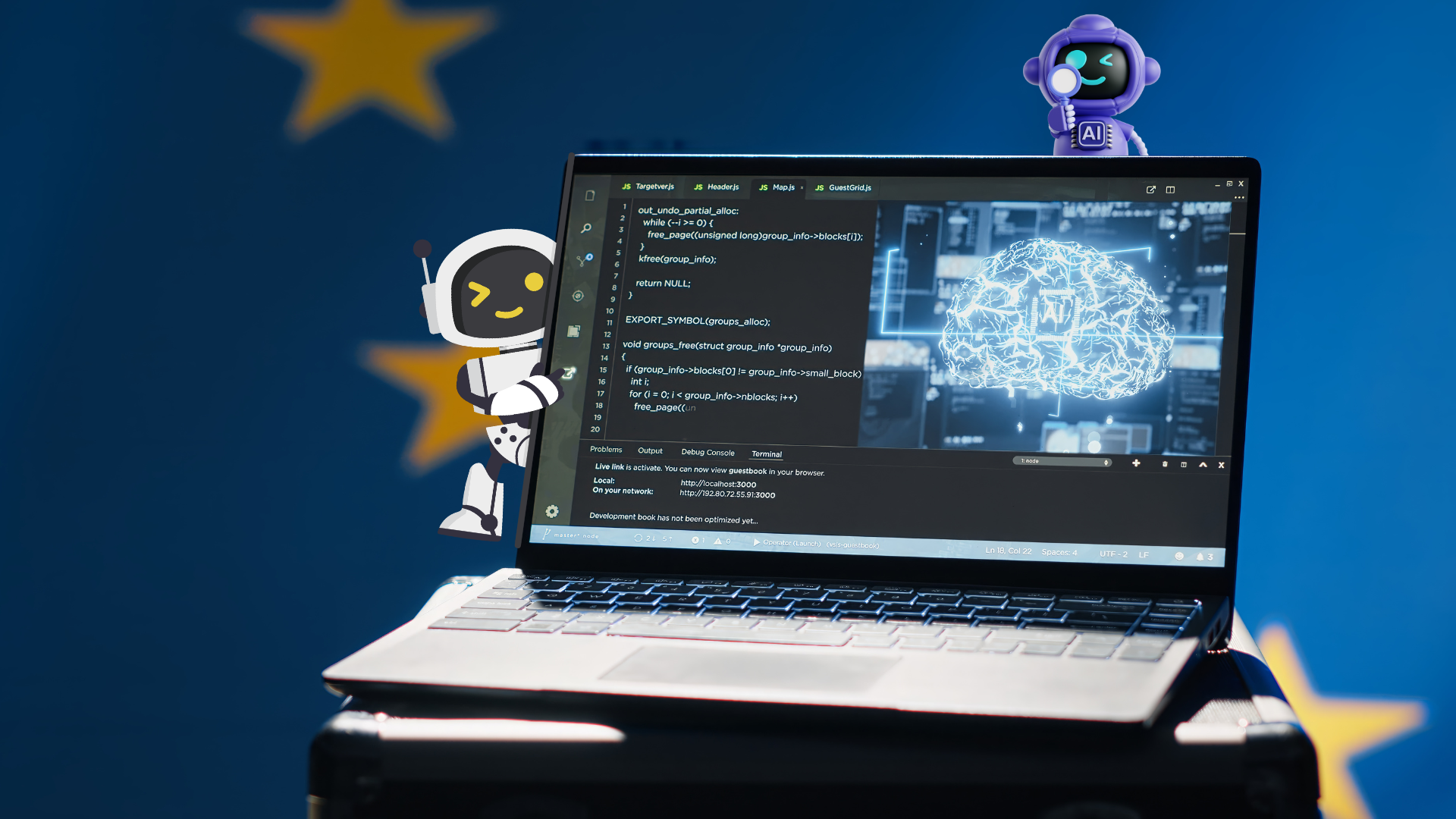


The European Central Bank is preparing to test how artificial intelligence could interact with a future digital euro, including the possibility of AI agents making payments, handling micropayments and communicating with other machines.
The ECB said on Sept. 28 that companies, fintech firms, payment providers, merchants, public institutions and researchers can apply to join the next phase of its digital euro innovation platform.
The new testing program is expected to begin in 2027 and will explore both practical payment features and longer-term technologies that could shape the future of digital payments in Europe.
Applications remain open until Nov. 9 at 17:00 CET.
ECB will explore AI-powered digital euro payments
One of the most closely watched parts of the program will focus on how AI systems could interact with a potential digital euro.
The ECB plans to study payment scenarios involving AI agents, machine-to-machine transactions and very small payments that may currently be inefficient or expensive using conventional payment systems.
These experiments do not mean autonomous AI payments will definitely become part of the final digital euro.
Instead, the ECB is using the program to explore what could be technically possible and what safeguards would be required before such features could be considered for wider use.
The central bank says privacy, user control and data protection must remain important parts of any AI-enabled payment system.
AI agents could interact with payment systems
The ECB wants participants to examine whether AI agents could interact directly with payment infrastructure or even communicate with other AI agents to complete transactions.
Such technology could eventually support automated economic activity between software systems, devices and digital services.
For example, a machine could potentially initiate a small payment when a particular service is used, while an AI agent could execute a transaction on behalf of a user after receiving authorization.
However, the ECB has not specified how much authority AI systems would receive or how users would approve automated payments.
The work remains experimental.
Workshops are scheduled to take place at the ECB’s headquarters in Frankfurt during the first and second quarters of 2027.
Participants will study possible applications for consumers, merchants, businesses and public-sector organizations.
Micropayments are another area of research
Micropayments will form part of the same research program.
These are very small transactions that can sometimes be impractical under traditional payment systems because transaction fees or processing costs may represent a large percentage of the payment itself.
AI agents and connected machines could create more demand for these types of transactions in the future.
Examples could include automated payments for digital services, data access, software usage or machine-to-machine interactions.
The ECB has not yet outlined specific transaction sizes or explained exactly how these payments would be authorized.
The research will instead focus on possible use cases and the technical requirements needed to make them secure and practical.
Companies will build working digital euro prototypes
A separate experimentation track will ask selected participants to build working prototypes rather than only discuss future ideas.
Testing is scheduled to run from January through June 2027.
The ECB has identified four main areas for development:
- Electronic receipts
- Multiparty payments
- Conditional payments
- New payment-app features
Electronic receipts could allow users to receive proof of purchase directly within their digital euro payment application.
Multiparty payments could support transactions involving several people, such as splitting a bill or allowing several senders to contribute toward one payment.
They could also support situations in which a single payment needs to be divided among multiple recipients.
Conditional payments will also be tested
The ECB also wants developers to experiment with conditional payments.
These transactions would be completed only when certain predefined conditions are satisfied.
The central bank has emphasized that conditional payments are different from programmable money.
A programmable currency could potentially restrict where or when money can be spent. The proposed digital euro, however, is not intended to place those kinds of restrictions on users.
Conditional payments would instead determine how a transaction is executed after users have already agreed to the required conditions.
Participants will submit proofs of concept and reports describing the results of their experiments.
Some teams may also be invited to present their findings to the ECB.
AI testing is separate from the main digital euro pilot
The new innovation program is separate from the ECB’s larger digital euro pilot scheduled to begin in the second half of 2027.
That pilot is expected to run for around 12 months and will use a beta version of the digital euro to test payment functions in controlled real-world environments.
The ECB has selected 36 payment service providers for the pilot after receiving more than 50 applications.
Participants include major financial and technology companies such as Deutsche Bank, Revolut Bank, Stripe Technology Europe, UniCredit, Adyen and SumUp.
The pilot will also involve the ECB and 19 national central banks from across the euro area.
What will the digital euro pilot test?
Participants are expected to test several common payment scenarios.
These include:
- Person-to-person transfers
- Online purchases
- Physical point-of-sale payments
- Mobile transactions
- Offline payments
ECB and national central bank staff will use the beta digital euro to test transactions with participating merchants.
The digital euro used during the trial will not have legal tender status.
The ECB is also recruiting merchants to participate in the pilot, with applications for some e-commerce and mobile-commerce businesses open until Oct. 27, 2026.
Privacy remains a major part of the digital euro project
Privacy has been one of the most closely watched issues surrounding the digital euro.
The ECB has previously said it wants the currency to provide strong privacy protections, particularly for offline payments.
At the same time, banks and regulated payment providers would still need to comply with identity verification and anti-money laundering requirements for many online transactions.
The latest AI research program will require participants to consider privacy by design, user control and data protection when developing new payment features.
This could become particularly important if AI agents are eventually allowed to initiate transactions on behalf of users.
The digital euro still needs legal approval
Despite growing technical preparation, the digital euro has not yet been approved for public launch.
The ECB says a final decision on whether to issue the currency will be made only after the necessary European Union legislation has been adopted.
Current planning aims for possible readiness around 2029, assuming the legal process moves forward.
The European Parliament’s Economic and Monetary Affairs Committee approved its position on the digital euro proposal in June 2026.
The proposed legislation covers areas such as issuance, legal tender status, privacy, data protection, technical requirements and distribution.
A final launch would still require completion of the legislative process and a separate decision by the ECB’s Governing Council.
How would the digital euro work?
The ECB describes the digital euro as a digital form of central bank money intended for everyday retail payments.
It would exist alongside physical euro banknotes and coins rather than replace them.
Consumers would not normally open accounts directly with the ECB.
Instead, banks and other regulated payment providers would distribute digital euro services to customers through payment applications and existing financial infrastructure.
The ECB has also been working to make integration easier for banks and merchants by aligning the digital euro with existing European payment standards.
What happens next?
The ECB’s digital euro development program is entering a more practical phase.
Companies interested in the latest innovation platform have until Nov. 9, 2026 to apply.
Prototype development will take place from January through June 2027, while workshops covering AI payments, machine interactions, micropayments and public-sector applications will be held during the first half of the year.
The separate large-scale digital euro pilot is then scheduled to begin during the second half of 2027.
These experiments will help the ECB understand how emerging technologies such as AI could interact with central bank digital money.
For now, however, AI-powered digital euro payments remain a research concept rather than a confirmed feature of Europe’s future digital currency.