

CeDeFi trading platform Grvt has partnered with Ondo Finance to build a position of up to $100 million in USDY, Ondo’s yield-bearing tokenized Treasury product, over the next 12 months.
The planned allocation will be integrated into Grvt Earn, allowing users to benefit from USDY-generated returns without having to purchase, hold, or manage the token themselves.
Instead, Grvt will hold USDY on its own balance sheet and combine the income generated from the position with other yield sources already supporting Grvt Earn.
If the full $100 million is deployed and USDY continues offering an annual percentage yield of around 3.5%, the position could generate approximately $3.5 million in gross annualized yield.
Summary
- Grvt plans to build a USDY position worth up to $100 million over the next 12 months.
- USDY yield will contribute to the base rate available through Grvt Earn.
- Users will not need to purchase or manage USDY directly.
- At a 3.5% APY, a fully deployed $100 million allocation could generate about $3.5 million annually.
- The planned position would represent roughly 4.6% of USDY’s current $2.14 billion in assets under management.
Grvt targets $100 million USDY allocation
Under the partnership, Grvt will gradually build and manage a USDY position on its own balance sheet.
The yield generated by the token will then be added to the returns supporting Grvt Earn, the platform’s yield-focused product.
Rather than exposing users to several individual assets or lending strategies, Grvt Earn combines multiple income sources into a single base rate.
This means users can keep one balance on the platform while Grvt manages the underlying yield-generating infrastructure.
USDY is a tokenized secured note issued by Ondo Finance.
The product is primarily backed by short-term U.S. Treasurys, shares of Treasury-focused exchange-traded funds, and bank deposits.
According to figures cited in the partnership announcement, USDY currently has around $2.14 billion in assets under management and approximately 15,626 holders.
If Grvt reaches its full $100 million target, its position would equal roughly 4.6% of USDY’s current assets under management.
At USDY’s current yield of about 3.5% APY, that allocation could generate approximately $3.5 million in annualized gross returns, assuming the rate remains unchanged.
USDY accrues yield daily, giving Grvt another source of income to combine with existing returns generated through its platform.
Grvt Earn combines multiple yield sources
Grvt Earn already relies on several sources to generate returns for users.
These include revenue from Grvt’s trading operations and lending activity through decentralized finance platform Aave.
USDY will now become another part of that structure.
Instead of distributing USDY directly to customers, Grvt will manage the token itself and pass the resulting yield into the base rate offered through Grvt Earn.
The approach is designed to simplify access to onchain yield.
Users do not need to monitor separate lending protocols, Treasury products, or tokenized securities individually.
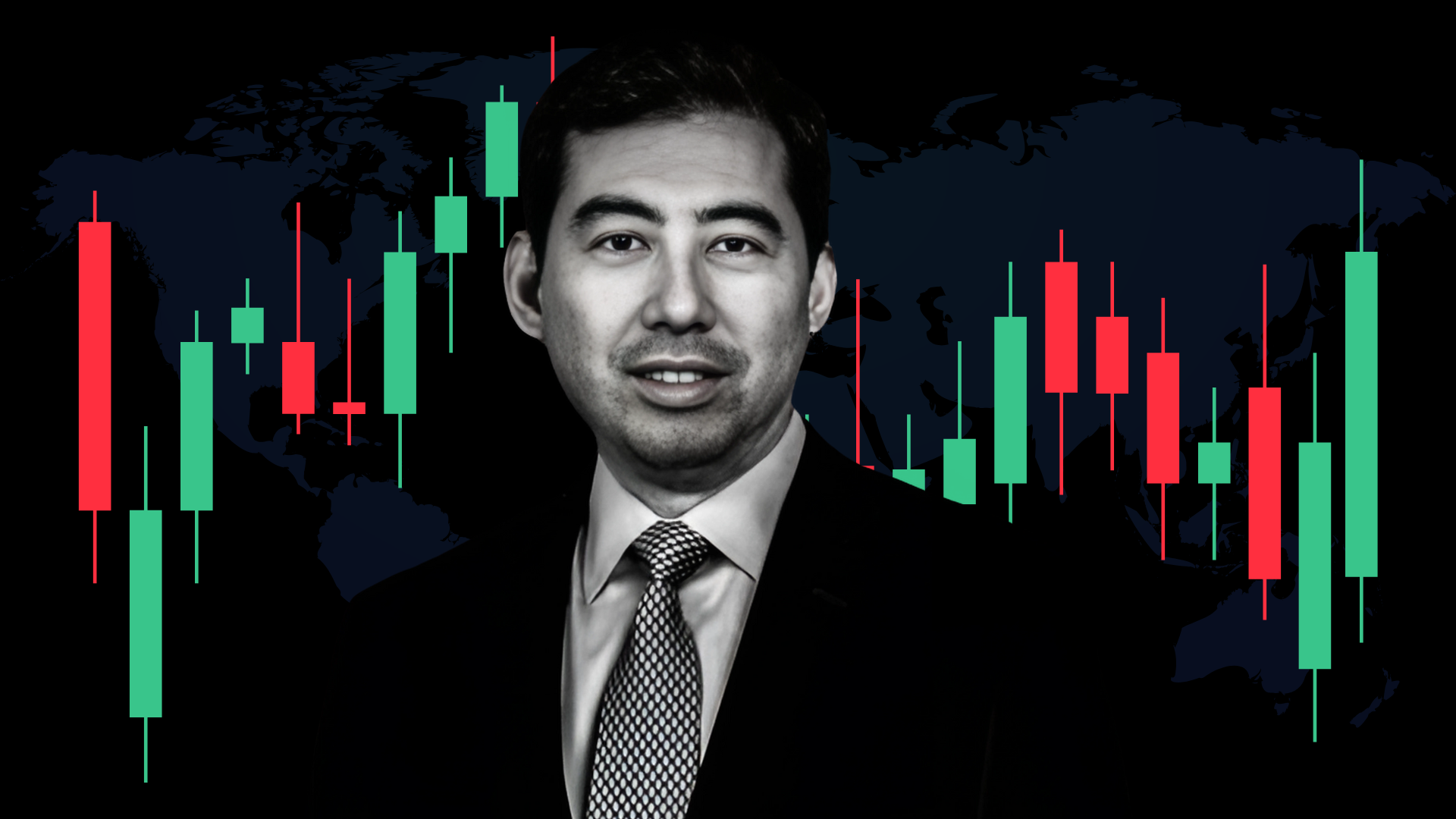
Grvt CEO Hong Yea said the platform was designed to keep users’ capital productive without requiring them to manage the financial infrastructure operating behind the scenes.
He explained that combining several financial markets into one balance could allow customers to continue earning yield while keeping their capital available for trading.
The company also sees the planned $100 million position as a sign of how tokenized assets could increasingly support everyday onchain financial products.
Ondo brings U.S. Treasury exposure onchain
For Grvt, the partnership provides access to U.S. Treasury-linked returns through Ondo’s tokenized infrastructure.
Ondo Finance has become one of the better-known companies building blockchain-based products connected to traditional financial markets.
USDY is one part of that ecosystem.
The token is designed to offer yield backed primarily by short-term U.S. government debt and similar low-duration financial instruments.
This allows blockchain users to gain exposure to Treasury-related returns without relying entirely on traditional brokerage or banking infrastructure.
USDY has already been integrated into several decentralized finance platforms.
In February 2025, Ondo partnered with NAVI Protocol on Sui in a liquidity campaign that included USDY.
Participants could provide liquidity and become eligible for incentives distributed in NAVX and USDY.
These integrations show how tokenized Treasury products are increasingly being used not only as investment assets but also as components of wider decentralized finance ecosystems.
Ondo continues expanding its tokenized asset products
USDY is not Ondo Finance’s only Treasury-focused product.
The company also operates OUSG, a tokenized product offering qualified investors exposure to short-term U.S. government securities.
While USDY is structured as a yield-bearing secured note, OUSG is aimed more directly at qualified institutional and professional investors seeking tokenized Treasury exposure.
OUSG has already been used in institutional blockchain settlement experiments.
In May, JPMorgan, Mastercard, Ripple, and Ondo participated in a cross-border settlement test involving OUSG on the XRP Ledger.
The test demonstrated how a tokenized Treasury asset could move across blockchain infrastructure while traditional payment systems handled the corresponding fiat settlement.
Ondo had previously expanded OUSG to the XRP Ledger in June 2025.
That integration allowed eligible investors to mint and redeem the product using Ripple’s RLUSD stablecoin.
At the time, OUSG had more than $670 million in total value locked across supported networks.
Ondo expands into tokenized stocks and ETFs
Ondo has also moved beyond government debt.
The company has been expanding into tokenized U.S. stocks and exchange-traded funds through Ondo Global Markets.
In June, Ondo introduced a collection of tokenized securities to Hyperliquid’s HyperEVM.
The initial offering included around 35 assets, including major U.S. stocks and ETFs such as Nvidia, Tesla, Alphabet, Netflix, SPY, and QQQ.
At the time, Ondo Global Markets had accumulated more than $970 million in total value locked and nearly $18 billion in cumulative trading volume.
The expansion reflects a wider push to bring traditional financial assets onto blockchain networks.
Rather than limiting tokenization to stablecoins or government bonds, companies are increasingly experimenting with stocks, funds, private credit, and other financial instruments.
Tokenized Treasurys become a major RWA category
Grvt’s planned investment comes as tokenized U.S. government debt continues to grow into one of the most significant areas of the real-world asset market.
By May 2026, tokenized real-world assets excluding stablecoins had grown to an estimated $31 billion to $34 billion.
That was a major increase from roughly $5.4 billion at the beginning of 2025.
Tokenized U.S. Treasurys represented approximately $15 billion of the total at the time.
Ethereum also remained the dominant blockchain for the sector, hosting roughly 60% of tokenized real-world asset value.
Treasury products have become particularly attractive because they combine blockchain settlement with returns linked to comparatively low-risk government securities.
That combination has attracted crypto-native companies as well as large traditional financial institutions.
BlackRock and Franklin Templeton push deeper into tokenization
Several major asset managers are already active in the tokenized Treasury market.
BlackRock operates BUIDL, a tokenized money market fund distributed through Securitize.
The product allows eligible investors to gain blockchain-based exposure to assets such as U.S. Treasury bills and other cash-equivalent instruments.
Franklin Templeton also operates BENJI, which represents shares in its OnChain U.S. Government Money Fund.
The company has continued expanding distribution for the tokenized fund.
In May, Kraken parent company Payward agreed to integrate BENJI for collateral and cash-management purposes.
The integration allowed eligible clients to put unused dollar balances into an onchain yield-generating product.
Franklin Templeton later expanded BENJI to MoonPay Trade.
That move enabled institutional users to exchange stablecoins such as USDC and USDT for shares in the tokenized fund using MoonPay’s onchain trading infrastructure.
These developments show how tokenized Treasurys are gradually becoming connected to trading platforms, collateral markets, and decentralized finance.
Grvt expands following $19 million funding round
The partnership with Ondo also comes as Grvt continues expanding its trading and financial infrastructure.
In September 2025, the company raised $19 million in Series A funding to develop its privacy-focused onchain trading platform.
Grvt operates using ZKsync technology and combines elements typically associated with centralized exchanges and decentralized finance.
Its architecture includes onchain settlement and self-custody while also attempting to deliver the performance and usability expected from traditional trading platforms.
The company has positioned privacy, scalability, and security as important parts of its strategy.
The Series A funding was intended to support further development and expansion of the platform.
Grvt has since launched its own token and continued developing additional products around trading and yield.
Grvt Earn has become a central part of that strategy.
Before the Ondo partnership, its returns were already supported by trading revenue and Aave-based lending.
The planned USDY allocation adds another income stream tied directly to tokenized U.S. Treasury markets.
Tokenized assets become part of everyday onchain finance
The Grvt-Ondo partnership highlights a broader shift in decentralized finance.
Tokenized real-world assets are increasingly being integrated directly into trading, lending, collateral, and yield products rather than being offered only as standalone investments.
For Grvt users, this means Treasury-linked yield could become part of their normal platform balance without requiring them to interact directly with USDY.
Grvt would manage the underlying asset while customers receive exposure to the resulting returns through Grvt Earn.
The size of the planned investment is also notable.
A $100 million USDY position would make Grvt a meaningful participant in the product relative to its current $2.14 billion in assets under management.
Whether the allocation ultimately reaches that level will depend on Grvt’s deployment over the next 12 months and on market conditions.
If fully implemented, however, the deal could demonstrate how tokenized Treasurys are moving from specialized blockchain products into the financial infrastructure of crypto trading platforms.