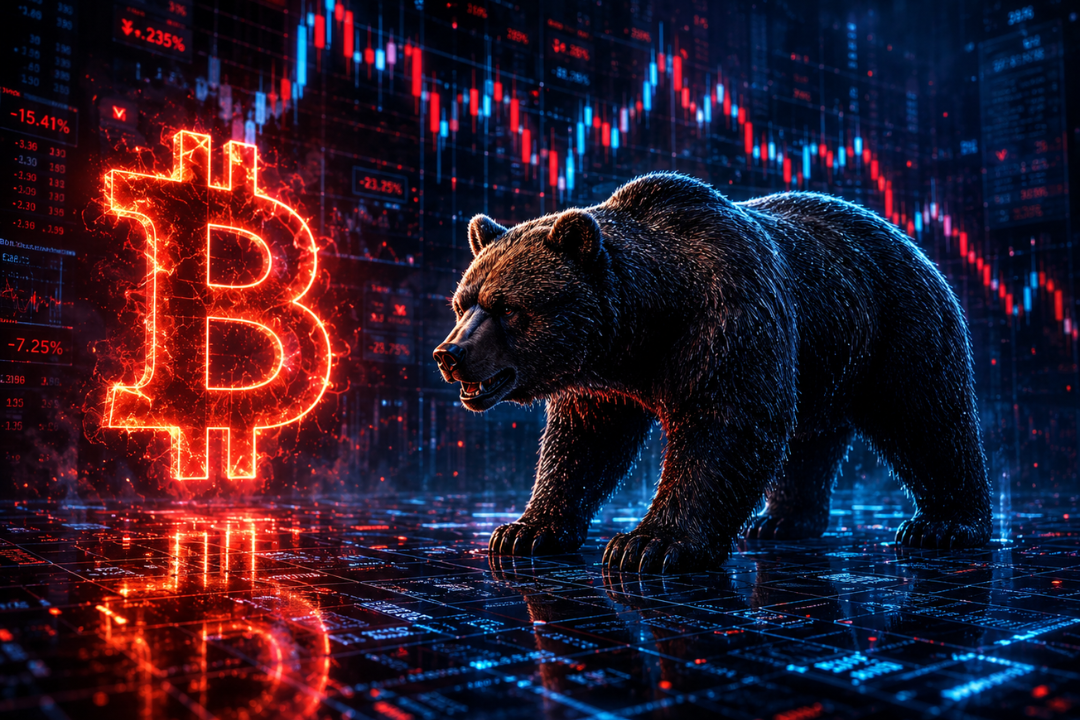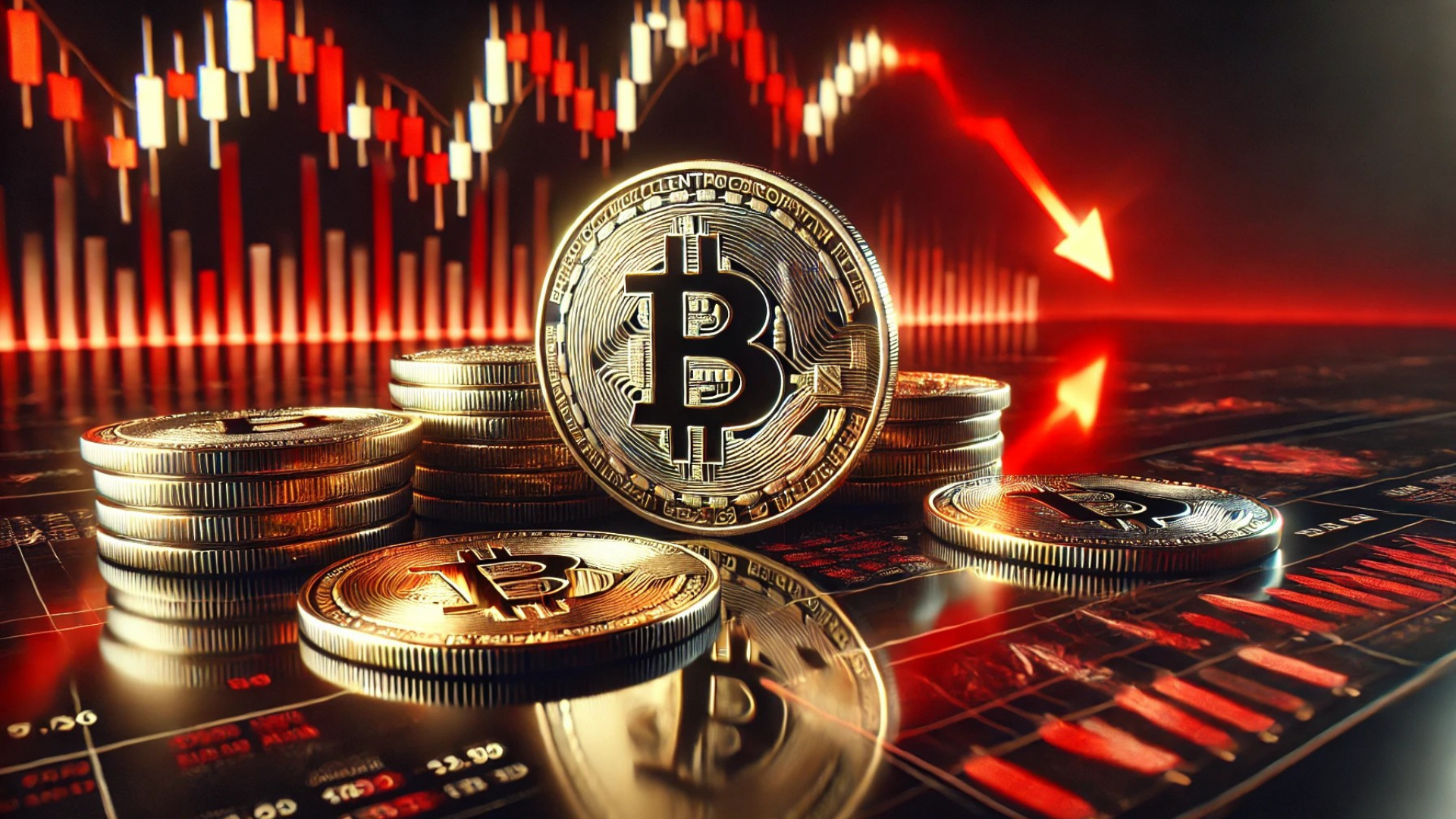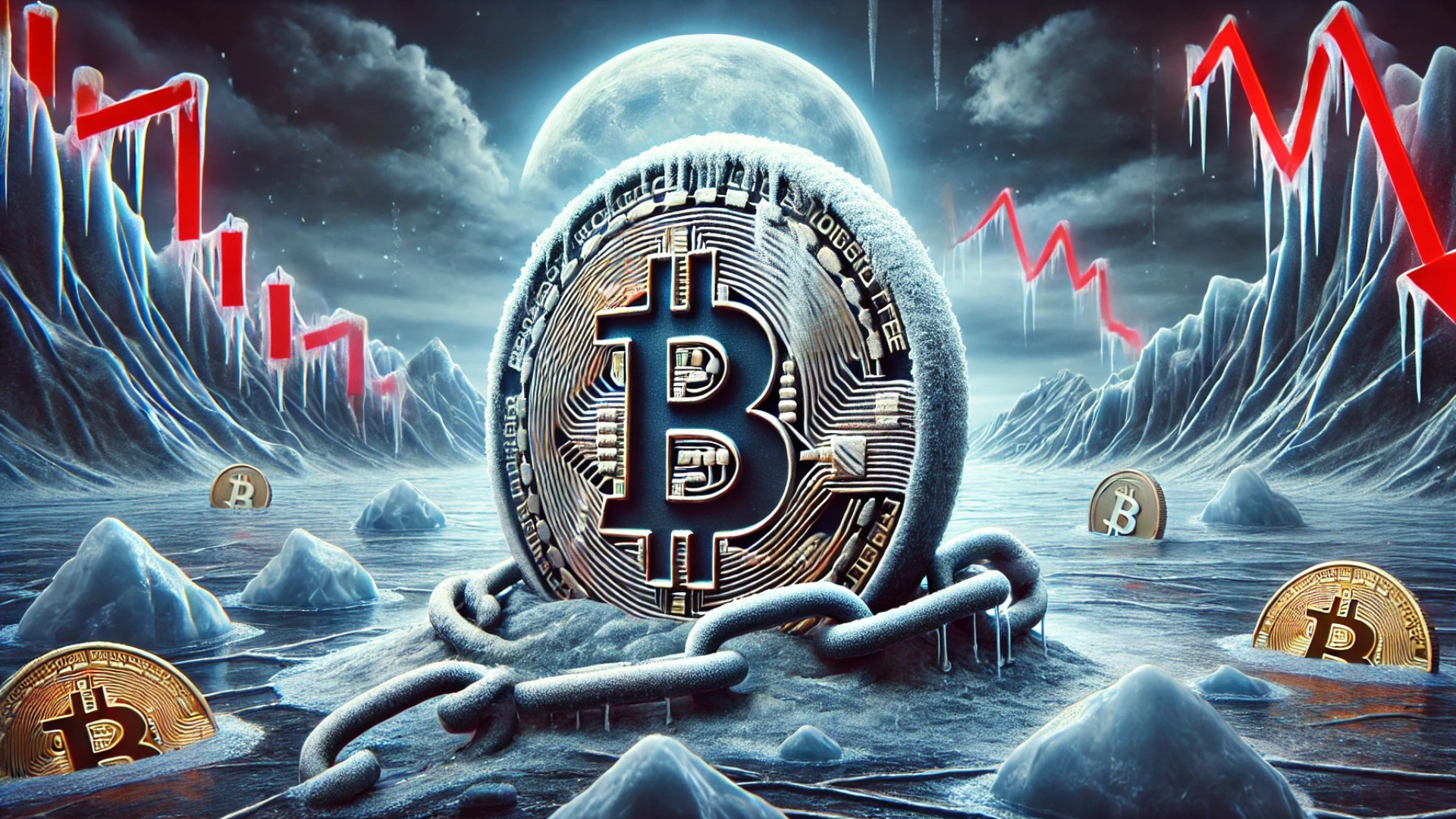


With Bitcoin down more than 20% this year, Ethereum suffering one of its weakest quarters in recent memory, and investor sentiment falling into extreme fear territory, many crypto investors are asking the same question:
How long will this bear market last?
While no one can predict the exact timing of a market bottom, history provides useful clues. Previous crypto bear markets have followed surprisingly consistent patterns, and many analysts believe the current downturn may already be well past its halfway point. However, unique factors such as institutional ETF participation, Federal Reserve policy, and global macroeconomic conditions make this cycle different from those that came before.
What History Tells Us About Crypto Bear Markets
Despite crypto’s relatively short history, enough market cycles now exist to identify recurring patterns.
According to historical data, major crypto bear markets have typically lasted between eight and twelve months from peak to trough. This timeframe has become one of the most widely cited benchmarks among market analysts when evaluating the current cycle.
The 2018 Bear Market
Following Bitcoin’s late-2017 peak, the market entered a prolonged decline that lasted roughly one year.
Key characteristics included:
- Bitcoin fell approximately 84% from its peak.
- Investor enthusiasm collapsed after the ICO boom.
- Many speculative projects disappeared.
- The market eventually bottomed in December 2018.
The 2022 Bear Market
The next major bear cycle followed Bitcoin’s 2021 all-time high.
Key characteristics included:
- Bitcoin declined approximately 77%.
- Major failures such as Terra, Three Arrows Capital, and FTX accelerated the downturn.
- The market bottomed in late 2022.
- Recovery began after leverage and excess risk were removed from the system.
Both cycles fit within the eight-to-twelve-month range for the sharpest phase of decline, giving analysts confidence that similar patterns may apply today.
Understanding the Difference Between a Bear Market and a Full Cycle
Many investors confuse a bear market with the broader crypto cycle.
The distinction is important.
Bear Market
The bear market refers specifically to the decline from peak to bottom.
Historically:
- Duration: 8–12 months
- Characterized by falling prices and negative sentiment
Full Market Cycle
The full cycle includes:
- Bull market
- Bear market
- Bottoming phase
- Recovery period
These broader cycles often align with Bitcoin’s roughly four-year halving cycle and can last considerably longer than the initial decline phase.
Why Bear Markets Take So Long
Bear markets are not random events.
They persist because several important processes need time to unfold.
1. Deleveraging
Bull markets create excessive leverage.
Traders borrow heavily to amplify gains, but when prices reverse, those positions must be liquidated.
This process occurs in waves:
- Initial decline
- Forced liquidations
- Additional selling
- Further liquidations
The cycle repeats until excess leverage is removed from the system.
2. Sentiment Capitulation
Market psychology also plays a major role.
Investors typically move through several emotional stages:
- Denial
- Hope
- Fear
- Capitulation
The final stage—capitulation—is often when investors give up entirely and sell regardless of price.
Historically, major market bottoms tend to form near this point of maximum pessimism.
3. Rebuilding Demand
After speculative demand disappears, genuine buyers must gradually return.
This process includes:
- Long-term investors accumulating
- Strong projects continuing development
- Weak projects disappearing
- Confidence slowly rebuilding
The market eventually stabilizes once new demand exceeds remaining selling pressure.
How the 2026 Bear Market Compares
The current downturn shares many characteristics with previous bear markets.
Similarities
The market has already experienced:
- Extreme fear readings
- Heavy liquidations
- Persistent selling pressure
- Weak retail participation
These conditions often appear during the later stages of bear markets.
Key Differences
However, this cycle is also unique.
Several factors did not exist during previous downturns:
- Spot Bitcoin ETFs
- Significant institutional ownership
- Greater correlation with traditional financial markets
- Strong influence from Federal Reserve policy
Because of these changes, historical patterns may not perfectly predict the current cycle.
Is the Market Already Past the Midpoint?
Many analysts believe it is.
If the cycle peaked in late 2025 and follows the traditional eight-to-twelve-month timeline, the current downturn could already be beyond its halfway stage.
This perspective is one reason some market observers are cautiously optimistic about a recovery later in 2026.
However, analysts stress that timing alone cannot determine whether a bottom has formed.
Markets care more about conditions than calendars.
The Signals That Usually Mark a Bottom
Rather than counting months, investors should focus on specific indicators.
Selling Pressure Begins to Fade
A potential bottom often forms when:
- Liquidations slow
- Selling volume decreases
- New lows become less frequent
This suggests most forced sellers have already exited.
ETF Flows Reverse
Unlike previous cycles, institutional flows now matter significantly.
A shift from persistent ETF outflows to sustained inflows would signal returning institutional demand.
This may become one of the most important indicators in the current cycle.
Extreme Fear Dominates
Historically, major bottoms occur when sentiment reaches maximum pessimism.
Current Fear and Greed Index readings near extreme fear levels resemble conditions seen near previous market lows.
Macroeconomic Conditions Improve
Because crypto is increasingly tied to broader financial markets, factors such as:
- Federal Reserve policy
- Interest rates
- Inflation expectations
- Geopolitical stability
may play a larger role in ending this bear market than they did in previous cycles.
What Could End This Bear Market?
Previous bear markets were largely driven by crypto-specific events.
2018
The ICO bubble collapsed.
2022
Terra, Three Arrows Capital, and FTX failed.
In both cases, the market recovered after excess speculation was removed.
2026 Could Be Different
This time, the most likely catalyst may come from outside crypto.
Potential triggers include:
- Federal Reserve rate cuts
- Lower inflation
- Improved global economic conditions
- Reduced geopolitical tensions
- Renewed institutional investment
These macroeconomic factors may determine when the next recovery begins.
Avoiding the “This Time Is Different” Trap
Every bear market produces two common mistakes.
Mistake #1: Assuming Recovery Will Never Come
Many investors convince themselves that this downturn is uniquely catastrophic.
History suggests otherwise.
Every major crypto bear market has eventually been followed by recovery.
Mistake #2: Ignoring Structural Changes
At the same time, blindly assuming history will repeat perfectly can also be dangerous.
The introduction of ETFs, institutional ownership, and stronger macroeconomic influences means this cycle may not follow previous patterns exactly.
The most balanced approach is to use history as a guide while remaining flexible enough to adapt to new market realities.
What It Means for Long-Term Holders
The historical record offers a relatively encouraging perspective.
If previous patterns remain relevant:
- Bear markets typically last 8–12 months.
- The current cycle may already be beyond its midpoint.
- Recovery could emerge later in 2026.
That does not mean prices will immediately rebound.
Bear markets often remain painful for longer than investors expect.
However, history suggests that periods of extreme fear and capitulation have often occurred closer to market bottoms than tops.
Final Thoughts
No one can predict the exact day a crypto bear market will end.
What history does show is that major downturns have generally lasted between eight and twelve months, with recovery eventually following periods of extreme pessimism and heavy selling.
The current cycle shares many similarities with previous bear markets, but it also includes new factors such as ETFs, institutional investors, and stronger macroeconomic influences.
For investors, the most important lesson may be patience.
Rather than trying to perfectly time the bottom, focusing on long-term fundamentals, monitoring market signals, and maintaining realistic expectations has historically proven far more valuable than reacting emotionally to short-term volatility.
If history remains even partially relevant, the market may be closer to the end of this bear phase than the beginning—but only time will confirm whether that pattern holds once again.