

At first glance, Zcash’s recent price collapse seems difficult to explain.
A critical vulnerability capable of creating unlimited counterfeit ZEC tokens was discovered, disclosed, and fixed within days. No stolen funds were detected, no inflation was confirmed, and the development team executed what many security experts consider a textbook incident response.
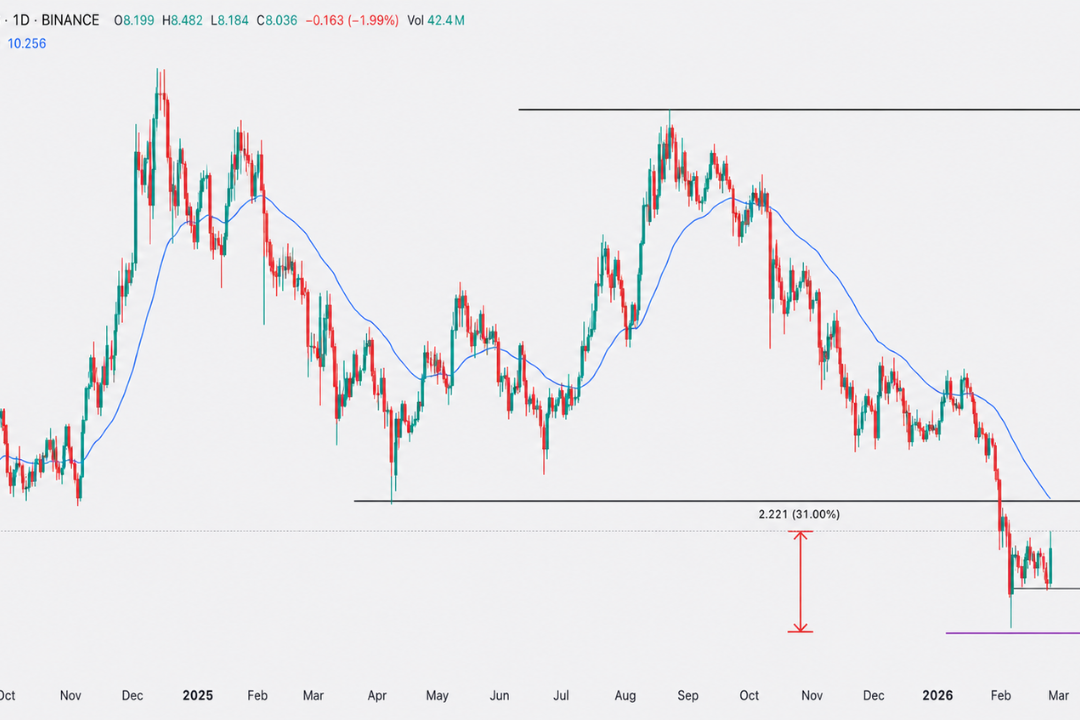
Yet Zcash’s price still plunged roughly 45%, falling from above $600 to around $314 and erasing more than $3 billion in market value. The paradox has left many investors wondering why the market reacted so negatively when the crisis appeared to have been successfully resolved.
The answer lies not in the bug itself, but in the uncertainty it exposed.
The Vulnerability Was One of the Most Serious Possible
The flaw existed within Orchard, Zcash’s most advanced privacy pool and a core component of its privacy-preserving architecture.
According to developers, the vulnerability could have allowed an attacker to create unlimited counterfeit ZEC tokens without detection.
The issue was discovered on May 29 by security researcher Taylor Hornby during a targeted audit using advanced AI-assisted analysis. After identifying the flaw, Hornby reportedly developed a working exploit capable of generating counterfeit ZEC in a testing environment.
The vulnerability represented a direct threat to one of cryptocurrency’s most important principles: supply integrity.
For any digital asset with a fixed supply, investor confidence depends on the assumption that new coins cannot be secretly created. The Orchard bug challenged that assumption in the most serious way possible.
Developers Responded Quickly
Despite the severity of the issue, the response was swift.
The Zcash development team coordinated an emergency fix, temporarily disabled the vulnerable Orchard component, and deployed a patched version through a hard fork within days.
No evidence of unauthorized inflation was discovered during the response process.
From a cybersecurity perspective, the incident was handled effectively:
- The flaw was found before any known attacker exploited it.
- Developers coordinated a rapid emergency response.
- Orchard functionality was temporarily suspended.
- A patched circuit was deployed quickly.
- Network operations resumed without disruption.
Under normal circumstances, such a response might have strengthened confidence in the project. Instead, the market reacted in the opposite direction.
The Real Problem: No One Can Prove the Bug Was Never Used
The market’s concern was not whether the bug had been fixed.
The concern was whether it had already been exploited before anyone knew it existed.
Because Orchard transactions are protected by advanced privacy technology, there is no cryptographic method available to conclusively prove that counterfeit ZEC was never created during the four years the vulnerability remained active.
This distinction is critical.
The fix secured the future of the network. It did not provide certainty about the past.
Developers themselves acknowledged this limitation, explaining that the privacy features protecting users also prevent auditors from definitively verifying whether the exploit was used before discovery.
As a result, investors are left with uncertainty that may never be fully resolved.
Privacy Became Both the Strength and Weakness
The incident highlights a fundamental trade-off that exists in privacy-focused cryptocurrencies.
On transparent blockchains such as Bitcoin, anyone can independently verify the circulating supply by analyzing public transaction data.
If a similar bug existed in Bitcoin, auditors could inspect the blockchain and confirm whether unauthorized coins had been created.
Zcash cannot offer that level of verification because privacy is one of its core design features.
The same cryptographic protections that hide transaction amounts and addresses also make it impossible to publicly audit every unit of supply.
In this case, privacy became both the network’s greatest strength and its greatest vulnerability.
The market was forced to price in the possibility that no one can ever fully prove whether the exploit was used during the years it remained hidden.
Four Years of Uncertainty Amplified the Crisis
One of the most damaging aspects of the incident was the timeline.
The Orchard bug was not introduced recently. It had existed since Orchard launched in May 2022, remaining undiscovered for approximately four years.
That long period creates two major concerns.
First, it significantly increases the amount of time during which exploitation could theoretically have occurred.
Second, it raises questions about how such a severe vulnerability remained hidden despite years of review by experienced cryptographers and security researchers.
Zcash is widely regarded as one of the most technically sophisticated privacy projects in the cryptocurrency industry. The fact that a flaw of this magnitude survived multiple years of scrutiny has shaken confidence among some investors.
Even though developers believe exploitation was unlikely, they cannot provide mathematical certainty. And for markets built on cryptographic trust, “probably” is often not enough.
The Debate Extends Beyond Zcash
The implications reach far beyond ZEC itself.
The incident has reignited a long-running debate about the relationship between privacy and auditability across the entire privacy coin sector.
Projects such as Monero face similar structural challenges.
The more private a blockchain becomes, the harder it becomes to independently verify supply integrity.
This tension is not unique to Zcash’s implementation. It is a fundamental trade-off embedded within privacy-preserving cryptocurrency design.
The question facing the industry is whether privacy and verifiable supply can coexist without compromising either objective.
Zcash Is Working on a Solution
In response to the crisis, Shielded Labs has proposed a future upgrade designed to improve supply verification.
The proposal would introduce a new shielded pool and accounting mechanisms intended to allow independent verification of ZEC supply while preserving privacy protections.
Developers are also pursuing formal verification techniques to mathematically prove the correctness of critical components within the Orchard circuit.
If successful, these efforts could become a blueprint for the broader privacy coin industry.
However, implementation remains a future goal rather than an immediate solution.
Why the Market Reacted So Harshly
The price crash was ultimately not a reaction to the bug itself.
It was a reaction to uncertainty.
Investors were confronted with a scenario where:
- A critical counterfeiting vulnerability existed for four years.
- The vulnerability was fixed successfully.
- No exploitation has been detected.
- No cryptographic proof can confirm exploitation never occurred.
That final point is what the market focused on.
The fix removed the threat going forward, but it could not eliminate doubt about what happened during the years before discovery.
For many investors, trust is the foundation of any cryptocurrency. When supply integrity becomes difficult to verify, that trust can quickly erode.
What Happens Next?
The future of Zcash now depends largely on whether developers can restore confidence in the network’s supply integrity.
The proposed verification upgrades and formal auditing efforts represent important steps toward rebuilding trust. If successful, they could help reduce the uncertainty currently weighing on ZEC.
However, the broader lesson extends beyond Zcash.
The incident has highlighted a difficult reality for privacy-focused cryptocurrencies: privacy and auditability are often opposing forces. Strengthening one can weaken the other.
Zcash’s Orchard bug may have been fixed, but the deeper question it raised remains unresolved. Until investors gain greater confidence in the ability to verify supply integrity without sacrificing privacy, the market may continue assigning a risk premium to privacy-focused digital assets.