

While much of the crypto market remains focused on XRP’s price movements, a much bigger transformation is quietly taking place behind the scenes.
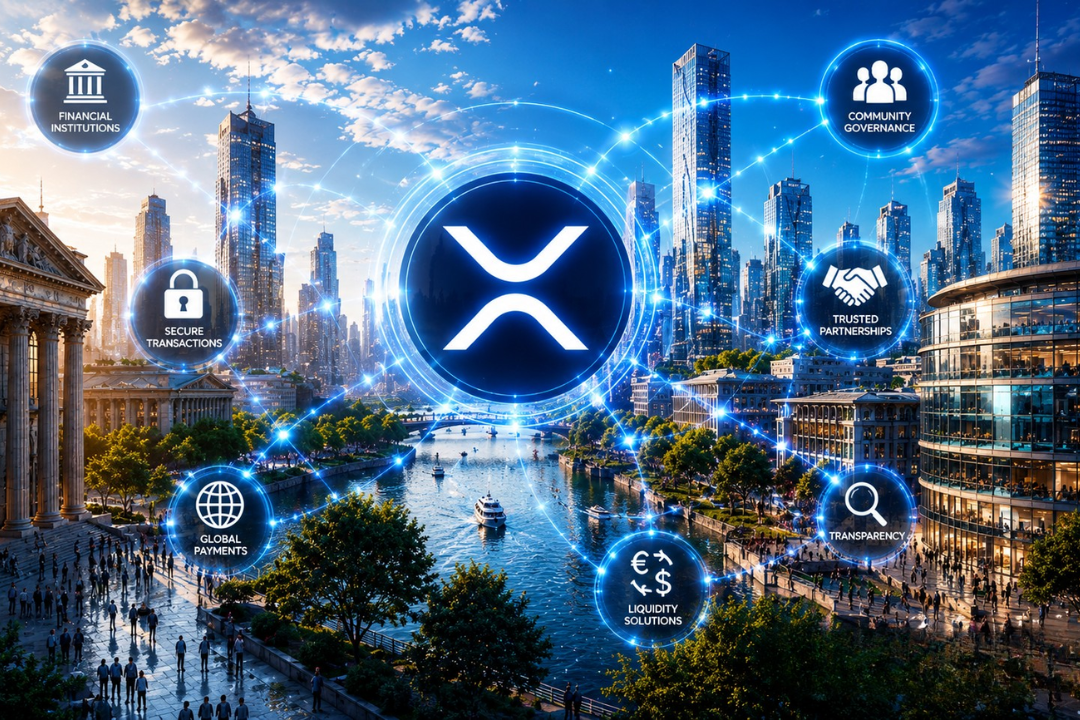
The XRP Ledger (XRPL) is steadily evolving from a blockchain known primarily for fast payments into a platform designed for institutional decentralized finance (DeFi). Rather than chasing retail speculation, Ripple and XRPL contributors are building infrastructure tailored for banks, asset managers, treasury firms, and regulated financial institutions.
From permissioned decentralized exchanges and tokenized real-world assets to native lending protocols and compliance-focused identity systems, XRPL is laying the foundation for what could become one of the industry’s first institution-ready DeFi ecosystems.
XRPL is moving beyond payments
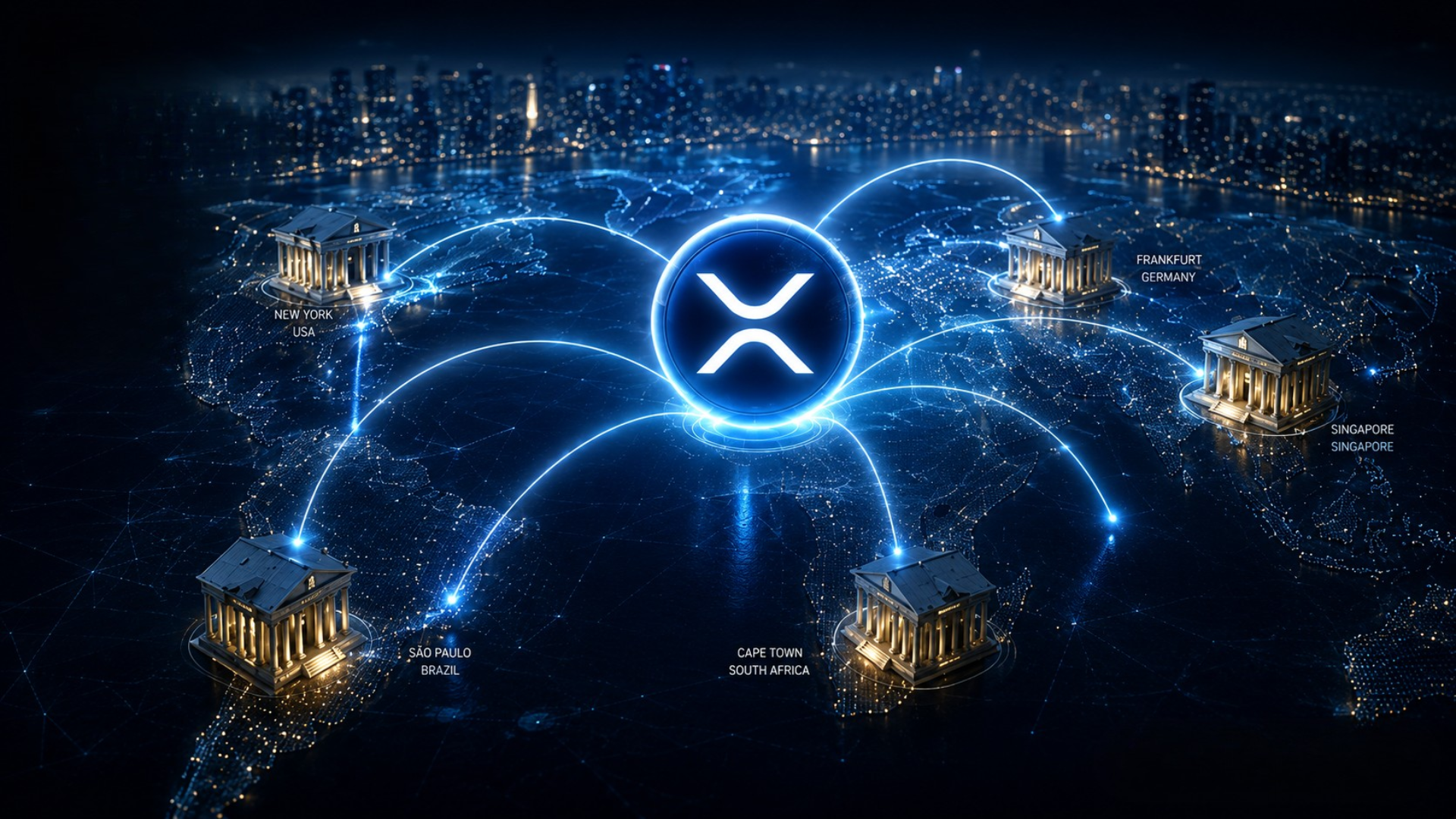
For years, the XRP Ledger was recognized mainly as a fast and inexpensive blockchain for cross-border payments.
Today, that narrative is changing.
Over the past 18 months, Ripple and XRPL developers have introduced a series of upgrades aimed at making the network attractive to institutional investors.
Among the most significant developments are:
- Permissioned decentralized exchanges (DEXs)
- Native lending infrastructure
- Tokenized real-world asset (RWA) support
- Compliance-focused identity verification
- Ripple’s RLUSD stablecoin
- Tokenized asset settlement tools
Rather than creating speculative DeFi applications, the goal is to build financial infrastructure that regulated institutions can actually use.
Compliance sits at the center of XRPL’s strategy
Unlike most blockchain ecosystems, XRPL is embedding compliance directly into its protocol.
Traditional DeFi platforms often rely on third-party identity verification or external compliance tools after applications are built. XRPL takes a different approach by integrating compliance features directly into the blockchain itself.
The system revolves around three core components.
On-chain credentials
Verified organizations can issue credentials that confirm whether a wallet belongs to a KYC-approved institution, accredited investor, or regulated entity.
Instead of storing sensitive personal information on-chain, the ledger simply records the verification itself.
Permissioned Domains
XRPL’s recently activated Permissioned Domains allow developers to create markets that only approved participants can access.
Only wallets holding the required credentials can trade within these controlled environments, making the system more suitable for banks and financial institutions.
Permissioned DEX
Building on those features, XRPL has launched a permissioned version of its native decentralized exchange.
This enables regulated firms to trade tokenized assets while maintaining full AML and KYC compliance, all without sacrificing blockchain settlement.
Native lending could become XRPL’s biggest milestone
Perhaps the most important development currently underway is XRPL’s native lending protocol.
Two proposed upgrades—XLS-65 and XLS-66—are currently undergoing validator voting.
If approved, they would introduce fixed-term lending directly on the XRP Ledger.
Unlike traditional DeFi lending, which usually depends on excessive collateral and automatic liquidations, XRPL’s design focuses on institutional lending.
Credit assessments, underwriting, and risk management remain off-chain, while loan creation, repayments, and settlement are recorded transparently on the blockchain.
This model is designed to mirror how banks already operate rather than replacing traditional credit systems altogether.
Validator approval remains the biggest hurdle
Despite the progress, the lending protocol has not yet gone live.
XRPL upgrades require support from at least 80% of network validators for two consecutive weeks before becoming active.
That governance model makes upgrades slower than on many competing blockchains but also reduces the risk of rushed protocol changes.
Developers can already test the lending infrastructure on XRPL’s development network, but final approval still depends on validator consensus.
Ripple’s RLUSD strengthens the ecosystem
Ripple’s regulated stablecoin RLUSD has become another major piece of the institutional strategy.
Since launching under a New York trust charter, RLUSD has grown rapidly, surpassing $1 billion in circulating supply.
The stablecoin is expected to play a central role in future lending markets by providing institutions with a regulated digital dollar for borrowing, lending, and settlement.
Combined with more than $3 billion in tokenized real-world assets already issued on XRPL, RLUSD helps position the network as a blockchain built for enterprise finance rather than speculative trading.
How XRPL compares with Ethereum and Solana
XRPL isn’t the only blockchain targeting institutional adoption.
Ethereum remains the leading platform for tokenized funds and institutional DeFi thanks to projects from companies such as BlackRock and Franklin Templeton.
Meanwhile, Solana continues attracting financial institutions with its high-speed infrastructure and expanding developer ecosystem.
However, XRPL’s biggest advantage lies in its native compliance tools.
Instead of requiring developers to build regulatory features into every application, XRPL includes identity verification, permissioned markets, and compliance controls directly at the protocol level.
That simplifies deployment for institutions while reducing operational complexity.
Challenges still remain
Despite its growing infrastructure, XRPL still faces several obstacles.
The network’s DeFi ecosystem remains considerably smaller than those of Ethereum and Solana, with significantly lower total value locked (TVL).
Liquidity also remains limited, making it difficult to attract large-scale institutional trading activity.
In addition, the lending protocol must still receive validator approval before institutions can begin using it in production.
Competition is also intensifying as rival blockchain networks continue expanding their own enterprise-focused offerings.
The road ahead
XRPL’s long-term vision extends far beyond faster payments.
Its roadmap includes confidential transactions using zero-knowledge proofs, improved automated market makers, tokenized financial products, institutional lending, and compliance-native decentralized finance.
Whether this ambitious strategy succeeds will depend on two critical factors.
First, the proposed lending upgrades must receive validator approval.
Second, institutional investors must choose to actively build and transact on the XRP Ledger rather than simply experimenting with pilot projects.
If both conditions are met, XRPL could emerge as one of the leading blockchains for regulated digital finance.
For now, while much of the market remains focused on XRP’s daily price movements, the ledger itself is quietly building the infrastructure that could define its long-term future.