

Pi Network’s native token, PI, has fallen to a new all-time low near $0.126, extending a month-long decline that has erased more than 30% of its value. The drop marks a significant setback for a project that once generated enormous excitement following its Open Mainnet launch and exchange listings.
While the broader cryptocurrency market has experienced heavy selling pressure, Pi’s decline is being driven by a more fundamental issue: a rapidly expanding token supply that continues to outpace demand.
PI Falls to Record Lows
At around $0.13 per token, Pi Network’s market capitalization has fallen to approximately $1.36 billion, placing it around the 58th largest cryptocurrency by market value.
The decline did not happen overnight.
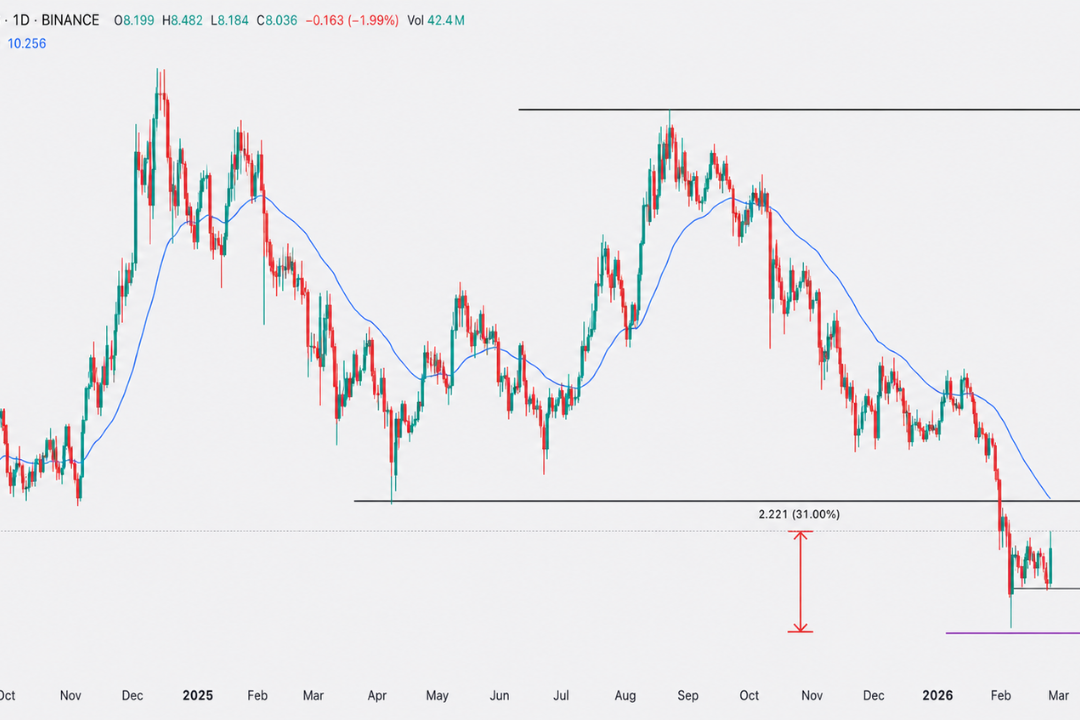
PI reached a local high near $0.296 in March 2026 as enthusiasm surrounding exchange listings and the project’s large user base fueled investor optimism. However, that momentum gradually faded as selling pressure increased and buyers failed to maintain control of the trend.
By late May, the token had already slipped to roughly $0.15 and was trading below major moving averages, signaling growing bearish momentum.
Technical Breakdown Accelerated the Selloff
For several weeks, Pi traded within a falling wedge pattern, a structure many traders were monitoring closely.
Repeated attempts to break above the $0.18–$0.20 resistance zone failed, eventually leading to a decisive breakdown below critical support between $0.129 and $0.131.
Once that support failed, PI entered price discovery on the downside and quickly fell to its new record low near $0.126.
The breakdown occurred during a broader cryptocurrency market selloff that saw:
- Bitcoin briefly fall below $62,000
- Ethereum drop under $1,800
- More than $1.6 billion in leveraged liquidations across crypto markets
Although market weakness contributed to the decline, analysts believe the primary problem lies elsewhere.
The Real Issue: Massive Token Unlocks
The biggest challenge facing Pi Network is its token release schedule.
According to PiScan data cited in the report, more than 163 million PI tokens are scheduled to enter circulation during June alone.
Key figures include:
- Over 163 million tokens unlocking in June
- More than 5 million PI entering circulation daily on average
- Nearly 16 million PI scheduled to unlock on June 11
Each unlocked token increases circulating supply and creates additional selling pressure unless new demand enters the market at an equal or greater pace.
Why Supply Matters So Much
The mathematics behind token economics are straightforward.
When supply grows faster than demand, prices generally decline.
Pi Network’s tokenomics were designed to gradually release previously locked tokens into circulation over time. However, the current market environment makes those releases particularly difficult to absorb.
The report notes that:
- Liquidity remains thin
- Investor risk appetite is weak
- New buyers are not entering fast enough
- Broader crypto markets remain under pressure
As a result, each new unlock adds weight to an already struggling market.
Why Traders Are Watching $0.10
The upcoming June 11 unlock has become a major focus for investors.
With nearly 16 million tokens scheduled to enter circulation on a single day, traders are increasingly discussing the possibility that PI could break below the psychologically important $0.10 level.
Analysts emphasize that this scenario is not merely speculative pessimism.
Rather, it reflects concerns that supply continues to expand faster than demand during one of the weakest market environments of the year.
One Positive Development: Ecosystem Growth
Despite the price decline, not everything within the Pi ecosystem is moving in a negative direction.
Recent developments include the launch of a Developer Center by CiDi Games, along with four new games designed specifically for the Pi ecosystem.
The initiative aims to:
- Attract developers
- Increase user engagement
- Encourage on-chain activity
- Create new use cases for PI
The network has also completed a mandatory protocol upgrade requiring node operators to update software to remain connected to the ecosystem.
Why Utility Matters
Long-term success for Pi Network depends on generating real demand.
The only sustainable solution to the supply problem is creating enough utility that users actively hold and spend PI rather than simply sell it.
Gaming represents one potential avenue because it can generate recurring transactions and ongoing ecosystem activity.
However, the report notes that the scale remains relatively small compared to the current supply challenge.
Four games and a developer platform may support future growth, but they are not yet generating enough activity to offset more than 163 million monthly token unlocks.
What Needs to Change?
The report separates Pi’s future into two timelines.
Near-Term Outlook
The immediate focus remains on:
- June token unlocks
- Bitcoin’s price performance
- Overall crypto market sentiment
- Support around $0.126–$0.131
A break below current support could place $0.10 firmly in focus as the next major psychological level.
Long-Term Outlook
Over the longer term, Pi’s success depends on whether ecosystem demand can eventually catch up with supply growth.
Potential catalysts include:
- More applications and games
- Increased developer participation
- Greater transaction activity
- Additional exchange listings
- Stronger real-world utility
Until those factors generate meaningful demand, token unlocks are likely to remain a major source of pressure on the market.
Final Thoughts
Pi Network’s new all-time low highlights a challenge faced by many emerging blockchain projects: adoption must eventually outpace token issuance.
The project still benefits from a large global user base and an active community. However, those strengths alone are not enough to offset the impact of massive token unlocks.
For now, the market is focused on a simple equation: supply continues rising while demand remains limited.
Until that balance changes, PI may continue struggling despite ongoing ecosystem development efforts.
The coming weeks—particularly the major unlock scheduled for June 11—could prove critical in determining whether Pi stabilizes or continues its slide toward the $0.10 level.