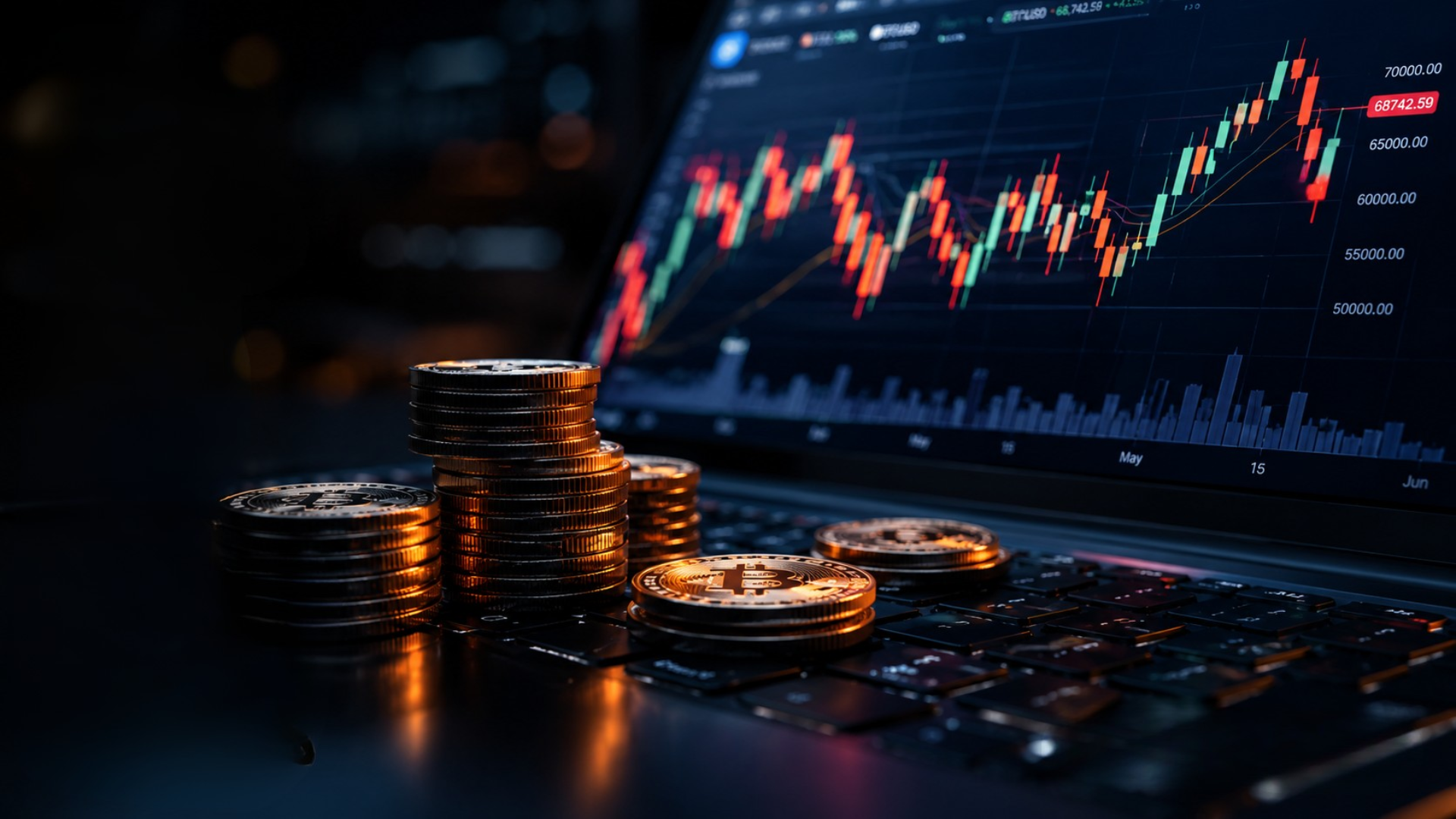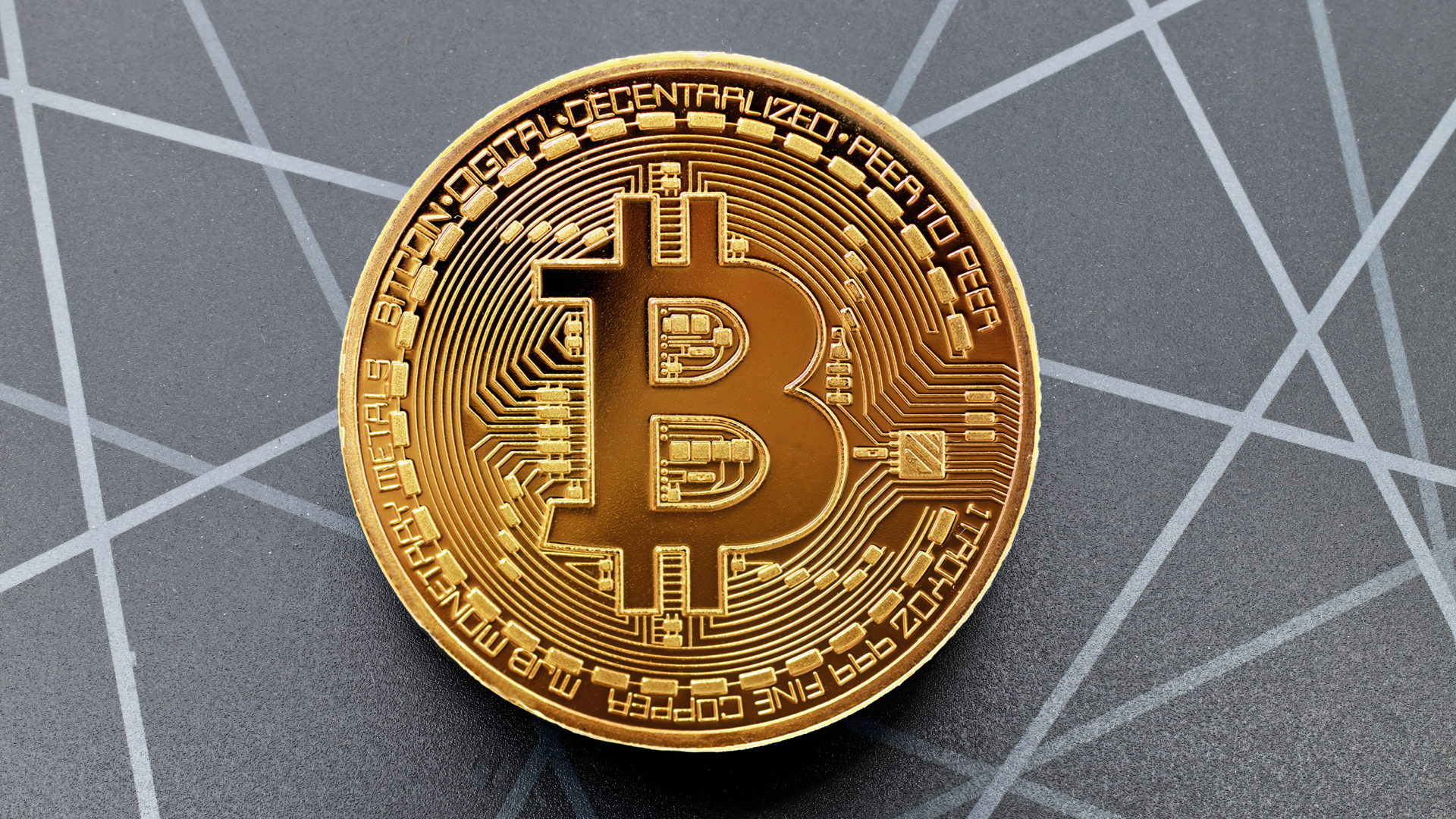


Bitcoin ETF headlines usually focus on money flowing in and out of funds. One day, hundreds of millions of dollars leave the market; the next, institutional investors are adding to their positions. But for long-term investors, there is a more practical question: how much does owning a Bitcoin ETF actually cost?
The answer goes beyond the expense ratio shown on a fund’s website. Investors also need to consider tracking error, taxes, trading spreads, and the long-term impact of fees that compound year after year. Meanwhile, buying Bitcoin directly avoids annual management fees but introduces a completely different set of risks, particularly around custody and private-key security.
With U.S. spot Bitcoin ETFs charging very different fees, even small percentage differences can turn into thousands of dollars over a long holding period.
Bitcoin ETF Fees Can Add Up Quickly
Spot Bitcoin ETFs provide an easy way to gain exposure to Bitcoin through a traditional brokerage account. However, that convenience comes at a price.
Expense ratios among U.S. spot Bitcoin ETFs vary significantly. Franklin’s EZBC charges 0.19%, while Bitwise’s BITB and VanEck’s HODL charge 0.20%. ARK 21Shares’ ARKB comes in at 0.21%, while BlackRock’s IBIT and Fidelity’s FBTC charge 0.25%.
Grayscale’s GBTC stands out at the expensive end, charging 1.50% annually. Grayscale’s Bitcoin Mini Trust, meanwhile, offers a much lower 0.15% expense ratio.
At first glance, the difference between 0.20% and 0.25% may seem almost irrelevant. Over several years, however, those small annual charges begin to compound.
And when comparing a fund charging around 0.20% with one charging 1.50%, the difference becomes much harder to ignore.
What Happens to $100,000 After 10 Years?
Consider a hypothetical $100,000 investment and assume Bitcoin’s price remains unchanged. This removes price performance from the equation and makes it easier to see the effect of fees alone.
After five years, a position in BlackRock’s IBIT at a 0.25% expense ratio would be worth about $98,756, representing roughly $1,244 lost to fees. GBTC, with its 1.50% expense ratio, would leave approximately $92,686, meaning around $7,314 would have gone toward fees.
Stretch the holding period to ten years and the difference becomes even clearer.
Under the article’s calculations, approximately $97,528 would remain in IBIT, compared with $85,907 in GBTC. That creates an $11,621 difference between the two funds despite both providing exposure to the same underlying asset.
And that example assumes Bitcoin goes nowhere.
If Bitcoin appreciates substantially, the dollar amount paid in fees also rises because the percentage fee is applied to a larger portfolio value. In other words, the better Bitcoin performs, the larger the dollar value of the management fee can become.
Tracking Error Is the Hidden Cost Investors Often Miss
The expense ratio is easy to find. Tracking error is less obvious.
Tracking error measures how closely an ETF follows the performance of its underlying benchmark. Ideally, a Bitcoin ETF charging 0.25% would trail Bitcoin by approximately that amount each year.
In reality, differences can emerge because of fund operations, cash holdings, trading spreads, custody timing, and creation and redemption activity.
According to the article’s figures, annualized tracking error among U.S. spot Bitcoin ETFs ranges from approximately 0.03% to 0.42%.
That can completely change the cost comparison.
For example, an ETF charging a 0.20% expense ratio but experiencing 0.15% tracking error could effectively prove more expensive than a fund charging 0.25% with only 0.03% tracking error.
This is why investors should not automatically assume that the ETF with the lowest advertised expense ratio is the cheapest overall.
Taxes Can Make Bitcoin ETFs More Attractive
Fees are only one part of the equation. Taxes can have an even greater impact depending on how and where an investor holds Bitcoin exposure.
Bitcoin ETF shares held in a regular taxable brokerage account are generally subject to capital gains taxes when sold, similar to directly held Bitcoin.
The ETF structure, however, can provide additional advantages.
One of the biggest benefits is access through tax-advantaged retirement accounts. Bitcoin ETFs can be held inside accounts such as IRAs and certain 401(k)s, allowing investors to potentially benefit from tax-deferred or tax-free growth depending on the account.
Holding Bitcoin directly inside retirement structures is generally more complicated and may require specialized self-directed arrangements.
As a result, an ETF’s tax and administrative advantages can sometimes outweigh its annual fee, particularly for investors using retirement accounts.
Self-Custody Avoids Fees, but It Is Not Risk-Free
Buying and holding Bitcoin directly provides one obvious financial advantage: there is no annual expense ratio.
Once an investor owns Bitcoin in a self-custodial wallet, there is no fund manager taking a percentage every year and no ETF tracking error.
But calling self-custody “free” oversimplifies the situation.
A hardware wallet may cost roughly $79 to $219 according to the article. Investors may also spend money protecting seed phrases using metal backups, secure storage, or multiple storage locations.
The bigger issue is operational risk.
If an investor permanently loses access to their private keys or seed phrase without a recovery method, their Bitcoin can become inaccessible. Unlike a traditional brokerage account, there may be no customer support department capable of restoring access.
For experienced Bitcoin users, that trade-off may be acceptable. For someone uncomfortable managing private keys, paying an ETF fee could be worth the convenience and regulated custody.
Bitcoin ETF vs. Self-Custody: Who Benefits From Each?
The choice ultimately depends on what an investor values most.
Bitcoin ETFs may make more sense for investors who want exposure through retirement accounts, institutions that require regulated custody, people who do not want to manage private keys, and traders who value the liquidity and simplicity of traditional brokerage platforms.
Self-custody may be more attractive to technically experienced, long-term holders who want to minimize recurring costs and maintain direct control over their Bitcoin.
The holding period matters as well.
For someone investing over ten or twenty years, even a relatively small annual fee has plenty of time to compound. For shorter-term investors, convenience and liquidity may matter more than a small difference in annual fees.
The Bitcoin ETF Fee War May Not Be Finished
Current Bitcoin ETF expense ratios may not stay at today’s levels forever.
Competition among BlackRock, Fidelity, Bitwise, ARK, Grayscale, and other issuers creates pressure to lower fees as funds compete for investor capital.
The article argues that there is no structural reason Bitcoin ETF fees must remain around 0.20% to 0.25%, especially as the industry becomes larger and more efficient.
If major funds eventually reduce expense ratios toward 0.10%, the long-term difference between ETF ownership and direct Bitcoin custody could become much smaller for typical retail investors.
Lower fees would also put additional pressure on expensive products such as GBTC, particularly as investors become more aware of the impact of compounding costs.
What Bitcoin ETF Investors Should Watch Next
Several developments could change the cost equation over the coming years.
One of the biggest is another round of fee reductions. If a major issuer such as BlackRock lowers IBIT’s expense ratio, competitors may respond with reductions of their own.
Tracking accuracy will also matter. Smaller funds could become more competitive if their tracking errors improve, while funds with deep liquidity may continue to justify slightly higher advertised fees through more accurate Bitcoin exposure.
Investors should also watch developments in custody solutions, tax treatment, accounting standards, and insurance products designed for self-custodied Bitcoin.
The Bottom Line
The cheapest Bitcoin ETF is not necessarily the fund with the lowest expense ratio.
A proper comparison should consider the expense ratio, tracking error, trading liquidity, taxes, account type, and holding period. For some investors, paying a small annual ETF fee is a reasonable price for regulated custody, easy tax reporting, and access through traditional investment accounts.
For others, particularly technically experienced long-term Bitcoin holders, self-custody may offer greater control while eliminating recurring management fees.
The key is to look beyond the headline percentage. A difference of a few basis points may seem insignificant today, but after years of compounding, it can translate into thousands of dollars.
Disclaimer: This article is for informational and educational purposes only and does not constitute financial, tax, or investment advice.