
The Federal Reserve could be preparing to raise interest rates in September, creating a major test for Bitcoin, Ethereum, altcoins and the broader crypto market.
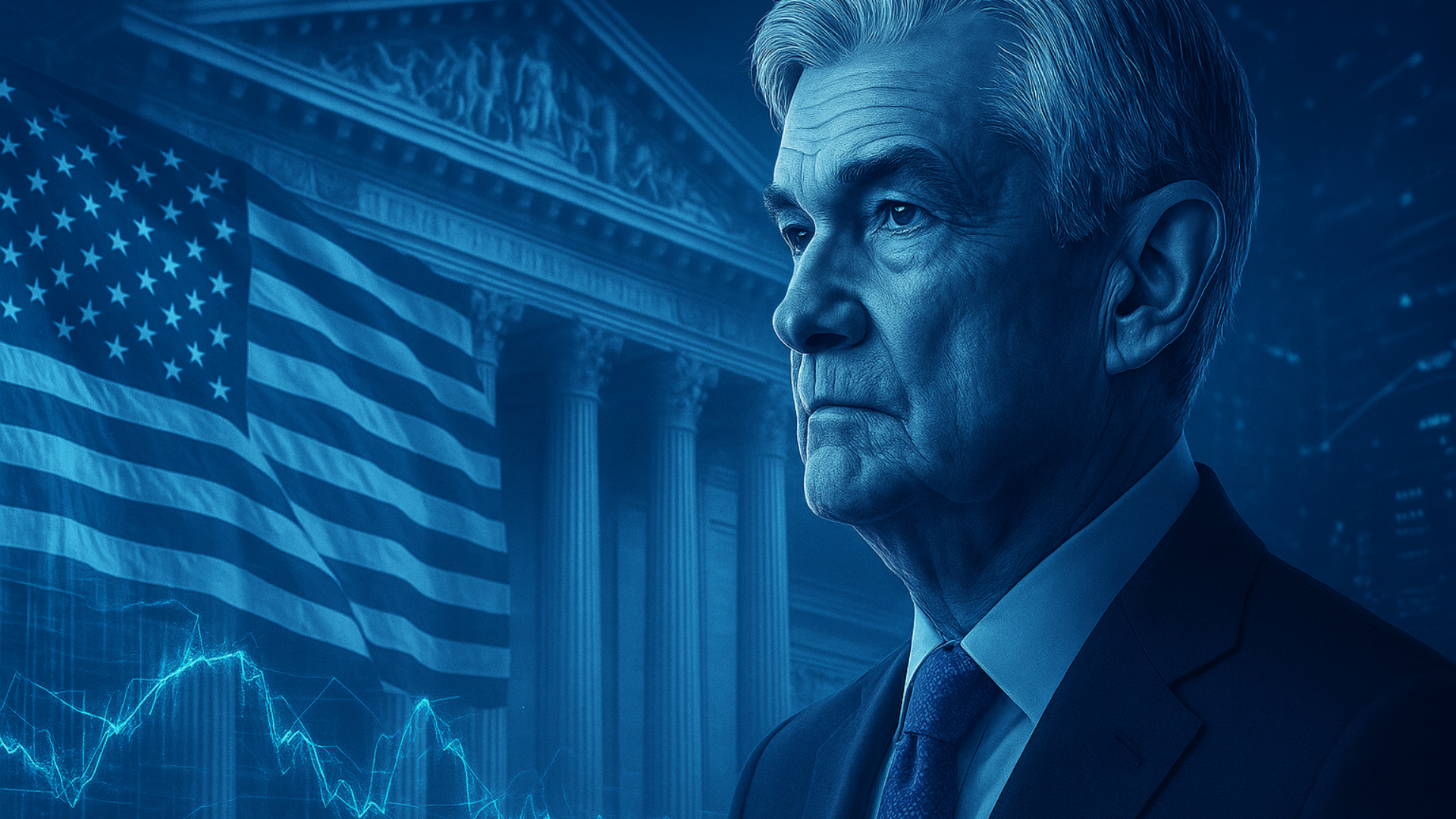
Expectations for another rate increase have risen sharply following hawkish comments from Federal Reserve Chair Kevin Warsh and renewed inflation concerns driven partly by higher energy prices.
CME FedWatch data puts the probability of a 25-basis-point rate increase at around 66%, significantly higher than the roughly 35% probability seen before Warsh’s Jackson Hole speech.
At the same time, Bitcoin is coming off an unusually strong month. BTC gained around 25% in August, while U.S. spot Bitcoin ETFs attracted approximately $3.52 billion in net inflows.
That creates an important question for investors: can growing institutional demand protect Bitcoin from tighter monetary policy, or will higher interest rates once again put pressure on crypto?
Why the Fed could raise interest rates in September
Inflation remains the central issue facing policymakers.
The Personal Consumption Expenditures price index, which is closely watched by the Federal Reserve, is running at approximately 3.7% over 12 months and 4.1% over six months.
Both figures remain well above the Fed’s long-term 2% inflation target.
Energy prices have added to the problem.
Brent crude moved above $91 per barrel in early September as renewed conflict between the United States and Iran near the Strait of Hormuz increased concerns about global oil supplies.
Higher oil prices can feed into transportation, manufacturing and consumer costs, making it more difficult for inflation to return to the Fed’s target.
Fed Chair Kevin Warsh reinforced those concerns during his Jackson Hole speech, describing the inflation situation as concerning and signaling that policymakers remain willing to act.
Markets responded quickly.
Fed rate-hike expectations jumped, while prediction markets also showed traders increasingly preparing for tighter monetary policy.
A September hike would reverse the recent Fed narrative
The federal funds rate currently stands between 3.50% and 3.75% following three rate cuts during 2025.
A September increase would therefore represent an important change in direction.
For much of 2025 and early 2026, markets were focused on when the Fed might cut rates further.
Investors are now being forced to consider a completely different question: how many times could the Fed raise rates?
That change matters because markets often react more strongly to a shift in the direction of monetary policy than to a single rate decision.
Some major financial institutions are already preparing for additional tightening.
Barclays expects rate increases in both September and December, while BNP Paribas has projected a series of hikes that could eventually push the federal funds rate back toward 4.25%–4.50% by mid-2027.
Why higher interest rates can hurt Bitcoin
The relationship between interest rates and risk assets is relatively straightforward.
When the Federal Reserve raises rates, yields on Treasury securities and other low-risk investments generally become more attractive.
Investors can therefore earn higher returns without taking as much risk.
That creates competition for assets such as stocks and cryptocurrencies.
Bitcoin doesn’t generate interest or cash flow simply from being held, so rising risk-free yields can make BTC less attractive to investors seeking returns.
Higher rates can also strengthen the U.S. dollar, tighten financial conditions and reduce speculative liquidity.
Historically, those conditions have been difficult for crypto.
During the 2022 tightening cycle, the Fed raised interest rates from approximately 0.25% to 4.50%.
Bitcoin fell roughly 77% from around $48,000 in March to approximately $15,500 by November.
Ethereum and many altcoins suffered even larger declines.
A single 25-basis-point increase in 2026 would obviously be very different from the aggressive tightening campaign of 2022.
Still, the direction of monetary policy matters.
If investors begin expecting several additional hikes, markets could start pricing in a longer period of tighter financial conditions.
Bitcoin ETFs could change the equation
There is one major difference between today’s Bitcoin market and the market that experienced the 2022 crash: spot Bitcoin ETFs.
U.S. spot Bitcoin ETFs have accumulated more than $99 billion in net assets since launching in 2024.
August 2026 was particularly strong.
The funds attracted approximately $3.52 billion in net inflows and recorded positive flows during 16 of the month’s 21 trading sessions.
That institutional demand may provide Bitcoin with a stronger structural source of buying pressure.
Large investment managers increasingly hold Bitcoin through regulated ETF products, while some portfolio strategies allocate a fixed percentage to BTC.
These portfolios can create automatic demand through rebalancing.
If Bitcoin falls below its target portfolio weighting, managers may purchase additional exposure to restore the allocation.
This type of institutional demand barely existed during Bitcoin’s previous major rate-hike cycle.
August showed how powerful ETF demand can be
Bitcoin’s August performance supports the idea that the market structure has changed.
BTC gained approximately 25% even as oil prices climbed, geopolitical tensions intensified and expectations for a September rate hike increased.
Under previous market conditions, that combination could have produced significant selling pressure.
Instead, Bitcoin rallied while ETF inflows remained strong.
That suggests institutional demand may be absorbing some of the selling pressure created by macroeconomic uncertainty.
However, there is an important limitation.
The Fed hasn’t actually raised rates yet.
The real test will come if policymakers confirm another tightening cycle.
Bitcoin ETFs cannot completely eliminate rate-hike risk
ETF demand isn’t guaranteed to continue indefinitely.
During the first half of 2026, Bitcoin ETFs experienced approximately $5.29 billion in cumulative net outflows while BTC declined from roughly $94,000 in January to around $63,000 in May.
Institutional investors therefore don’t simply buy Bitcoin regardless of market conditions.
They can sell too.
If the Fed raises rates, Treasury yields could increase and the dollar could strengthen.
That could encourage some investors to reduce risk exposure or temporarily stop allocating new capital to crypto.
Higher rates could also affect hedge funds using Bitcoin ETFs for basis trades.
These strategies often involve purchasing spot Bitcoin exposure through ETFs while simultaneously shorting futures contracts.
When Treasury yields rise, the opportunity cost of committing capital to such strategies increases, potentially making them less attractive.
That could translate into ETF outflows even if investors haven’t fundamentally changed their long-term view of Bitcoin.
Bitcoin’s digital gold narrative faces another test
A Fed rate hike could also challenge Bitcoin’s long-standing reputation as “digital gold.”
Bitcoin supporters often argue that its limited supply makes it a hedge against inflation and currency debasement.
Historical performance during periods of monetary tightening has been less convincing.
Inflation exceeded 8% during parts of 2022, yet Bitcoin still fell approximately 77% during the Fed’s aggressive tightening cycle.
Gold proved considerably more resilient.
Bitcoin also became highly correlated with technology stocks during that period, behaving more like a high-risk growth asset than a traditional safe haven.
The current geopolitical environment provides another opportunity to test that narrative.
Oil prices have climbed because of concerns surrounding the U.S.-Iran conflict and the Strait of Hormuz, while gold has also strengthened.
Bitcoin performed strongly in August, but its much higher volatility means investors may still treat it primarily as a risk asset rather than a defensive store of value.
What a Fed rate hike could mean for Ethereum
Ethereum would likely face many of the same macroeconomic pressures as Bitcoin.
Higher rates generally reduce investors’ appetite for speculative assets, while tighter liquidity can hurt crypto markets broadly.
However, Ethereum now has its own source of institutional demand through U.S. spot ETH ETFs.
Ethereum ETFs attracted approximately $697 million during the final week of August, with BlackRock’s ETHA accounting for a large portion of those inflows.
That could provide ETH with some additional support.
Still, Ethereum’s institutional ETF market remains considerably smaller than Bitcoin’s.
ETH could therefore remain more sensitive to a wider crypto market correction.
Altcoins could face even greater pressure
Altcoins would likely be more vulnerable than Bitcoin if the Fed begins another tightening cycle.
History illustrates the difference.
During the 2022 rate-hike cycle, Bitcoin fell approximately 77%.
Ethereum dropped around 82%, while Solana declined roughly 96%.
The broader altcoin market also suffered severe losses.
Most altcoins don’t have the institutional ETF demand supporting Bitcoin.
Their valuations often depend more heavily on speculative capital, momentum, narratives and venture funding.
All of those can weaken when interest rates increase.
Higher rates could also pressure crypto venture funding
The impact wouldn’t necessarily stop at token prices.
Crypto startups and DeFi protocols rely heavily on venture capital.
When Treasury yields increase, investors can earn higher returns from relatively low-risk assets.
That raises the return venture investors expect before committing money to speculative startups.
As a result, higher interest rates can make fundraising more difficult for blockchain companies.
Projects may receive smaller investments, face lower valuations or struggle to raise capital altogether.
Over time, that can slow ecosystem development and weaken demand for tokens linked to those projects.
DeFi borrowing costs could increase
Decentralized finance could also feel the effects of tighter monetary policy.
Onchain lending rates don’t move exactly alongside Federal Reserve rates, but the two markets influence each other.
If investors can earn higher returns from traditional financial products, DeFi protocols need to offer competitive yields to attract capital.
That can push borrowing costs higher.
Higher borrowing costs reduce demand for leverage and can discourage traders from taking loans to invest elsewhere in crypto.
During the 2022 tightening cycle, total value locked across major DeFi protocols dropped sharply.
Another sustained increase in interest rates could create similar pressure, even if the effect is less severe than before.
Token unlocks add another risk for altcoins
September’s token unlock calendar could make the situation more difficult for some altcoins.
Tokens including ENA, EIGEN, GUN and GPS are scheduled for additional supply releases.
SUI is also approaching another unlock while trading near an important consolidation area.
Token unlocks increase circulating supply.
Under normal conditions, markets may be able to absorb that additional supply.
But if a Fed rate increase simultaneously reduces demand for speculative assets, new token supply could create additional selling pressure.
Why Kevin Warsh’s Fed matters
The leadership of the Federal Reserve also adds uncertainty.
Kevin Warsh replaced Jerome Powell as Fed Chair in February 2026.
The market is still learning how to interpret his communication style and monetary policy approach.
Powell typically provided extensive forward guidance before major policy changes.
Warsh has so far appeared more willing to communicate concerns directly.
His Jackson Hole speech highlighted elevated inflation without offering the same level of reassurance investors had become accustomed to under Powell.
Markets reacted quickly, pushing September hike expectations significantly higher.
That means incoming economic data could have an unusually large impact on crypto and other risk assets.
CPI could decide the September rate decision
The August Consumer Price Index release on Sept. 10 will be one of the most important events before the Fed meeting.
A hotter-than-expected inflation reading would strengthen the argument for another rate increase.
A surprisingly weak inflation report could do the opposite.
Weekly jobless claims on Sept. 11 will also matter.
If unemployment indicators begin showing meaningful weakness, policymakers could have more justification to keep rates unchanged.
But persistent inflation combined with a resilient labor market would make tightening easier to justify.
Key Bitcoin levels ahead of the Fed meeting
Bitcoin’s price action could become increasingly sensitive as the Sept. 15–16 Federal Open Market Committee meeting approaches.
The $75,000 area represents an important downside support region.
On the upside, BTC faces significant resistance between approximately $82,000 and $86,000.
A strong breakout above $86,000 following favorable inflation data could potentially put the previous $94,000 region back into focus.
Conversely, a hawkish Fed decision combined with a break below $75,000 could increase the risk of a deeper correction toward the May lows.
Leverage makes both scenarios more volatile.
Bitcoin perpetual futures open interest increased during August as prices climbed, while positive funding rates indicate that traders remain positioned heavily toward the long side.
If the market suddenly moves lower, forced liquidations could accelerate the decline.
Does institutional demand change Bitcoin’s rate-hike playbook?
The answer appears to be yes, but only partially.
Spot Bitcoin ETFs have created a source of institutional demand that didn’t exist during previous tightening cycles.
That demand could make Bitcoin more resilient and potentially provide stronger support during corrections.
But ETFs don’t make Bitcoin immune to macroeconomic conditions.
Institutional investors still respond to interest rates, Treasury yields, portfolio risk and expected returns.
If monetary policy becomes meaningfully tighter, ETF flows could slow or reverse.
Bitcoin may therefore be better positioned to withstand a Fed rate increase than it was in 2022, but it hasn’t escaped the fundamental relationship between liquidity, interest rates and risk appetite.
What crypto investors should watch next
The Sept. 10 CPI report will provide the clearest indication of whether inflation is cooling enough for the Fed to wait.
Jobless claims on Sept. 11 will provide another signal about the strength of the labor market.
Bitcoin and Ethereum ETF flows will show whether institutional investors continue buying as rate-hike expectations rise.
Oil prices will also remain important. Any escalation around the Strait of Hormuz could push energy costs higher and strengthen the Fed’s case for tighter monetary policy.
Finally, Bitcoin’s reaction to the $82,000–$86,000 resistance region could reveal whether buyers remain willing to take risk ahead of the Fed decision.
The September meeting could therefore become one of the most important macro events for crypto in 2026.
ETF demand has changed Bitcoin’s market structure, but the Federal Reserve still has enormous influence over global liquidity.
If rates rise, Bitcoin, Ethereum, DeFi and altcoins will face a major test of just how much the crypto market has matured since the last tightening cycle.