

Ethereum Foundation researcher Justin Drake has warned that rapid advances in artificial intelligence could eventually threaten the cryptographic systems protecting Bitcoin, Ethereum, and other cryptocurrency wallets. However, experts emphasize that no successful AI-powered attack against these systems has been demonstrated.
Artificial intelligence is creating new possibilities across the technology industry, but its growing mathematical capabilities are also raising concerns about cryptocurrency security.
On October 7, 2026, Ethereum Foundation researcher Justin Drake warned that AI-assisted mathematical discoveries could potentially weaken the encryption-related cryptographic techniques used to secure digital wallets.
Drake suggested that the industry should begin preparing for a worst-case scenario in which attackers discover an efficient way to recover private keys from publicly available information.
Although such an attack remains theoretical, his warning has started a broader discussion about whether cryptocurrency networks should accelerate their transition toward more resilient security systems.
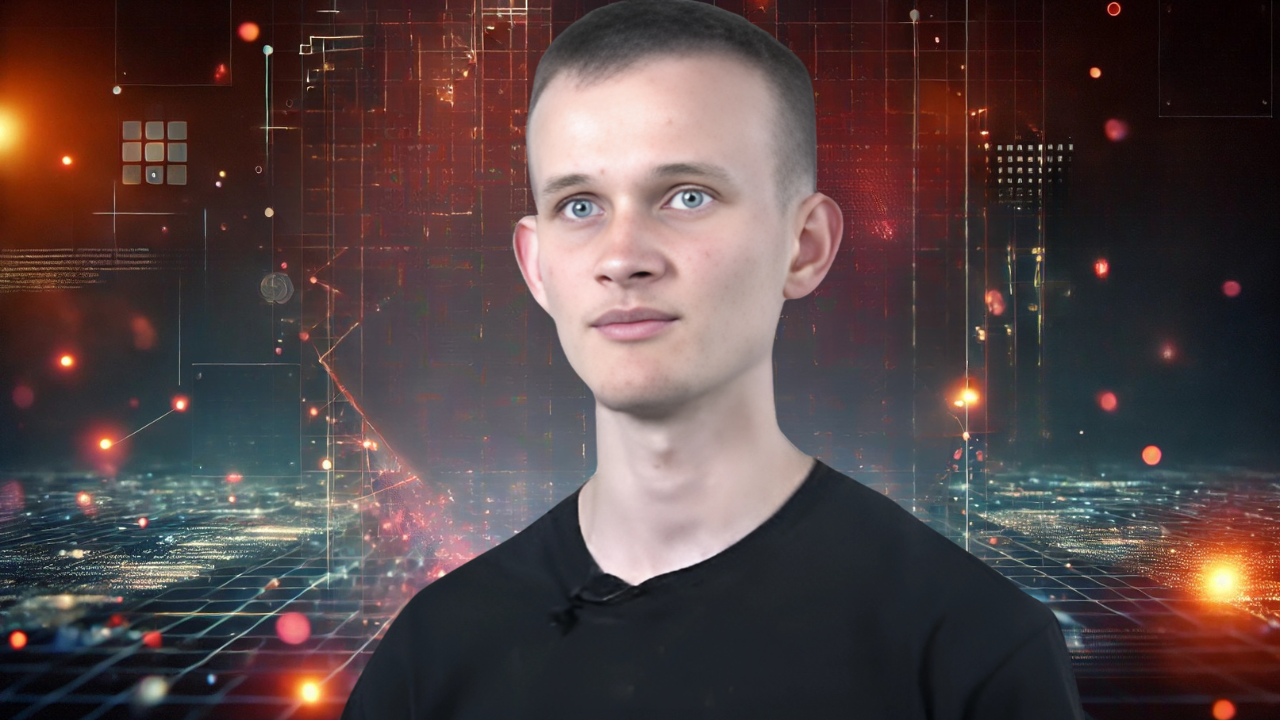
Ethereum co-founder Vitalik Buterin has also acknowledged the potential risks while advising cryptocurrency holders not to make rushed decisions.
Ethereum Researcher Raises Concerns About AI and Crypto Wallet Security
Justin Drake shared his concerns in an October 7 post on X, urging the cryptocurrency industry to begin preparing for possible breakthroughs in AI-assisted cryptographic research.
His warning focused on the Elliptic Curve Digital Signature Algorithm (ECDSA), a widely used cryptographic system that helps protect cryptocurrency transactions.
ECDSA allows users to authorize transactions with private keys while enabling blockchain networks to verify signatures using corresponding public keys.
Under current security assumptions, recovering a private key from its public key is considered computationally infeasible using known classical algorithms and available computing resources.
However, Drake believes rapid improvements in AI-assisted mathematics could potentially challenge those assumptions.
He described a worst-case scenario in which an attacker could recover a cryptocurrency private key from a public key within approximately one week using powerful computing equipment, such as a large GPU cluster.
Drake suggested that such a breakthrough might emerge within months rather than years.
Importantly, this prediction represents a speculative security scenario, not evidence that cryptocurrency wallets have already been compromised.
No publicly demonstrated AI-powered attack has established the ability to break ECDSA in the manner Drake described.
Why Exposed Public Keys Could Become a Security Risk
Understanding Drake’s warning requires a closer look at how cryptocurrency wallets protect digital assets.
Most conventional cryptocurrency wallets use a combination of public and private keys.
The private key allows the wallet owner to authorize transactions, while the public key enables others to verify that a transaction was properly signed.
A wallet’s security depends on the practical difficulty of calculating the private key from publicly available information.
Ethereum’s official documentation explains that standard externally owned accounts which have only received funds without sending transactions generally have not exposed their public keys directly on the blockchain.
Once an account signs and broadcasts a transaction, its public key can be recovered from the signature.
If a future mathematical breakthrough makes it practical to calculate private keys from exposed public keys, funds controlled by those keys could become vulnerable.
For this reason, Drake suggested that cryptocurrency holders consider reducing unnecessary exposure of public keys.
One possible precaution involves transferring remaining assets to fresh, unused addresses after signing transactions.
However, creating a new address using the same seed phrase does not automatically provide protection against every possible future attack. Such precautions also do not replace the need for stronger cryptographic systems.
Any wallet migration must be carefully planned to avoid unnecessary financial losses.
Justin Drake Suggests Preparing Crypto Wallets Without Panic
Despite his concerns, Drake did not recommend an immediate mass movement of cryptocurrency holdings.
Instead, he encouraged a measured approach to preparing for possible future security developments.
His proposed strategy involves gradually moving funds to fresh addresses whose public keys have not previously been exposed.
Large cryptocurrency holders, exchanges, and institutional custodians could take an early role in assessing their exposure.
Drake also highlighted the importance of reviewing cold-storage arrangements, particularly those used to protect large amounts of cryptocurrency.
Among the companies he mentioned were Binance, Bitbank, Robinhood, Bitfinex, and Tether.
The goal would be to identify wallet structures that could become vulnerable if advances in mathematics made currently secure cryptographic assumptions unreliable.
However, unnecessary wallet transfers can introduce risks of their own.
Sending cryptocurrency to incorrect addresses, mishandling recovery phrases, or interacting with fraudulent wallet tools can cause permanent losses.
For this reason, both developers and investors are being encouraged to approach potential security upgrades cautiously.
Bitcoin Wallets Could Face Similar Cryptographic Challenges
The discussion is not limited to Ethereum.
Bitcoin also uses elliptic-curve cryptography to secure transaction signatures, meaning a practical attack against the underlying mathematical assumptions could have implications for its network.
However, different Bitcoin address types expose public-key information in different ways.
Some older address formats reveal public keys directly, while others may expose them when funds are spent.
Taproot outputs also contain public-key information that is visible on the blockchain.
This distinction matters because simply avoiding address reuse does not provide the same protection across every Bitcoin address type.
Project Eleven, a research initiative examining cryptocurrency exposure to future cryptographic threats, has been tracking Bitcoin addresses that may be vulnerable under certain attack scenarios.
In its September 14 update, the project’s Bitcoin Risq List identified more than 8.1 million BTC associated with addresses it classified as quantum-vulnerable.
That figure does not mean these Bitcoins can currently be stolen.
Rather, it reflects the amount of Bitcoin associated with public-key exposure patterns that could become important if a practical cryptographic attack emerges.
The findings highlight why wallet architecture and long-term security planning are becoming increasingly important topics for cryptocurrency developers.
Vitalik Buterin Advises Against Rushing Wallet Migrations
Ethereum co-founder Vitalik Buterin responded to the discussion by acknowledging that AI-driven mathematical progress deserves serious attention.
However, he cautioned users against immediately transferring their cryptocurrency holdings out of fear.
Buterin emphasized that a poorly executed migration could create security problems even when the original cryptographic system remains secure.
He also suggested that cryptocurrency developers should examine the long-term resilience of different cryptographic approaches.
His concerns extend beyond elliptic-curve systems.
Buterin noted that AI-assisted mathematical discoveries could also influence the security assumptions behind certain lattice-based cryptographic methods.
Lattice-based cryptography plays an important role in several proposed post-quantum security systems.
Although these methods are designed to resist known quantum attacks, researchers must continue evaluating their mathematical foundations as technology develops.
Buterin has expressed interest in hash-based cryptographic approaches where practical, alongside conservative security parameters for other systems.
For ordinary cryptocurrency holders, the main message remains one of preparation rather than panic.
There is currently no demonstrated need for users to urgently abandon their existing Ethereum wallets because of an AI-powered ECDSA attack.
OpenAI’s Mathematical Research Sparks New Security Questions
Drake’s warning followed new developments in artificial intelligence research.
On October 6, OpenAI published mathematical research generated using an internal frontier AI model.
The release demonstrated progress in AI-assisted mathematical problem-solving and included supporting research materials intended for further examination.
Such developments have encouraged discussion about how AI could accelerate discoveries in fields that traditionally require substantial human mathematical expertise.
Drake connected these advances to the possibility that AI systems might eventually identify previously unknown weaknesses in cryptographic algorithms.
However, OpenAI’s mathematical research announcement did not demonstrate an attack against ECDSA, RSA, or cryptocurrency wallets.
The published mathematical results are also at different stages of verification.
This distinction is important because advances in general mathematical reasoning do not automatically translate into practical methods for breaking cryptocurrency security.
For now, the idea that AI could independently discover an efficient classical attack against widely used elliptic-curve cryptography remains speculative.
Nevertheless, the discussion demonstrates why some blockchain researchers are reevaluating long-term security assumptions.
Ethereum Is Already Developing Quantum-Resistant Security
Ethereum has been preparing for future cryptographic threats independently of the latest AI-related concerns.
In January 2026, the Ethereum Foundation established a dedicated Post-Quantum Security team to research and develop stronger security infrastructure.
The initiative focuses on protecting Ethereum against future computing capabilities that could compromise existing cryptographic systems.
Current research includes alternatives to conventional transaction signatures, improvements to validator security, and new methods for maintaining blockchain efficiency.
One major development involves leanXMSS, a hash-based signature system intended to replace quantum-vulnerable validator signatures.
Ethereum is also developing leanVM, a system designed to help process and aggregate larger post-quantum signatures more efficiently.
These technologies aim to strengthen security while maintaining the performance requirements of a decentralized blockchain.
Ethereum’s roadmap targets core post-quantum infrastructure development around 2029.
However, that date remains a planning target rather than a guaranteed completion deadline.
Ethereum’s EIP-8141 Could Improve Wallet Security
Another important part of Ethereum’s long-term security strategy involves EIP-8141.
The proposal is designed to introduce greater flexibility in how Ethereum accounts authorize transactions.
Instead of relying permanently on one signature method, compatible accounts could eventually adopt alternative authentication systems.
This flexibility could allow users to move toward quantum-resistant security without necessarily transferring all their assets to entirely new wallet addresses.
EIP-8141 is being considered for Ethereum’s planned Hegotá upgrade, targeted for 2027.
However, its inclusion and implementation details remain subject to the network’s development and governance process.
The proposal could become an important step toward making Ethereum more adaptable to future cryptographic threats.
Post-Quantum Cryptography Could Shape the Future of Digital Wallets
The broader technology industry is also developing cryptographic methods designed to withstand future quantum computing attacks.
In 2024, the U.S. National Institute of Standards and Technology (NIST) finalized several post-quantum cryptography standards.
Among them was FIPS 205, which specifies SLH-DSA, a hash-based digital signature algorithm derived from SPHINCS+.
Unlike conventional elliptic-curve signatures, hash-based signature systems rely on different mathematical foundations.
These methods are being considered as part of the transition toward long-term digital security.
However, post-quantum cryptography involves important engineering trade-offs.
Some alternative signature systems require more storage space, larger signatures, or additional computational resources.
For blockchain networks processing large numbers of transactions, these differences can create technical challenges.
Ethereum’s research efforts therefore focus on achieving stronger security without sacrificing network efficiency or usability.
Crypto Custody Providers Explore Stronger Wallet Protection
Institutional cryptocurrency custody providers are also evaluating new approaches to digital asset security.
BitGo has tested post-quantum multiparty computation (MPC) wallet signing technology in collaboration with Silence Laboratories.
Meanwhile, Coinbase has been examining custody infrastructure designed to adapt to future cryptographic standards.
Such developments reflect the increasing importance of protecting cryptocurrency holdings against long-term technological threats.
Institutional custodians often manage substantial digital asset balances, making security upgrades particularly important.
However, adopting new cryptographic systems requires extensive testing, regulatory consideration, and careful operational planning.
Security improvements must also account for existing blockchain protocols, hardware wallets, custody arrangements, and recovery procedures.
The transition toward stronger cryptographic protection is therefore expected to involve multiple stages rather than a single industry-wide change.
Should Crypto Investors Be Worried About AI Hacking Their Wallets?
Despite the attention surrounding Drake’s comments, there is currently no verified evidence that AI can recover private keys from properly generated ECDSA public keys using an efficient practical attack.
Ethereum’s official security documentation also states that existing quantum computers cannot currently break the cryptographic systems protecting the network.
However, the discussion highlights why long-term planning remains important.
Cryptocurrency investors can reduce common security risks by following established wallet protection practices.
These include:
- Keeping wallet recovery phrases and private keys confidential.
- Using reputable hardware wallets for significant holdings.
- Avoiding suspicious wallet migration websites and unsolicited security warnings.
- Keeping wallet applications and firmware updated.
- Reviewing official wallet-provider guidance before making major security changes.
- Avoiding unnecessary address reuse where appropriate for the relevant blockchain.
Users should also be cautious of scams that exploit concerns about AI or quantum computing to encourage urgent transfers.
A legitimate security upgrade should be supported by clear technical documentation and trusted wallet-provider instructions.
Moving funds in response to unverified social media claims can be more dangerous than the theoretical threat being discussed.
What Comes Next for Ethereum and Crypto Wallet Security?
The debate surrounding AI-assisted cryptography is likely to remain important as artificial intelligence becomes more capable of mathematical reasoning.
For Ethereum, the focus is already shifting toward creating a blockchain that can adapt to new security requirements.
The network’s post-quantum roadmap, ongoing signature research, and account abstraction proposals are intended to support that transition.
Meanwhile, institutional custody providers and security researchers are continuing to investigate ways to protect digital assets against future threats.
Justin Drake is also scheduled to discuss Ethereum’s post-quantum security plans at the Ethereum Institutional Forum in London on November 12.
The event is expected to provide further insight into the network’s technical preparations and long-term security priorities.
Final Thoughts
Justin Drake’s warning has brought renewed attention to the relationship between artificial intelligence, cryptography, and cryptocurrency wallet security.
While AI-powered mathematical breakthroughs could eventually challenge existing security assumptions, no practical attack capable of breaking standard cryptocurrency wallet signatures has been publicly demonstrated.
Vitalik Buterin’s response highlights the importance of balancing preparation with caution.
Ethereum’s ongoing post-quantum development efforts show that blockchain researchers are already working to address future security challenges.
For cryptocurrency holders, the key takeaway is simple: stay informed, follow reliable security practices, and avoid making rushed wallet transfers based on hypothetical threats.
The future of digital asset security will depend not only on advances in artificial intelligence but also on how effectively blockchain networks adapt to emerging technological risks.