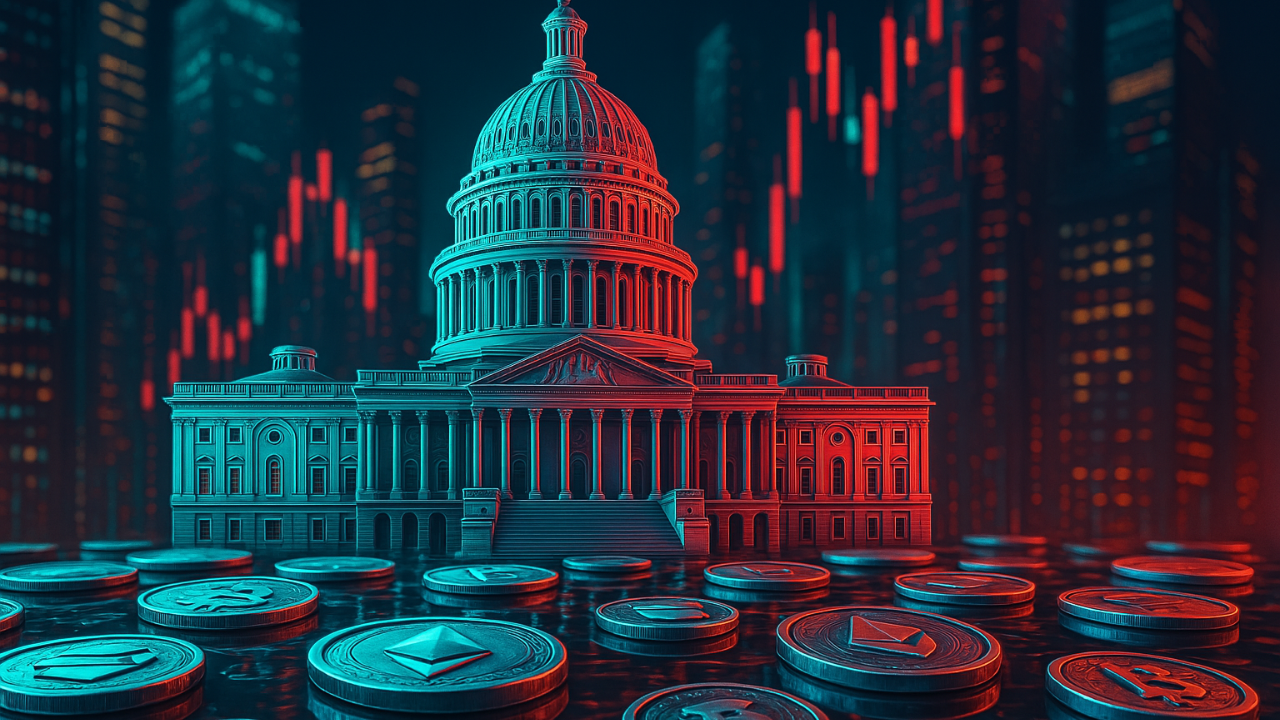


Coinbase has filed a formal amicus brief with the U.S. Supreme Court, challenging what it calls an unconstitutional data sweep conducted by the Internal Revenue Service (IRS). The filing, submitted on April 30, comes in support of James Harper, a Bitcoin researcher who is suing the IRS over its controversial 2016 demand for customer information from the exchange.
The case, Harper vs IRS, questions the agency’s reliance on the third-party doctrine a legal principle that argues individuals surrender privacy rights when voluntarily sharing data with third parties, such as crypto exchanges. Coinbase is urging the nation’s highest court to reconsider this doctrine, calling it outdated and ill-suited for the digital age, particularly in the context of blockchain technology and decentralized finance.
Coinbase Pushes Back on IRS Powers
In its brief, Coinbase argues that the IRS’s actions in 2016 when it demanded transaction and identity data from 14,355 Coinbase users amounted to an unprecedented and unlawful dragnet. The exchange maintains that such bulk data requests lacked individualized suspicion and ignored fundamental privacy rights.
“The John Doe summons that Coinbase resisted and that led to the government’s acquisition of Harper’s personal and financial information was not only unlawful. It was unprecedented in its sweep,” Coinbase wrote.
Rather than functioning as custodians like traditional banks, Coinbase asserts that crypto platforms operate more like tech intermediaries, and therefore the same investigative rules should not apply. The brief further suggests that probable cause or particularized suspicion should be required before the IRS can demand access to user data.
The Stakes: A Defining Moment for Crypto Privacy
The Supreme Court’s decision in this case could dramatically reshape the boundaries of digital privacy and redefine the government’s surveillance powers in the crypto sector. A ruling against the IRS would limit its ability to collect bulk user data without individualized cause, setting a powerful precedent for future privacy-related cases involving emerging technologies.
This comes at a critical time as the federal government ramps up efforts to monitor crypto activity amid concerns over tax evasion, illicit finance, and regulatory compliance. Coinbase’s involvement highlights the growing tension between regulators and the crypto industry over how far oversight should extend.
Industry-Wide Implications
A ruling in favor of Harper could ripple across the broader digital asset ecosystem, providing stronger legal protection for users and potentially forcing agencies to adapt investigative methods to account for evolving technologies.
Coinbase has positioned itself at the forefront of crypto advocacy in the U.S., frequently pushing for regulatory clarity, constitutional protections, and policy modernization. The exchange has previously called for fairer staking rules and more transparent SEC oversight.
As the Harper case awaits Supreme Court review, Coinbase’s brief adds momentum to a growing call within the industry for more robust digital rights in an increasingly surveilled financial landscape.