
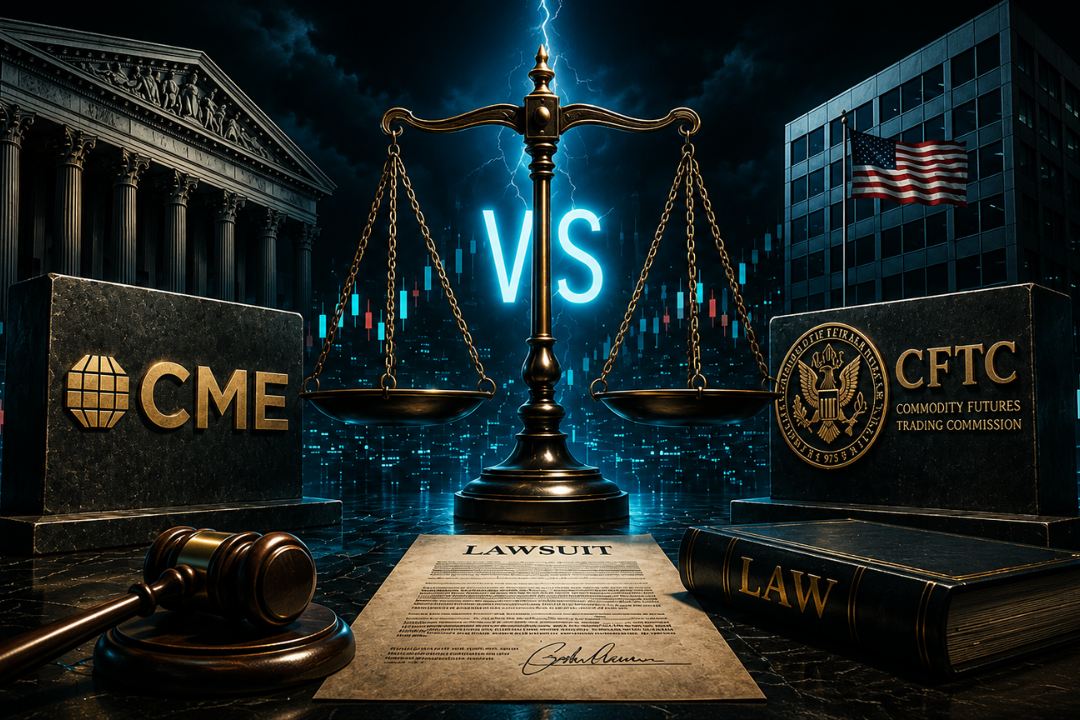
A major legal battle is unfolding in the United States that could determine the future of cryptocurrency derivatives trading for years to come.
The dispute centers on a seemingly simple question: Is a perpetual futures contract legally a futures contract or a swap?
While the distinction may sound technical, the answer could decide who controls the fastest-growing segment of the crypto derivatives market, which companies can offer these products, and whether U.S. traders gain broad access to regulated perpetual futures.
At the center of the fight are two powerful institutions: CME Group, the largest derivatives exchange in the United States, and the Commodity Futures Trading Commission (CFTC), the federal regulator responsible for overseeing futures markets.
How the Dispute Began
The controversy began after the CFTC approved a Bitcoin perpetual futures product offered by Kalshi, a regulated prediction-market platform.
The approval marked a significant milestone because perpetual futures, commonly known as “perps,” had largely remained unavailable through regulated U.S. venues for years. Instead, traders typically accessed these products through offshore exchanges operating outside U.S. regulatory oversight.
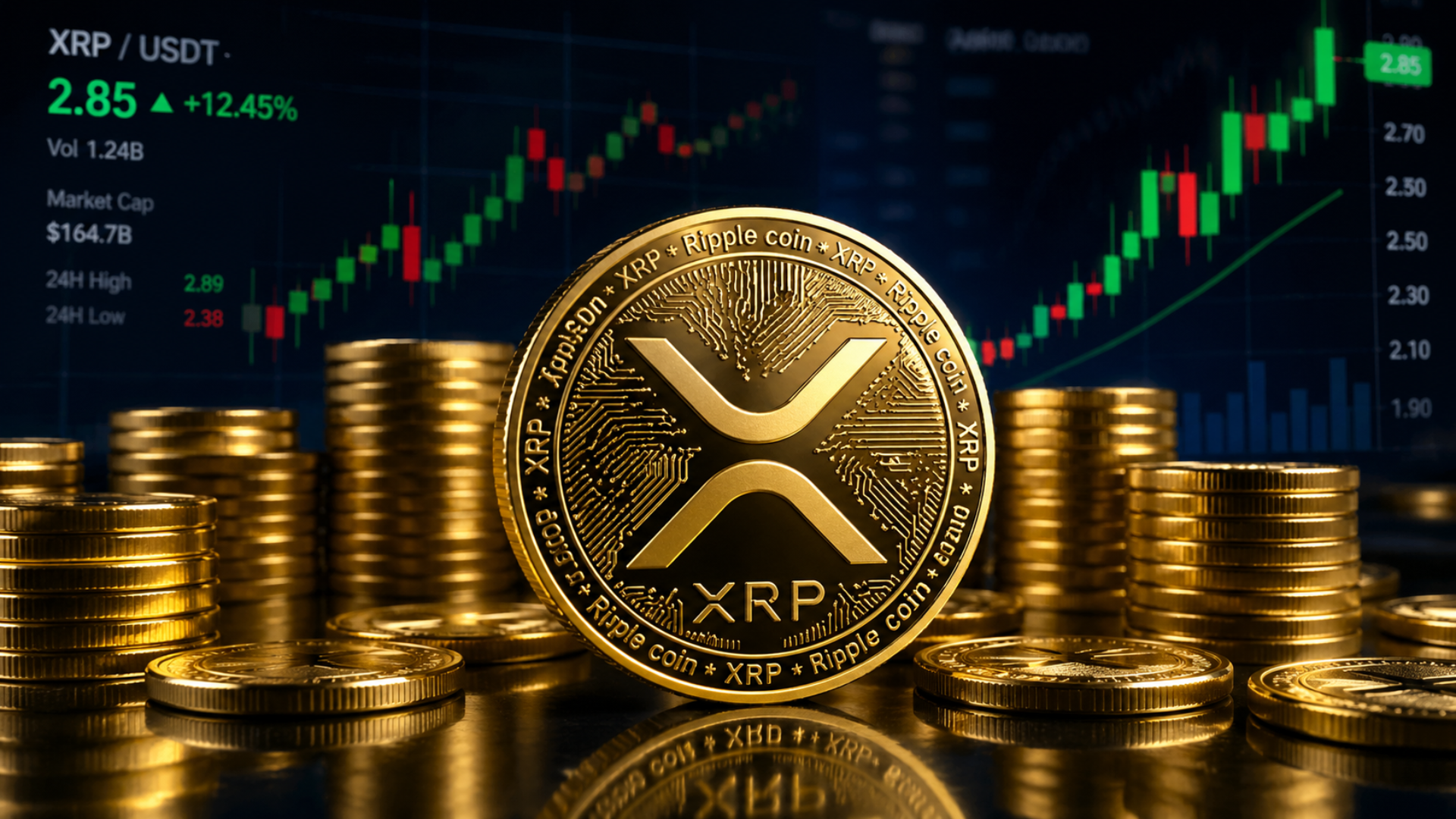
Once approval was granted, Kalshi quickly expanded its offering to include perpetual contracts tied to additional digital assets such as Ethereum and XRP.
The response from traders was immediate.
Reports indicate that the platform generated billions of dollars in trading volume within weeks, demonstrating strong demand for regulated perpetual futures products.
The rapid success attracted attention across the industry—and concern from established market participants.
Why CME Decided to Sue
Rather than launching a competing product immediately, CME chose a different route: litigation.
The exchange argues that the CFTC improperly classified perpetual futures as standard futures contracts.
According to CME, perpetual contracts should instead fall under the legal category of swaps, which are governed by a different regulatory framework established under the Dodd-Frank Act following the 2008 financial crisis.
This distinction matters because swaps and futures operate under separate sets of rules.
If perpetual contracts are classified as swaps, they could face additional regulatory requirements, potentially making them more difficult and expensive to bring to market.
If they remain classified as futures, exchanges may have a faster and more straightforward path to listing them.
For CME, the classification decision has enormous competitive implications.
The Legal Question at the Center of the Case
The core issue is whether a perpetual contract can legally qualify as a futures contract despite lacking an expiration date.
Traditional futures contracts have a defined settlement date.
Perpetual futures do not.
Instead, they remain open indefinitely and rely on periodic funding payments to keep prices aligned with the underlying asset.
CME argues that this structure makes perpetual contracts fundamentally different from traditional futures and more closely aligned with swaps.
The CFTC disagrees.
The regulator maintains that U.S. law does not require a futures contract to have a fixed expiration date.
According to the agency, existing statutes, court rulings, and regulatory interpretations provide sufficient flexibility to classify perpetual futures as futures contracts.
The outcome of this debate will determine which regulatory framework governs one of crypto’s most popular trading instruments.
Why the Stakes Are So High
The fight is about much more than legal definitions.
Perpetual futures represent the largest segment of crypto trading worldwide.
For years, the majority of this activity occurred on offshore platforms because U.S. traders lacked access to regulated alternatives.
Bringing perpetual futures onshore creates a massive business opportunity.
If the futures classification remains intact:
- More exchanges can offer regulated perps.
- Competition increases.
- U.S. traders gain broader access.
- Trading volume shifts toward regulated venues.
If the swaps classification prevails:
- Listing requirements become more complex.
- Market entry becomes more difficult.
- Larger incumbents gain an advantage.
- Fewer platforms may be able to compete.
In many ways, the lawsuit is a battle over who gets to dominate the future U.S. crypto derivatives market.
The CFTC’s Defense
The CFTC has publicly defended its position.
Regulators argue that perpetual futures already fit within existing futures laws and that concerns about the products are overstated.
One common criticism involves leverage.
Offshore perpetual futures platforms often allow extremely high leverage levels, sometimes exceeding 100x.
The CFTC notes that regulated U.S. perpetual futures would be subject to the same leverage restrictions applied to other regulated futures products.
As a result, the regulator argues that U.S.-based perpetual futures are structurally safer than their offshore counterparts.
The agency has also defended funding rates, explaining that they serve a similar economic purpose to rolling traditional futures contracts forward over time.
From the CFTC’s perspective, perpetual futures are simply an evolution of existing futures products rather than an entirely separate category.
What This Means for Crypto Traders
For everyday traders, the lawsuit has direct consequences.
If CME Wins
A ruling that classifies perpetual contracts as swaps could:
- Reduce the number of regulated offerings.
- Slow innovation.
- Increase compliance costs.
- Keep more trading activity offshore.
If the CFTC Wins
A futures classification could:
- Expand access to regulated perpetual futures.
- Increase competition among exchanges.
- Encourage innovation.
- Bring more crypto derivatives activity into regulated U.S. markets.
The decision may ultimately influence where traders choose to execute their positions and how much regulatory protection they receive.
Offshore Exchanges Are Watching Closely
Although the lawsuit involves American institutions, the implications are global.
For years, offshore exchanges dominated the perpetual futures market due to the absence of regulated U.S. alternatives.
A favorable ruling for the CFTC could encourage more trading activity to migrate toward regulated American platforms.
Conversely, a victory for CME could preserve the competitive advantage that offshore exchanges have enjoyed for much of the past decade.
As a result, major crypto trading firms and international exchanges are closely monitoring the case.
A Defining Moment for Crypto Regulation
The timing of the lawsuit is particularly significant.
The CFTC is expected to play an increasingly important role in regulating digital asset markets as lawmakers continue developing comprehensive crypto legislation.
Because of this, the court’s decision may extend beyond perpetual futures.
The outcome could establish important legal precedents for how future crypto derivatives are classified, regulated, and brought to market.
In effect, the case may help define the boundaries of the CFTC’s authority in the next phase of cryptocurrency regulation.
The Bottom Line
The CME versus CFTC lawsuit is about far more than a technical legal classification.
At stake is the future of crypto perpetual futures in the United States, a market that represents the largest and most actively traded segment of the global cryptocurrency ecosystem.
If perpetual futures are classified as futures contracts, the door opens for greater competition, broader market access, and faster growth of regulated crypto derivatives.
If they are classified as swaps, the path becomes narrower, potentially favoring established incumbents and limiting new entrants.
Ultimately, the case will answer a question that regulators, exchanges, and traders have debated for years: What exactly is a perpetual futures contract under U.S. law?
The answer could shape the future of crypto trading for an entire generation of investors.
Disclaimer: This article is for informational purposes only and should not be considered legal, financial, or investment advice. Regulatory developments are ongoing, and readers should consult official sources for the latest updates.