

Stablecoins are no longer an experimental corner of crypto. They are already systemically relevant financial infrastructure.
Last year alone, stablecoins processed an estimated $46 trillion in transaction volume, rivaling the scale of the U.S. ACH network. At the same time, issuers have become some of the largest indirect buyers of U.S. government debt, holding vast amounts of Treasury bills as reserves.
Despite years of regulatory uncertainty, limited institutional access, and fragmented banking support, stablecoin supply has grown from $28 billion in 2020 to nearly $300 billion today. Those headwinds are now turning into tailwinds.
On current trajectories, a $7 trillion to $10 trillion stablecoin economy within the next decade is no longer a bold prediction it is a plausible base case.
Payments giants and corporates are moving in
The shift is already visible.
When Western Union integrates stablecoins into its payment flows — alongside issuances from PayPal and **Ripple the trillions come from
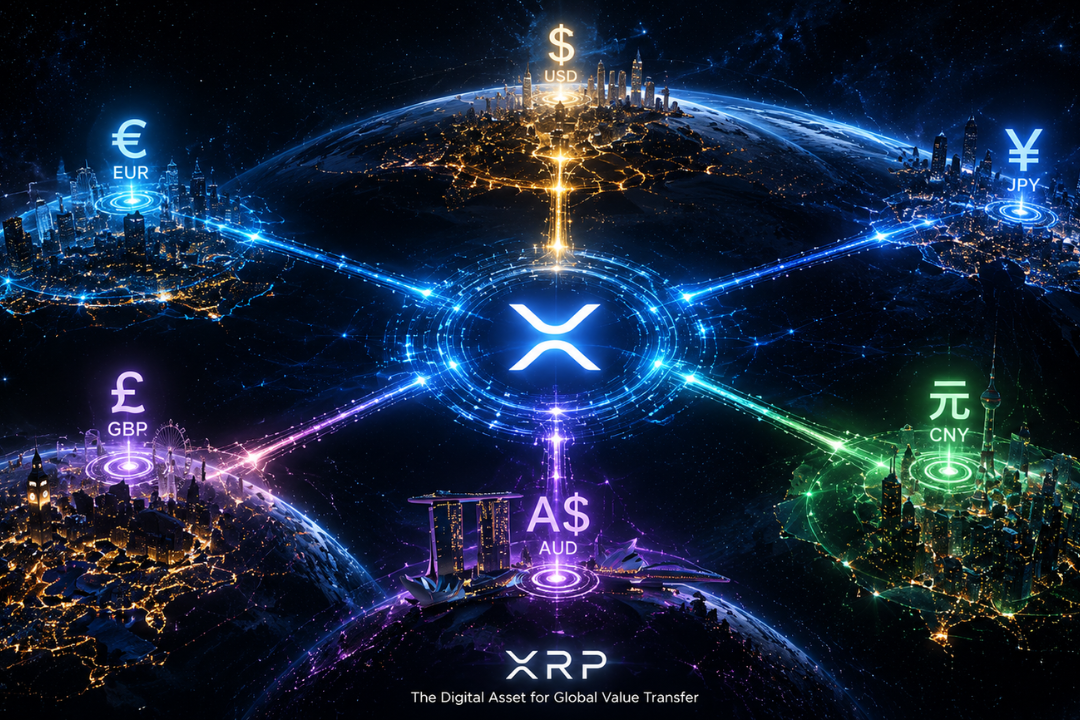
Cross-border payments and remittances
The global cross-border payments market handles over $40 trillion in annual volume while generating roughly $200 billion in revenue largely from fees.
Yet, sending a $200 transfer still costs over 6% on average and can take days to settle.
Stablecoins offer near-instant settlement at fees often below 1%. If stablecoins capture just 30% of cross-border settlement flows, the required liquidity float alone could amount to $500 billion to $1 trillion.
Emerging market dollarization
According to projections from Standard Chartered, as much as $1 trillion in emerging-market bank deposits could migrate to stablecoins within three years.
Out of roughly $10 trillion in vulnerable global savings, even a 10–15% shift toward stablecoins would generate $1–1.5 trillion in additional demand.
For millions, stablecoins are not an investment they are digital access to dollar stability.
Corporate treasury management
Global corporations hold more than $8 trillion in cash, with over $4 trillion in the U.S. alone.
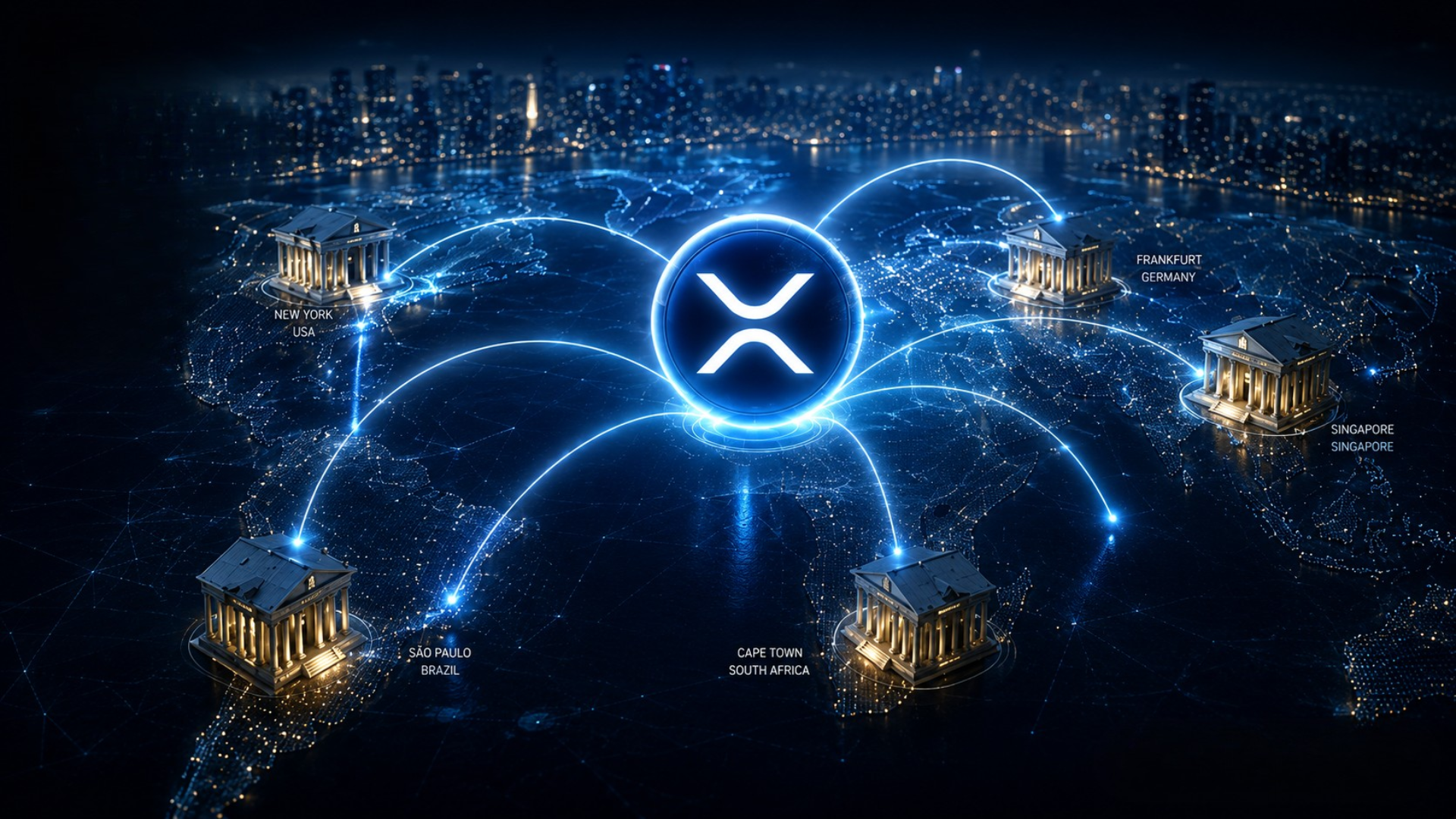
In a world shaped by tariffs, interest-rate volatility, and geopolitical risk, treasury efficiency matters. A multinational can now move stablecoins between subsidiaries in Singapore, São Paulo, and San Francisco in seconds, bypassing correspondent banks entirely.
If just 5–10% of corporate cash migrates onto stablecoin rails, that represents $1–2 trillion in potential demand.
Money market fund substitution
U.S. money market funds have reached a record $7.57 trillion, while global totals approach $10 trillion.
Tokenized money market products offer what traditional funds cannot: 24/7 settlement, instant liquidity, and native integration into financial applications.
Products like BlackRock’s BUIDL and offerings from Ondo Finance are already bridging this gap, while institutions such as Goldman Sachs and BNY Mellon move deeper into tokenized fund infrastructure.
A 20–30% migration would add $1.5–2 trillion in stablecoin demand.
Tokenized real-world asset settlement
PwC projects tokenized funds growing from $90 billion to $715 billion by 2030, while McKinsey estimates $2–16 trillion in tokenized securities by the early 2030s.
Every on-chain asset needs a settlement currency.
If 8–10% of tokenized asset value must be held for settlement and liquidity, stablecoin demand could rise another $2–3 trillion.
Crypto-native and institutional trading demand
In September 2025, perpetual trading volume exceeded $1 trillion monthly for the first time, with platforms like Hyperliquid relying almost entirely on stablecoin collateral.
As DeFi matures and institutions enter, stablecoin collateral demand across trading, lending, and liquidity provision could reach $500 billion to $1 trillion.
The math points to $10 trillion
Add the pieces together and the numbers converge:
- Cross-border payments
- Emerging-market savings
- Corporate treasuries
- Money markets
- Tokenized securities
- DeFi collateral
The result is a $7–10 trillion stablecoin economy exceeding even Citi’s $4 trillion bull case and Treasury Secretary Scott Bessent’s $3 trillion estimate by 2030, once long-term compounding is considered.
Every Fortune 500 company becomes a DAT
Matt Zhang, former global head of structured products trading at Citi and now CEO of Hivemind Capital, has said:
“In 10 years, every Fortune 500 company will be a digital asset treasury somehow.”
That future is already forming.
The Digital Asset Treasury (DAT) sector has grown from four companies in 2020 to more than 140 today. The first wave simply held Bitcoin. The next wave actively deploys assets through staking, DeFi yield, governance, and on-chain revenue strategies.
This is not about memecoins.
It is about digital assets becoming routine treasury instruments.
Regulation is no longer the blocker
The GENIUS Act established federal rules requiring full reserve backing, disclosures, and oversight, accelerating institutional confidence.
Since then, Visa and Mastercard have enabled stablecoin payments, while banks tokenize funds and integrate on-chain settlement. The alignment between regulators, banks, corporates, and payment networks is now visible.
The backbone of global finance
Stablecoins are not replacing banks they are becoming the connective tissue of global finance.
The institutions that adapt early will help define settlement standards, liquidity flows, and treasury norms for the next decade.
The $10 trillion stablecoin economy is not a distant vision.
It is already under construction.
Disclosure: This opinion reflects the author’s views and does not constitute investment advice.