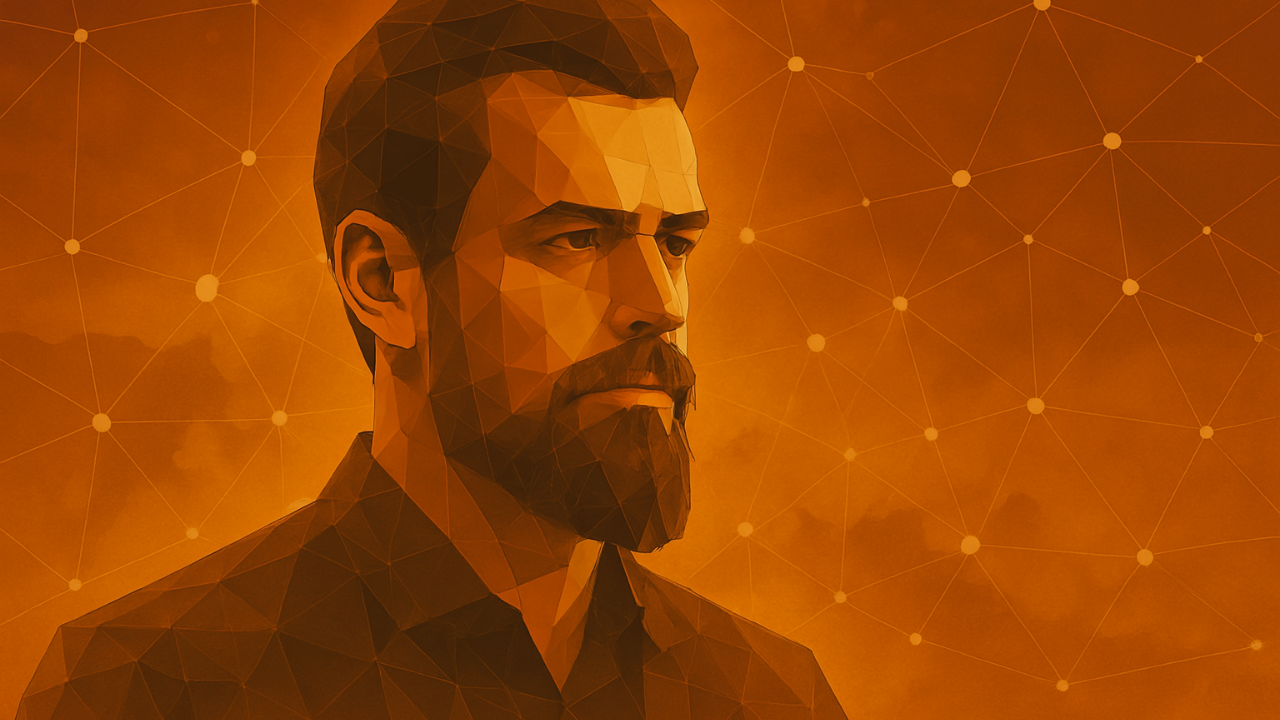


As privacy concerns take center stage in the evolution of blockchain infrastructure, Aztec Labs CEO Zac Williamson believes Ethereum’s long-term scalability and global relevance depend on embracing privacy at every layer.
In an exclusive interview with crypto.news, Zac Williamson particle physicist turned zero-knowledge trailblazer and co-inventor of PLONK outlined why privacy isn’t merely a feature but a foundational requirement for blockchains to become truly usable at scale.
Redefining Blockchain Privacy: More Than Just Hiding Identities
Williamson identifies three pillars of blockchain privacy: user privacy (hiding sender/receiver identities), data privacy (concealing transaction values), and code privacy (obscuring the logic behind smart contracts). Achieving all three, he argues, is key to unlocking what he calls “information asymmetries”crucial for everyday use cases like private voting, financial confidentiality, and compliant identity verification.
“Privacy in a blockchain context means enabling users to know things others don’t. That’s a fundamental part of human interaction,” said Williamson.
Breaking the Myth: Privacy Isn’t Just for ‘Shadow’ Users
A major misconception, according to Williamson, is that privacy exists in a silo within crypto—separate from DeFi, NFTs, or real-world utility.
“In the future, all crypto will be private,” he says. “To scale beyond early adopters and compete with Web2 or TradFi, we need the same kind of privacy protections users already expect.”
Aztec’s approach, called composable privacy, enables programmable smart contracts with built-in confidentiality. One example: ZKPassport, a third-party app that verifies nationality or age through passport chip signatures—without exposing personal data.
On Privacy Pools, Tornado Cash, and Legitimate Privacy
Williamson applauded Privacy Pools a compliance-friendly alternative to mixers like Tornado Cash but emphasized that Aztec is building toward fully programmable privacy networks, not limited stopgaps.
He also drew a sharp line between legitimate privacy and enabling bad actors:
“When you use Tornado Cash, you’re expanding the hiding place for bad actors. With Privacy Pools, you’re not. Users should feel confident that they’re not facilitating criminal activity.”
Ethereum’s Role: Keep the Base Layer Public, Push Privacy to Layer-2
Williamson believes Ethereum shouldn’t become fully private at the base layer—not because it shouldn’t value privacy, but because L2s like Aztec are better suited to handle the complexity:
“If Ethereum had launched with full privacy, it probably wouldn’t have launched at all,” he said. “It would break backwards compatibility and slow innovation.”
Instead, L2s can offer modular privacy with scalability, compliance, and user-friendliness baked in.
UX, Tooling, and Who Pays the Complexity Tax?
Williamson admits private transactions are harder to build and use. So who shoulders that burden?
“Right now, the developer and the user pay. But at Aztec, we say the cryptography researchers should pay—by building better tech.”
He points to how PLONK has improved 250x in speed since 2019. Meanwhile, tools like Noir, Aztec’s zero-knowledge programming language, aim to make building private apps as easy as writing traditional smart contracts.
Aztec is now preparing for its testnet launch, which Williamson claims significantly lowers the barrier to building secure, private applications.
Privacy Needs Network-Layer Protection Too
While zero-knowledge proofs are essential, Williamson stresses they’re not enough. Full privacy requires encrypted mempools and private infrastructure across the entire stack:
“If I’m paying my mortgage or working with a DAO in an unfriendly jurisdiction, no one else should know what I’m doing. That’s the level of protection we need.”
ZK Fragmentation Is a Strength, Not a Weakness
Asked whether competing ZK proving systems (PLONK, STARKs, SNARKs) are a bottleneck, Williamson disagrees:
“Standardizing too early is a death trap. Just look at France’s Minitel project. We need to keep experimenting until we know what tech will stand the test of time.”
FHE: Powerful, But Still in the Oven
Fully homomorphic encryption (FHE) holds promise for blockchain privacy, but Williamson thinks it’s years behind where zero-knowledge proofs are today:
“It’s the ZK of 2010. Valuable, but only useful for niche cases right now.”
Ethereum Needs Privacy to Scale And Aztec Is Building It
Zac Williamson believes Ethereum’s long-term competitiveness hinges not just on scaling transaction throughput, but on making privacy intuitive, programmable, and secure at scale. Aztec is building the infrastructure and tools to make that vision real.
“Privacy is a human right. If we’re serious about mainstream adoption, then real privacy end to end an’t be optional.”