
Senior leaders from some of the biggest names in the U.S. crypto industry met Commerce Secretary Howard Lutnick this week as pressure builds around the stalled CLARITY Act.
According to journalist Eleanor Terrett, the meeting included Coinbase CEO Brian Armstrong, Ripple CEO Brad Garlinghouse, a16z crypto founder Chris Dixon and Kraken co-founder Arjun Sethi.
The executives reportedly met Lutnick before President Donald Trump addressed crypto industry leaders at the White House.
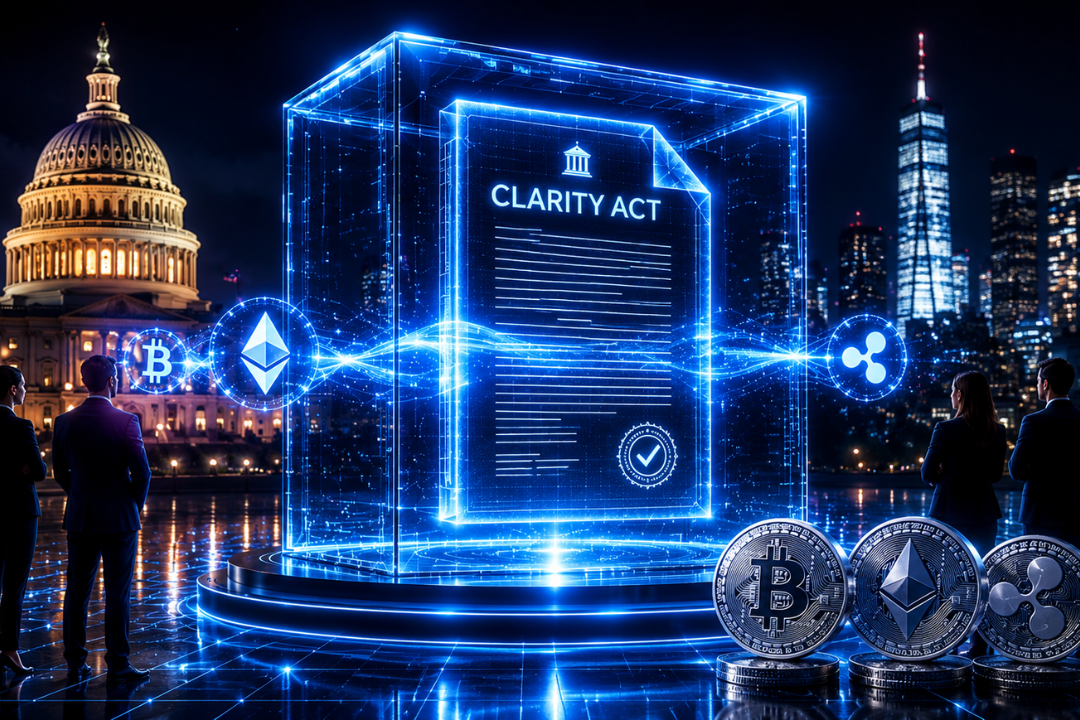
Their discussion focused on the Digital Asset Market Clarity Act, the economic case for clearer U.S. crypto rules, and the political obstacles still preventing the legislation from reaching the Senate floor.
Among the biggest unresolved issues are ethics provisions, consumer protections, decentralized finance rules and the challenge of securing enough bipartisan support.
Crypto Executives Push the Economic Case for the CLARITY Act
The industry leaders reportedly used the meeting to emphasize how a clearer digital asset framework could benefit the U.S. economy.
Participants discussed job creation, investment and the possibility of encouraging crypto companies to build or return to the United States.
For years, crypto firms have argued that regulatory uncertainty has pushed some founders, investors and businesses toward jurisdictions with clearer digital asset rules.
The executives’ message to Lutnick appears to have focused on reversing that trend.
A federal framework could potentially give companies greater confidence about how tokens, exchanges, stablecoins and decentralized finance products will be regulated.
The group also discussed how the White House could help lawmakers reach a compromise capable of attracting support from both Republicans and Democrats.
Ethics Rules Remain a Major CLARITY Act Obstacle
One of the most difficult issues in the negotiations remains the legislation’s ethics provisions.
Lawmakers have been debating rules intended to address potential conflicts of interest involving government officials and digital assets.
The issue has become particularly important because Republican lawmakers may need Democratic votes to move the bill through the Senate.
That makes bipartisan agreement essential.
Ethics concerns had already been raised before this week’s meeting. President Trump previously met Republican senators in July as lawmakers attempted to resolve several outstanding disagreements.
However, revised legislation did not immediately emerge from those discussions.
Democratic lawmakers continued to raise concerns around ethics and consumer protection, leaving the issue as one of the most significant barriers to passage.
Coinbase Has Been Deeply Involved in CLARITY Act Talks
Brian Armstrong’s participation in the Lutnick meeting is notable because Coinbase has been closely involved in negotiations over the bill for months.
The company initially opposed an earlier Senate version of the legislation.
Armstrong raised concerns about several provisions, including rules affecting stablecoin rewards, tokenized equities and decentralized finance.
Coinbase later returned to negotiations after lawmakers made changes.
Ahead of the Senate Banking Committee’s May markup, Armstrong backed the revised legislation and said the bill had improved significantly following months of discussions between banks, lawmakers and crypto companies.
One of the biggest compromises involved stablecoin rewards.
Stablecoin Rewards Became a Key Negotiating Point
Crypto companies and traditional banks had disagreed sharply over whether stablecoin issuers and platforms should be allowed to provide rewards to customers.
Banks argued that interest-like rewards on stablecoins could pull deposits away from traditional financial institutions.
Crypto companies countered that overly restrictive rules would limit competition and innovation.
The compromise that emerged allowed rewards connected to customer activity while restricting passive payments simply for holding stablecoins.
That agreement helped move the legislation forward, although major banking groups remained unhappy with the outcome.
Five large U.S. banking organizations opposed the compromise before the Senate Banking Committee vote, arguing that the restrictions did not go far enough.
Senate Banking Committee Advanced the Bill
Senate Banking Committee Chairman Tim Scott released a 309-page substitute version of the legislation on May 12.
Two days later, the committee advanced the bill in a 15-9 bipartisan vote.
That was a major milestone because it moved the legislation onto the Senate Legislative Calendar.
However, being placed on the calendar did not guarantee a final vote.
Senate leadership still needed to allocate floor time, while lawmakers had to reconcile work from both the Banking and Agriculture committees.
Several major disagreements remained unresolved.
These included ethics rules, decentralized finance, anti-money laundering provisions, developer protections and stablecoin-related issues.
Blockchain Developer Protections Are Still Under Discussion
Another important area of negotiation concerns developers who build non-custodial blockchain software.
Senator Ron Wyden previously pushed Senate leaders to preserve Section 604, known as the Blockchain Regulatory Certainty Act.
The provision would protect certain software developers from being treated as money transmitters when they do not control customer funds.
This issue matters for decentralized finance because many developers create protocols or smart contracts without directly holding or moving users’ assets.
Industry groups have warned that treating those developers like traditional financial intermediaries could create significant legal uncertainty.
The developer protections have therefore become another part of the broader negotiation alongside ethics and consumer protection rules.
White House Becomes More Involved in Crypto Legislation
The Trump administration has taken an increasingly direct role in discussions around the CLARITY Act.
In June, White House officials brought together lawmakers, congressional staff and law enforcement representatives to discuss digital asset legislation.
Those talks included crypto-related crime enforcement and protections for blockchain software developers.
Trump later increased his involvement by meeting Republican senators at the White House in July.
The goal was to resolve remaining disagreements and identify a route toward passage.
However, the legislation continued to face political and scheduling difficulties.
Earlier targets for passing the bill slipped, including a July 4 goal.
Lawmakers then worked toward an August deadline, but negotiations remained incomplete.
Why Bipartisan Support Matters
The Senate’s procedural rules make bipartisan support especially important.
Republicans may not be able to move the bill forward entirely on their own if enough votes are required to overcome procedural hurdles.
That means Democratic support could be necessary.
This is one reason ethics language has become so important.
Even if most lawmakers agree that the U.S. needs clearer digital asset rules, disagreements over conflicts of interest, consumer safeguards and financial crime controls can determine whether enough senators support the final package.
The crypto executives’ meeting with Lutnick appears to have focused partly on how the administration could help bridge those differences.
Coinbase Changed Its Position After Earlier Dispute
Coinbase’s position on the legislation has shifted considerably during the year.
Armstrong withdrew support for an earlier version in January.
At the time, Coinbase objected to several provisions, including restrictions affecting stablecoin rewards, decentralized finance and tokenized equities.
The company later resumed discussions with policymakers and banking representatives.
By April, Armstrong had renewed his support after Treasury Secretary Scott Bessent urged Congress to continue advancing digital asset market structure legislation.
The negotiations that followed resulted in the stablecoin rewards compromise that helped the legislation move through committee.
Armstrong later argued that banks had received major concessions while the bill still protected important crypto industry priorities.
Crypto Lobbying Has Increased
The fight over the CLARITY Act has also contributed to increased lobbying activity in Washington.
Coinbase disclosed approximately $1.07 million in federal lobbying spending during the first quarter of 2026.
The company’s filings covered several digital asset issues, including the CLARITY Act, stablecoin regulation and crypto tax policy.
That spending reflects how important federal regulation has become for major crypto companies.
For exchanges and blockchain businesses, the final legislation could determine which regulators oversee their products, how tokens are classified and what compliance requirements they must follow.
Ripple, Kraken and a16z Add Industry Weight
The presence of Ripple, Kraken and a16z also shows that the push for the CLARITY Act goes beyond Coinbase.
Ripple has spent years dealing with U.S. securities regulation and has consistently called for clearer digital asset rules.
Kraken is another major U.S. crypto exchange with a strong interest in a predictable regulatory framework.
Meanwhile, a16z crypto is one of the industry’s most influential venture investors and has backed numerous blockchain companies and protocols.
Together, the executives represent exchanges, blockchain companies and venture capital, giving the meeting a broad industry perspective.
Bringing Crypto Companies Back to the U.S.
One of the central arguments raised during the meeting was the idea that clearer rules could bring more crypto businesses back onshore.
Industry leaders have repeatedly said uncertainty over U.S. regulation has encouraged companies to operate elsewhere.
A comprehensive federal framework could reduce that uncertainty by defining which regulators oversee different parts of the digital asset market.
Supporters argue this could lead to more domestic investment, jobs and technology development.
Critics, however, continue to push for stronger safeguards around consumer protection, conflicts of interest and financial crime.
That tension remains at the center of the CLARITY Act debate.
The CLARITY Act Still Faces a Difficult Road
The legislation has made meaningful progress.
It cleared the Senate Banking Committee and entered the Senate queue for possible floor consideration.
But several hurdles remain.
Lawmakers still need to reconcile committee proposals, resolve ethics disputes and secure enough votes for passage.
Scheduling is also a challenge because Senate leadership must dedicate floor time to the legislation.
The longer those negotiations continue, the harder it may become to complete the bill within the current legislative window.
White House Support Could Become Decisive
The meeting with Lutnick suggests the crypto industry sees the White House as an important player in the final stage of negotiations.
The administration could potentially help lawmakers reach compromise language, build support across party lines and keep the legislation politically relevant.
For Coinbase, Ripple, Kraken and a16z, the goal appears to be moving beyond general support for crypto regulation toward an agreement that can actually pass the Senate.
Whether the White House can help resolve the remaining ethics and policy disputes remains uncertain.
Still, the meeting demonstrates that major crypto executives are continuing to push aggressively for action.
What Comes Next for the CLARITY Act?
The next major development will depend on whether lawmakers can agree on revised language around the bill’s most controversial provisions.
Ethics rules remain one of the biggest tests.
Developer protections, illicit finance controls and stablecoin-related provisions could also affect the final vote count.
If negotiators can reach a bipartisan compromise, the bill could move closer to Senate floor consideration.
If those disagreements persist, however, the legislation could remain stalled despite support from major crypto companies and the White House.
For now, the meeting between Lutnick and leading crypto executives shows that the industry’s push for federal market structure legislation is far from over.
The CLARITY Act has cleared important hurdles, but its future may depend less on broad support for crypto regulation and more on whether lawmakers can settle the final political details.