

Pi Network is facing renewed selling pressure as its native cryptocurrency, PI, struggles to regain momentum following a sharp weekly decline.
Pi Network’s price has fallen approximately 10% over seven days, trading near $0.0812 on October 9, 2026. The decline comes despite fresh developments involving stablecoin integration and an upcoming blockchain upgrade.
The Pi Core Team recently clarified its plans to explore stablecoin payments through a partnership with Open Standard. At the same time, developers are preparing to introduce Protocol 28, a network upgrade scheduled for October 16.
Both announcements have attracted attention from the Pi community, but investors are still waiting to see whether these developments can translate into stronger demand for PI.
With the token hovering near the important $0.08 support level, market participants are watching for signs of a potential recovery.
Pi Network Confirms Stablecoins Will Not Replace PI
Pi Network has addressed growing questions about the future role of stablecoins within its ecosystem.
In an October 8 update, the Pi Core Team explained that stablecoins could support payments, commerce, and other financial activities where predictable prices are important.
Unlike cryptocurrencies that experience frequent price fluctuations, stablecoins generally aim to maintain a relatively stable value by referencing assets such as the U.S. dollar.
This makes them potentially useful for merchants, businesses, and applications that need consistent pricing.
However, Pi Network emphasized that introducing stablecoins does not mean replacing its native cryptocurrency.
PI will remain the primary cryptocurrency used across the network, while stablecoins could serve additional purposes where stable-value transactions are beneficial.
The team believes the two types of digital assets can operate alongside each other without competing for exactly the same functions.
For example, stablecoins could eventually make it easier for businesses to accept payments without worrying about sudden changes in token prices.
Meanwhile, PI would continue to support the network’s broader cryptocurrency ecosystem.
Developers also stressed that introducing stablecoins requires careful planning, including regulatory compliance and practical integration with existing applications.
Open Standard Partnership Could Expand Pi Network Payments
The latest clarification follows Pi Network’s September 30 partnership announcement with Open Standard, the organization behind the Open USD (OUSD) stablecoin.
The collaboration is intended to explore new payment opportunities and potential reward programs for Pi Network users, commonly known as Pioneers.
According to the announcement, Open Standard operates a consortium involving more than 200 companies across financial services, payments, and technology.
Its model is designed to allow participating partners to share in certain earnings generated from stablecoin reserves, subject to the applicable arrangements.
For Pi Network, the partnership could create opportunities to introduce stable-value payments into applications and services within its ecosystem.
This may eventually allow participating merchants and users to conduct selected transactions without needing to move funds through external payment platforms.
The companies are also exploring possible OUSD-based rewards for eligible Pioneers.
However, several important details remain undecided.
Pi Network has not confirmed the amount of potential rewards, eligibility requirements, or a date for launching OUSD on Mainnet.
It is also unclear whether future stablecoin transactions would create additional demand for PI beyond any applicable network fees.
For now, the partnership represents an exploration of future functionality rather than a completed stablecoin integration.
Pi Network Protocol 28 Upgrade Scheduled for October 16
While stablecoin plans remain under development, Pi Network is approaching another major technical milestone.
The network is scheduled to activate Protocol 28 on October 16, 2026, following testing and earlier infrastructure improvements.
The Pi Core Team announced on September 25 that Protocol 28 had reached Testnet after Protocol 27 was successfully deployed on Mainnet.
The upcoming upgrade focuses on improving the way the blockchain manages transaction-related data and application updates.
Among the expected changes are tools that allow developers to upgrade groups of smart contracts together and make adjustments to stored application data more safely.
These improvements are intended to make software maintenance more flexible as applications become increasingly complex.
Protocol 27 previously introduced changes that expanded smart contract authentication options.
Protocol 28 builds on those improvements by strengthening transaction-data handling and providing developers with additional tools for managing blockchain applications.
Although these updates are important for the network’s technical development, they do not automatically guarantee an increase in PI’s market price.
The long-term impact will depend on how developers and users adopt the improved infrastructure.
Pi Node Operators Face October 13 Upgrade Deadline
Ahead of the planned Protocol 28 activation, Pi Network has instructed Mainnet node operators to update their software.
Operators must install version 28.0 by October 13, 2026, three days before the scheduled Mainnet upgrade.
Keeping nodes updated helps maintain compatibility across the network and supports the rollout of new protocol features.
Node operators who fail to complete required upgrades could experience compatibility issues once the updated protocol becomes active.
The October 16 activation is expected to introduce the tested changes into the network that handles actual user balances and transactions.
However, the Pi Core Team has made it clear that Protocol 28 and the proposed OUSD integration are separate developments.
The upgrade does not include a confirmed stablecoin launch.
This distinction is important because some community members may expect the protocol update to immediately unlock new payment functionality.
For now, any broader stablecoin rollout remains subject to further announcements.
Pi Network Price Falls 10% as Selling Pressure Continues
Despite the ecosystem announcements, PI has struggled to maintain its previous trading levels.
According to the CoinGecko figures cited in the October 9 report, Pi Network traded near $0.0812 after declining approximately 1.78% over 24 hours and 10% over the previous week.
Trading volume stood at roughly $8.36 million, while the token’s market capitalization was approximately $914 million.
PI had traded above $0.09 earlier in October before weakening as selling pressure intensified.
The token dropped below that level on October 7 and subsequently moved toward $0.078.
Although buyers managed to push the price back above $0.08, the recovery remained limited.
The price continued to struggle below its previous trading range, suggesting that sellers retained control of the short-term trend.
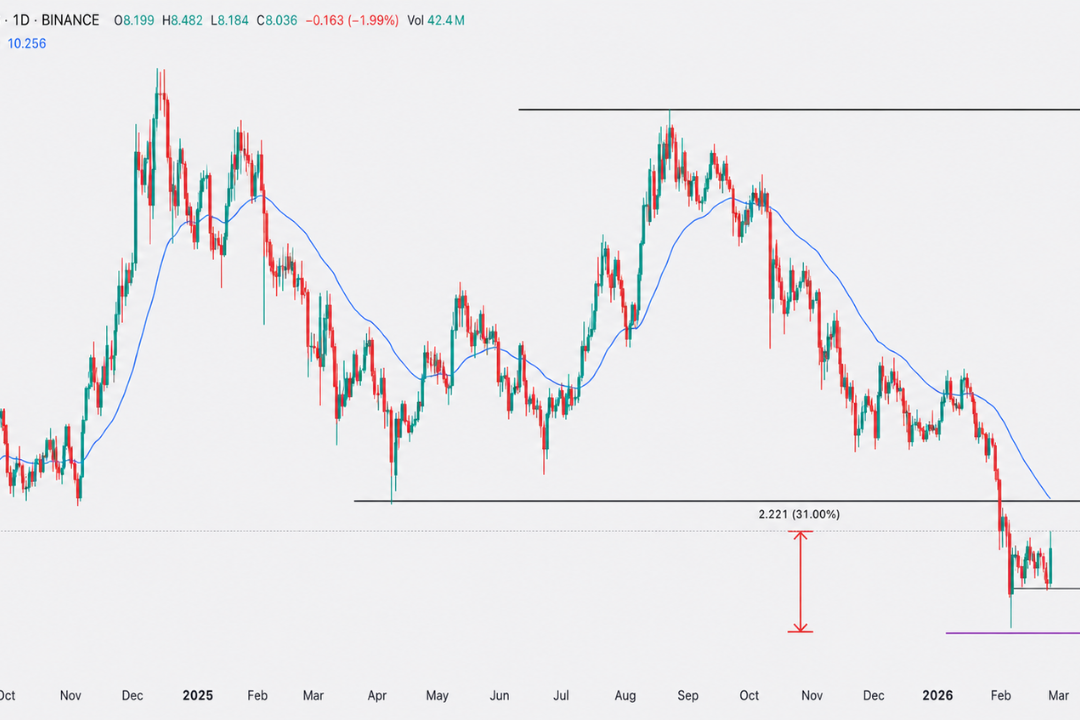
The decline also brought PI close to its lowest trading levels in approximately three months, according to the supplied market analysis.
Pi Network Technical Indicators Continue to Show Weakness
Technical indicators suggest that PI had not yet established a convincing recovery at the time of the report.
On the daily chart, the token traded around $0.08128, posting a modest session gain of approximately 0.58%.
However, the broader price structure remained weak, with a continuing pattern of lower highs and lower lows.
This pattern generally indicates that sellers are dominating market direction.
The Moving Average Convergence Divergence (MACD) indicator also remained in negative territory.
The reported MACD line stood at -0.00210, compared with a signal line reading of -0.00121.
Meanwhile, the histogram registered -0.00089.
These readings indicated that bearish momentum had not yet reversed.
The BBTrend indicator also remained negative at -4.80947, reinforcing the view that selling pressure was still present.
Although the indicator had improved from earlier negative readings, it did not yet confirm a sustained upward trend.
Technical indicators reflect historical price behavior and cannot reliably predict future market movements on their own.
Key PI Price Levels Traders Are Watching
Two important price levels could influence Pi Network’s next market movement.
$0.080 Support Remains Critical
The $0.080 area represents an important short-term support zone.
If buyers continue defending this level, PI could attempt to stabilize and recover some of its recent losses.
However, a sustained breakdown below $0.080 could increase the risk of further selling.
Based on the technical levels identified in the original market report, the next areas to watch would be around $0.075 and $0.070.
These levels represent potential downside zones rather than guaranteed price targets.
$0.090 Resistance Could Limit Recovery
On the upside, PI would first need to regain the $0.090 level.
This price area previously acted as part of the token’s trading range before the latest decline.
A sustained move above $0.090 could improve short-term sentiment and bring the psychological $0.10 level back into focus.
However, a brief price spike without follow-through would not necessarily confirm a trend reversal.
Traders may also monitor trading volume and broader market conditions to assess the strength of any recovery attempt.
Can Stablecoins and Protocol 28 Help PI Recover?
Pi Network’s upcoming developments offer potential opportunities for improving its ecosystem, but their immediate effect on token prices remains uncertain.
The Open Standard partnership could eventually expand payment options and create new use cases for businesses and applications.
If implemented successfully, stablecoin functionality might make Pi-based services more convenient for transactions requiring predictable prices.
However, stablecoins could also handle activities that might otherwise involve PI directly.
The actual impact on the native cryptocurrency will depend on the final integration model and how users interact with both assets.
Similarly, Protocol 28 could support future application development by improving network functionality and software maintenance.
These improvements may be valuable for developers, but technical progress does not always result in immediate buying activity.
For PI to establish a more sustainable recovery, the market may need to see stronger demand, increased ecosystem usage, and improving overall cryptocurrency market conditions.
What Comes Next for Pi Network?
Pi Network faces an important period as it approaches the scheduled Protocol 28 upgrade.
The first milestone is the October 13 deadline for node operators to complete their software updates.
That will be followed by the planned October 16 Mainnet activation.
Meanwhile, the Pi Core Team is expected to provide further information about its stablecoin strategy and cooperation with Open Standard as development progresses.
No official launch date has been confirmed for OUSD integration or the proposed Pioneer reward programs.
From a market perspective, PI’s ability to maintain support near $0.080 will remain an important short-term indicator.
A recovery above $0.090 could signal improving price momentum, while another decline below support would keep downside risks in focus.
Pi Network’s latest announcements demonstrate continued ecosystem development, but a lasting price recovery will depend on more than partnership news and protocol upgrades.
The coming weeks may provide greater clarity on both the network’s technical progress and the market’s response to its evolving plans.
Disclaimer: This article is for informational and educational purposes only and does not constitute financial or investment advice. Cryptocurrency markets are volatile, and readers should conduct their own research before making financial decisions.