
Ripple is expanding its presence in South Korea through a new strategic partnership with Meritz Securities, one of the country’s major financial firms.
The agreement will focus on exploring how Ripple Custody and the company’s tokenization infrastructure could be used within South Korea’s capital markets.
For now, the two companies plan to work within existing securities and digital asset regulations.
The scope of the partnership could expand over time as South Korea introduces new rules governing tokenized securities, digital assets and other blockchain-based financial products.
- Meritz Securities has partnered with Ripple to study institutional digital asset custody and tokenization infrastructure.
- The initial work will focus on use cases allowed under South Korea’s existing securities and digital asset rules.
- Meritz is also reviewing spot crypto ETFs, tokenized securities, trading platforms, fractional investments and won-denominated stablecoins.
- Ripple Custody will be one of the core technologies considered under the agreement.
- Ripple has already worked with Korean financial institutions on tokenized government bonds.
- No specific product launch date has been announced.
- Meritz has not confirmed whether XRP, RLUSD or the XRP Ledger will be used in future services.
Meritz Securities signs strategic agreement with Ripple
Meritz Securities and Ripple signed the partnership agreement on Oct. 1 at Meritz Securities’ headquarters in Yeouido, Seoul.
Executives attending the signing included Meritz Securities CEO Jang Won-jae and Ripple President Monica Long.
Meritz publicly disclosed the partnership on Oct. 7.
The securities firm said the agreement will examine how Ripple’s institutional infrastructure could be applied to South Korea’s capital markets.
The initial focus is expected to remain within services already permitted under existing securities and digital asset rules.
As regulations evolve, the companies could expand the partnership into additional areas.
Meritz is preparing for a broader digital asset market
The Ripple partnership comes as Meritz Securities studies several possible digital asset businesses.
The company is reviewing areas including spot cryptocurrency exchange-traded funds, fractional investment products, tokenized securities, digital asset trading platforms and won-denominated stablecoins.
These plans remain under review.
Meritz has not announced a final decision to launch any of those products.
Instead, the company appears to be preparing its infrastructure and business strategy ahead of expected regulatory changes in South Korea.
The Ripple agreement gives Meritz access to technology already being used by financial institutions in other markets.
Ripple Custody sits at the center of the partnership
Ripple Custody is one of the main technologies Meritz plans to examine.
The platform is designed for financial institutions that need to securely store, manage and govern digital assets.
Ripple has increasingly paired its custody products with tokenization infrastructure.
That allows institutions to manage digital assets through systems covering custody, issuance, settlement and compliance.
For Meritz, the objective is to determine whether that infrastructure can be adapted to South Korea’s capital market environment.
No specific digital asset product has yet been confirmed under the agreement.
Ripple is expanding its institutional business in Asia Pacific
The Meritz partnership is part of a broader push by Ripple into institutional digital asset infrastructure across the Asia-Pacific region.
In September, Ripple partnered with SettleMint to combine Ripple Custody with infrastructure for issuing and managing tokenized assets.
That offering was aimed primarily at regulated financial institutions.
SettleMint’s Digital Asset Platform supports areas including issuance, settlement, servicing and compliance.
Ripple Custody provides the storage and governance layer.
Together, the two systems allow institutions to manage several stages of a tokenized asset’s lifecycle through connected infrastructure.
Ripple has already deployed custody technology with banks
Ripple has also worked directly with financial institutions outside South Korea.
South African lender Absa Corporate and Investment Banking launched digital asset custody services using Ripple technology in September.
The launch followed a partnership that had been announced nearly a year earlier.
That project demonstrated how Ripple Custody can be integrated into a traditional financial institution’s existing operations.
The Meritz agreement follows a similar institutional approach, although the Korean partnership remains at the evaluation stage.
Ripple has already tested tokenized bonds in South Korea
This is not Ripple’s first institutional project in South Korea.
In April, Ripple and Kyobo Life Insurance announced a project to test blockchain-based settlement for tokenized Korean government bonds.
The project was designed to move the holding, transfer and settlement of tokenized bonds onto blockchain infrastructure.
Kyobo Life planned to test whether tokenized government bonds could settle closer to real time instead of using the traditional two-day settlement cycle.
Ripple Custody was the primary infrastructure used in the project.
The companies also explored whether Ripple’s RLUSD stablecoin could be used as part of the payment infrastructure.
XRP was not required in the bond project
An important detail in Ripple’s Korean institutional work is that the use of Ripple technology does not automatically mean XRP is involved.
The Kyobo Life project used Ripple Custody but did not require XRP as the settlement asset.
That distinction also applies to the Meritz partnership.
Ripple provides a range of institutional products, including custody, tokenization, payments and stablecoins.
Financial institutions can use those services without necessarily buying or using XRP.
Meritz has not said whether XRP will play any role in products that may eventually emerge from the partnership.
Other Korean financial firms are also exploring tokenization
Ripple is entering a Korean market where several traditional financial institutions are already testing tokenized products.
KB Securities signed an agreement with Securitize and the Optimism Foundation in September.
The partnership is focused on developing tokenized investment products for Korean institutional investors.
Their first planned product is a tokenized money market fund built on OP Mainnet.
A product based on a KB Asset Management strategy is also planned.
Other potential assets could eventually include stocks, corporate bonds and Korean government bonds as local regulations continue developing.
Shinhan is also testing tokenized funds
Shinhan Asset Management has also explored tokenization through a project with Plume.
The companies have been testing a won-denominated tokenized fund backed by an ultra-short-term bond fund.
The proof of concept was structured offshore.
Korean residents were excluded, and the test did not involve token issuance or distribution within South Korea.
Projects like these show that major Korean financial companies are preparing for a market in which traditional securities increasingly move onto blockchain infrastructure.
South Korea’s tokenized securities rules take effect in 2027
A major regulatory milestone is approaching.
South Korea’s security token amendments are scheduled to take effect on Feb. 4, 2027.
The rules are expected to provide a formal legal framework for tokenized securities.
That gives financial institutions a clearer foundation for building products around blockchain-based securities.
Meritz’s partnership with Ripple appears to be part of this broader preparation.
By examining custody and tokenization infrastructure before the new rules take effect, the company can position itself to move more quickly if regulators allow additional digital asset products.
Meritz is looking beyond custody
Although Ripple Custody is central to the agreement, Meritz is considering a wider range of digital asset services.
The firm has identified spot crypto ETFs as one possible area of future business.
It is also reviewing fractional investments, security token offerings, digital asset trading platforms and won-denominated stablecoins.
None of these services has been formally approved for launch by Meritz.
The company is instead studying how they could fit within South Korea’s changing regulatory environment.
Won stablecoins are becoming a bigger topic in South Korea
Won-denominated stablecoins are attracting increasing attention from policymakers and financial institutions.
South Korea continues to debate how locally denominated digital money should be regulated.
Meritz has included won-based stablecoins among the areas it is reviewing.
Ripple also already has stablecoin exposure in the Korean market through RLUSD.
Upbit listed RLUSD trading in July against the Korean won, Bitcoin and USDT.
Deposits and withdrawals were supported through the XRP Ledger.
Ripple’s stablecoin business is separate from XRP
Ripple’s growing stablecoin business adds another option for institutions considering its infrastructure.
RLUSD can be used independently of XRP.
That means financial firms could adopt Ripple technology for stablecoin settlement, custody or tokenization without using XRP as part of the transaction flow.
The same applies to the Meritz partnership.
At this stage, the agreement does not state whether RLUSD, XRP or the XRP Ledger will be involved in any future services.
The partnership is primarily focused on studying Ripple’s broader institutional infrastructure.
Meritz will expand cooperation as regulations develop
Meritz said its initial work with Ripple will remain within the boundaries of current securities regulations.
That approach allows the company to explore digital asset infrastructure without moving ahead of South Korea’s regulatory framework.
As new rules are introduced, the scope of the partnership could expand.
A Meritz official said the agreement creates a foundation for combining Ripple’s global digital asset technology with Meritz Securities’ experience in capital markets.
The company plans to prepare digital asset financial services gradually as domestic regulations develop.
Ripple continues expanding across global financial markets
Ripple was founded in 2012 and now provides blockchain-based financial infrastructure in more than 90 countries.
Its institutional business has grown beyond payments.
The company now provides custody, tokenization, stablecoin infrastructure and other services to banks and financial institutions.
Its expansion in South Korea follows similar institutional partnerships in other markets.
Fiona Murray, Ripple’s managing director for Asia Pacific, said the company plans to explore how its digital asset infrastructure could support the continued development of South Korea’s capital markets.
XRP shows limited reaction to the partnership
XRP showed little immediate market reaction to the Meritz announcement.
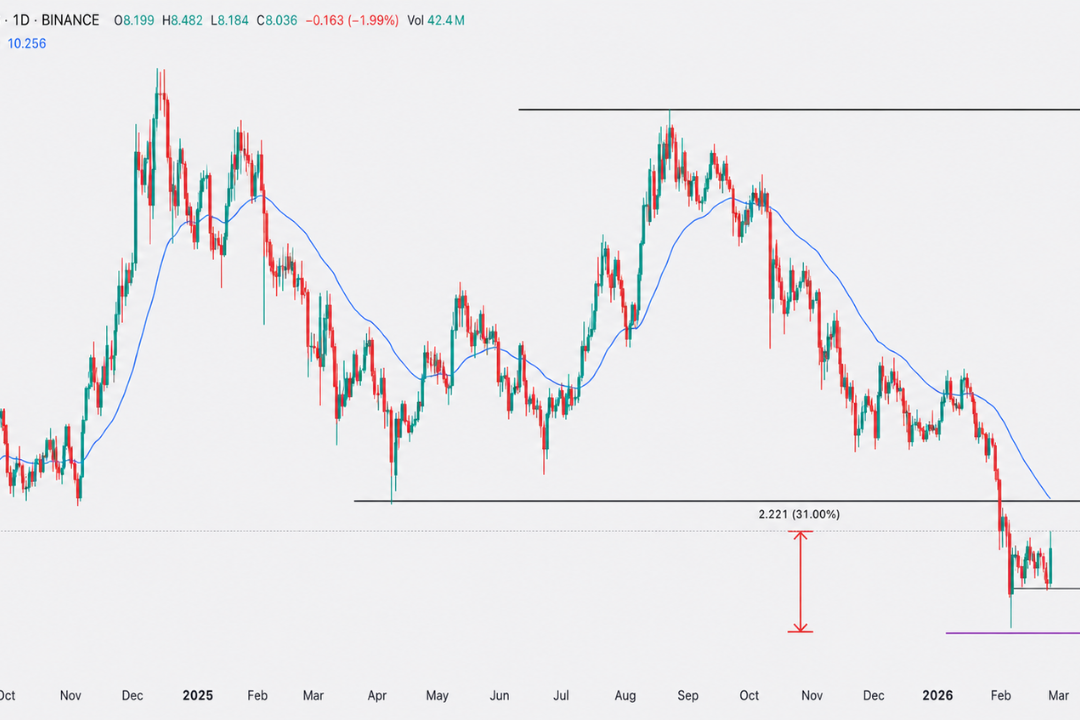
The token was trading around $1.47 on Oct. 7 after declining over the previous 24 hours.
Technical indicators remained mixed.
However, moving averages and the broader EMA composite were leaning bullish.
The first major resistance level was near $1.48.
A break above that level could open a path toward approximately $1.53.
Still, the Meritz agreement itself does not provide a direct fundamental reason for XRP demand because the partnership does not confirm that the token will be used.
Ripple strengthens its position in South Korea
The Meritz partnership gives Ripple another connection to South Korea’s traditional financial system.
Its earlier work with Kyobo Life focused on tokenized government bonds.
The new Meritz agreement broadens the conversation to institutional custody and potentially other capital-market products.
For Meritz, the partnership provides access to infrastructure already being used by financial institutions in other regions.
For Ripple, it strengthens the company’s position in a market that is moving quickly toward regulated tokenization and digital asset services.
Much will depend on South Korea’s regulatory framework.
With security token rules taking effect in 2027 and policymakers still developing regulations for crypto products and stablecoins, financial institutions are preparing now for opportunities that may become available later.
The Meritz agreement is another sign that tokenization, custody and blockchain-based financial infrastructure are moving closer to South Korea’s mainstream capital markets.