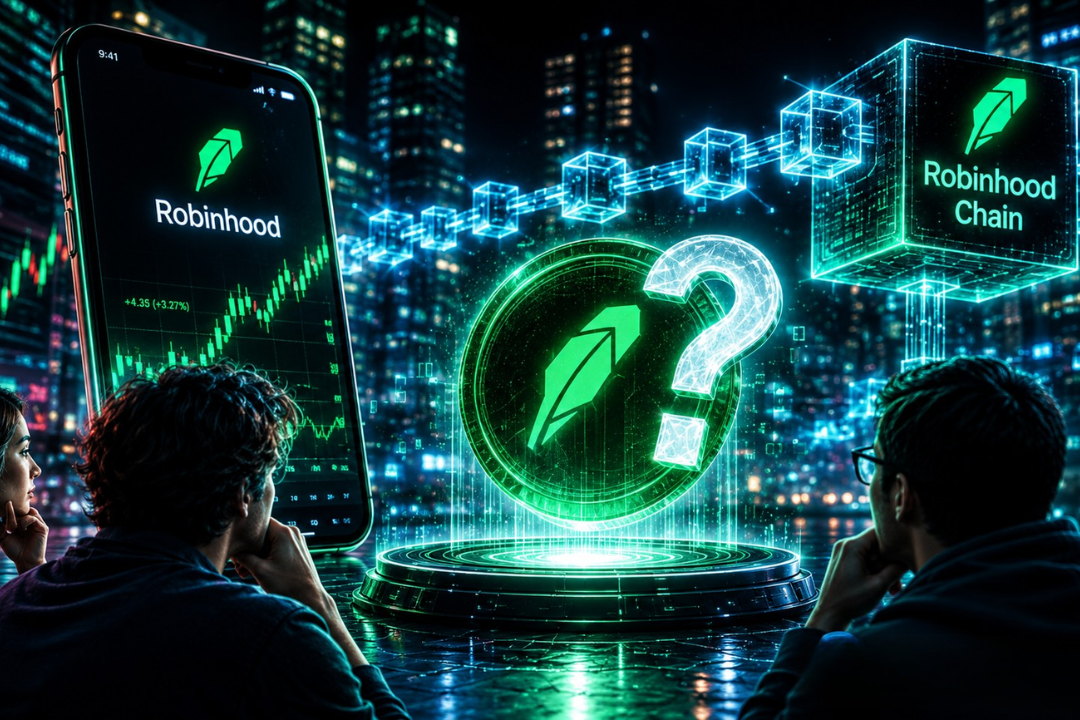


Robinhood says trading activity in its tokenized stock products is already approaching levels that could become restricted under the U.S. Securities and Exchange Commission’s new exemption framework for tokenized equities.
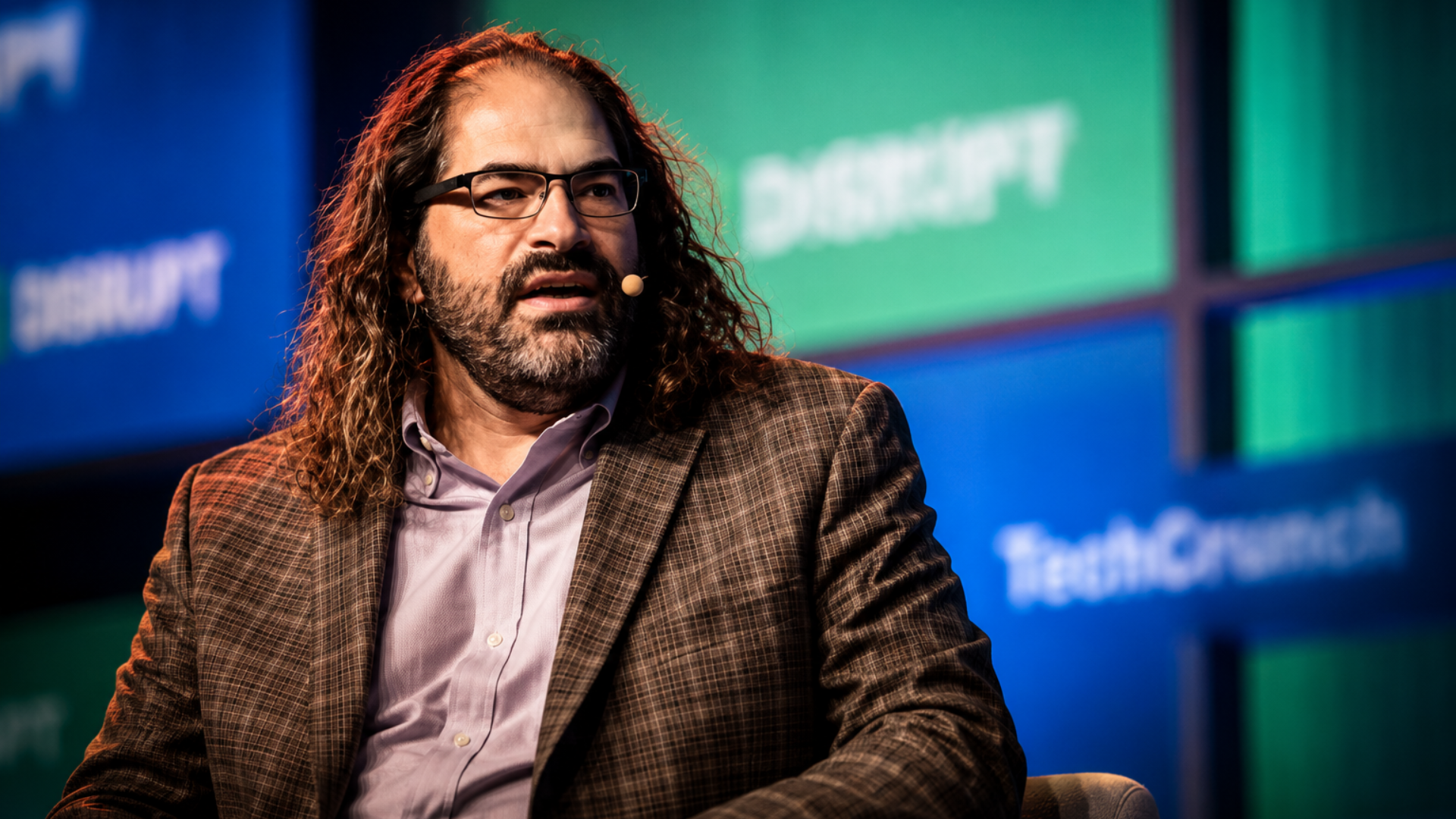
Johann Kerbrat, Robinhood’s senior vice president and general manager of crypto and international, said the company is still reviewing the details of the SEC’s new five-year innovation exemption.
The framework allows qualifying platforms to offer certain tokenized U.S. stocks through permissioned automated market makers and liquidity pools without registering as traditional securities exchanges, provided they meet specific conditions.
But the exemption also places limits on how many stocks can be tokenized and how much trading activity can take place.
Kerbrat said Robinhood’s existing stock token volumes are already high enough that some of those thresholds could become relevant.
Robinhood is still studying the SEC tokenization framework
Speaking during Korea Blockchain Week 2026, Kerbrat said Robinhood is working through the SEC’s requirements.
The exemption, introduced on September 17, creates a five-year pathway for qualifying tokenized National Market System stocks.
However, the SEC has set restrictions on both the number of eligible securities and the amount of trading activity permitted.
Kerbrat said Robinhood’s current tokenized-stock volume is already significant and could eventually reach some of the limits.
Despite those constraints, he described the exemption as an important signal that U.S. regulators are willing to explore ways to bring traditional equities onchain.
Robinhood plans to continue expanding its tokenization business and wants to offer broader access to U.S. stocks and exchange-traded funds over time.
SEC caps depend on the type of stock
The SEC divides qualifying tokenized equities into two categories.
Tier 1 products have stricter limits.
These include stocks in the S&P 500 and Russell 1000, along with certain exchange-traded products.
Under the exemption, Tier 1 platforms can list up to 75 eligible symbols.
Trading volume for each tokenized stock is capped at 0.25% of the underlying stock’s average daily share volume during the previous month.
Tier 2 products are allowed more room.
Platforms can list up to 250 Tier 2 symbols, while trading volume can reach as much as 2.5% of the underlying stock’s average daily volume.
The SEC based these categories on the existing Limit Up Limit Down Plan.
Repeated breaches can force trading pauses
The trading limits are not simply guidelines.
If a venue repeatedly exceeds the applicable volume threshold for a particular tokenized stock, it may have to suspend trading in that token for three months.
The first breach does not immediately trigger a suspension.
However, the platform must remain within the permitted threshold afterward.
That makes volume management an important operational issue for any platform hoping to scale tokenized equities under the exemption.
For Robinhood, this could become particularly relevant if adoption continues to grow.
Robinhood already has strong stock token activity
Robinhood built substantial activity around tokenized stocks before the SEC announced the exemption.
In August, tokenized-stock trading through Uniswap on Robinhood Chain reportedly reached $1 billion in volume.
The figure was cited by Uniswap founder Hayden Adams.
At that time, Robinhood Stock Tokens were not available to U.S. investors.
The products had instead been rolled out internationally.
Kerbrat said the SEC’s decision shows regulators are taking tokenization seriously and are willing to engage with the industry.
Robinhood now wants to push toward broader adoption and eventually expand its coverage of U.S. stocks and ETFs.
Robinhood’s current stock tokens are different from SEC-qualified tokenized stocks
Robinhood’s existing Stock Tokens do not have the same legal structure as the tokenized National Market System stocks covered by the SEC exemption.
Robinhood offers its current products through Robinhood Wallet in more than 120 countries.
They are not available to U.S. customers.
The tokens are debt securities issued by Robinhood Assets Jersey Limited.
They are backed by shares associated with the underlying assets they track.
However, holders do not directly own the underlying shares.
That difference becomes important under the SEC’s new framework.
SEC-qualified tokens must provide shareholder rights
The SEC exemption requires qualifying tokenized NMS stocks to provide holders with the same rights and privileges attached to conventional shares.
That includes economic rights as well as other shareholder protections.
Voting rights are one important example.
Products that only provide synthetic exposure to a company’s share price do not qualify.
The exemption therefore goes beyond simply creating a blockchain token that tracks a stock.
The tokenized product must preserve the legal and economic rights associated with the original security.
Third-party tokenization also comes with conditions
The SEC framework includes additional requirements when a platform wants to tokenize shares issued by an unrelated company.
If a venue lists a stock tokenized by an unaffiliated third party, it must notify the underlying company.
The issuer must also be given an opportunity to object.
This could become important as more companies and platforms experiment with tokenized equities.
It introduces a clearer relationship between blockchain-based trading venues and the companies whose shares are represented.
Robinhood plans to add voting rights
Robinhood has already announced changes to its Stock Tokens.
Kerbrat and CEO Vlad Tenev said in September that the company plans to add voting rights.
That would bring the products closer to the rights associated with traditional shares.
Robinhood also plans to introduce in-kind redemption.
In-kind redemption could allow eligible token holders to exchange tokenized exposure for the underlying asset rather than receiving only cash.
Kerbrat said the company had already been working on these features before recent criticism surrounding some of its stock tokens.
AMC dispute highlighted the ownership issue
Robinhood’s tokenization model came under scrutiny after AMC Entertainment CEO Adam Aron criticized the company’s AMC-linked token.
Aron said AMC had not approved the product.
Robinhood responded that issuer consent was not required under the current structure of its international Stock Tokens.
The AMC-linked product provides investors with economic exposure to AMC shares.
However, holders do not directly own AMC stock and do not currently receive the voting rights attached to conventional AMC shares.
That distinction is central to the debate over tokenized equities.
Robinhood says token upgrades were already planned
Kerbrat said Robinhood’s plans to introduce voting rights and in-kind redemption were not created in response to the AMC dispute.
He said in-kind redemption had already been discussed during Robinhood’s July 1 event in London.
Robinhood continues to defend the legal structure of its existing international Stock Tokens.
At the same time, the SEC exemption creates a potentially different path for tokenized securities in the U.S., where shareholder rights are explicitly required.
Robinhood Chain is part of the company’s broader tokenization strategy
Robinhood’s stock token push accelerated during its July product rollout.
The company launched Robinhood Chain as part of a wider effort to bring traditional financial assets onto blockchain infrastructure.
Tokenized stocks are one part of that strategy.
Robinhood has positioned blockchain settlement as a way to make traditional assets more accessible, transferable and potentially available beyond standard market hours.
However, regulations remain a major factor in determining how those products can be offered in different jurisdictions.
Robinhood is also preparing U.S. crypto perpetual futures
While Robinhood works through the SEC’s stock-token rules, it is preparing another major product for American traders.
The company announced on September 29 that it plans to introduce cryptocurrency perpetual futures for eligible U.S. customers.
The initial lineup includes eight cryptocurrencies:
- Bitcoin
- Ether
- Solana
- XRP
- Dogecoin
- Cardano
- Chainlink
- Hyperliquid
The products will allow traders to take leveraged positions without using traditional futures contracts with fixed expiration dates.
Bitcoin and Ethereum perps will offer up to 10x leverage
Robinhood plans to offer different leverage limits depending on the cryptocurrency.
Bitcoin and Ether perpetual futures will support leverage of up to 10x.
The remaining six assets will initially offer leverage of up to 3x.
Kerbrat said Robinhood selected those leverage limits itself.
The company has not decided whether they will eventually increase.
Future leverage levels will depend on trading behavior and available market liquidity after launch.
Robinhood plans a global waterfall clearing model
Robinhood also plans to use what it describes as a global waterfall clearing system for its U.S. crypto perpetuals.
Kerbrat said the structure differs from some competing products already available in the U.S. market.
Funding-rate calculations will also work differently.
Robinhood plans to recalculate funding continuously on the exchange.
Some competing platforms update funding rates at fixed intervals, such as every 15 minutes.
Funding rates are important because they help keep perpetual futures prices aligned with underlying spot prices.
They also determine payments between traders holding long and short positions.
Crypto perps will initially carry a 0.01% fee
Robinhood plans to charge a 0.01% trading fee on its U.S. crypto perpetual futures through the end of 2026.
The contracts will be offered through Robinhood Derivatives using Bitstamp infrastructure.
The company has not announced what fee structure will apply after the promotional period ends.
Higher leverage will depend on market conditions
Kerbrat said Robinhood will evaluate how customers use its perpetual futures before deciding whether to increase leverage.
Liquidity will be a major consideration.
Higher leverage allows traders to control larger positions with less capital.
However, it also increases liquidation risk.
If markets move quickly, highly leveraged traders can lose their collateral much faster.
Robinhood appears to be taking a more cautious approach initially by limiting most of the listed cryptocurrencies to 3x leverage.
No single-stock perpetual futures planned for the U.S.
Robinhood has seen interest in other types of perpetual futures in Europe.
These include commodity and ETF perpetuals.
However, Kerbrat said the company is not currently announcing plans for single-stock perpetual futures for U.S. customers.
Robinhood already offers options strategies that can be combined into multi-leg positions, giving investors another way to create more complex exposures.
Tokenization could become one of Robinhood’s biggest growth areas
Robinhood is increasingly positioning tokenized assets as an important part of its international expansion.
Its current products already provide stock-linked exposure to customers in more than 120 countries.
The SEC exemption could eventually provide another regulatory route for offering tokenized U.S. equities domestically.
However, the rules are more demanding than simply placing stock-price exposure on a blockchain.
Qualifying products need to provide shareholder rights, follow asset-specific volume caps and remain within limits on the number of supported securities.
The SEC volume limits may become Robinhood’s next challenge
The biggest immediate issue is scale.
Robinhood wants tokenized stocks to reach more users and cover more U.S. securities.
At the same time, the SEC exemption intentionally limits how large qualifying trading venues can become during the five-year experimental period.
That creates a tension between adoption and compliance.
Robinhood may be able to grow its stock token business quickly, but individual products could hit SEC volume ceilings if trading activity expands too far.
Repeatedly exceeding those thresholds could force temporary trading suspensions.
What happens next?
Robinhood is still evaluating exactly how the SEC exemption could fit with its tokenized-stock strategy.
Several developments will be important to watch.
The company plans to continue expanding stock token coverage while introducing voting rights and in-kind redemption.
It will also need to determine how existing international products differ from any future U.S.-compliant tokenized equities.
At the same time, Robinhood is preparing its U.S. crypto perpetual futures business.
The combination shows how the company is increasingly blending traditional finance with blockchain-based markets.
For tokenized stocks, however, the key challenge may not be finding demand.
Robinhood says demand is already strong enough that the new SEC limits could soon matter.
The next phase will depend on whether the company can expand tokenized equity trading while staying within the regulator’s volume, asset and shareholder-right requirements.
Disclaimer: This article is for informational and educational purposes only and does not constitute financial or investment advice.