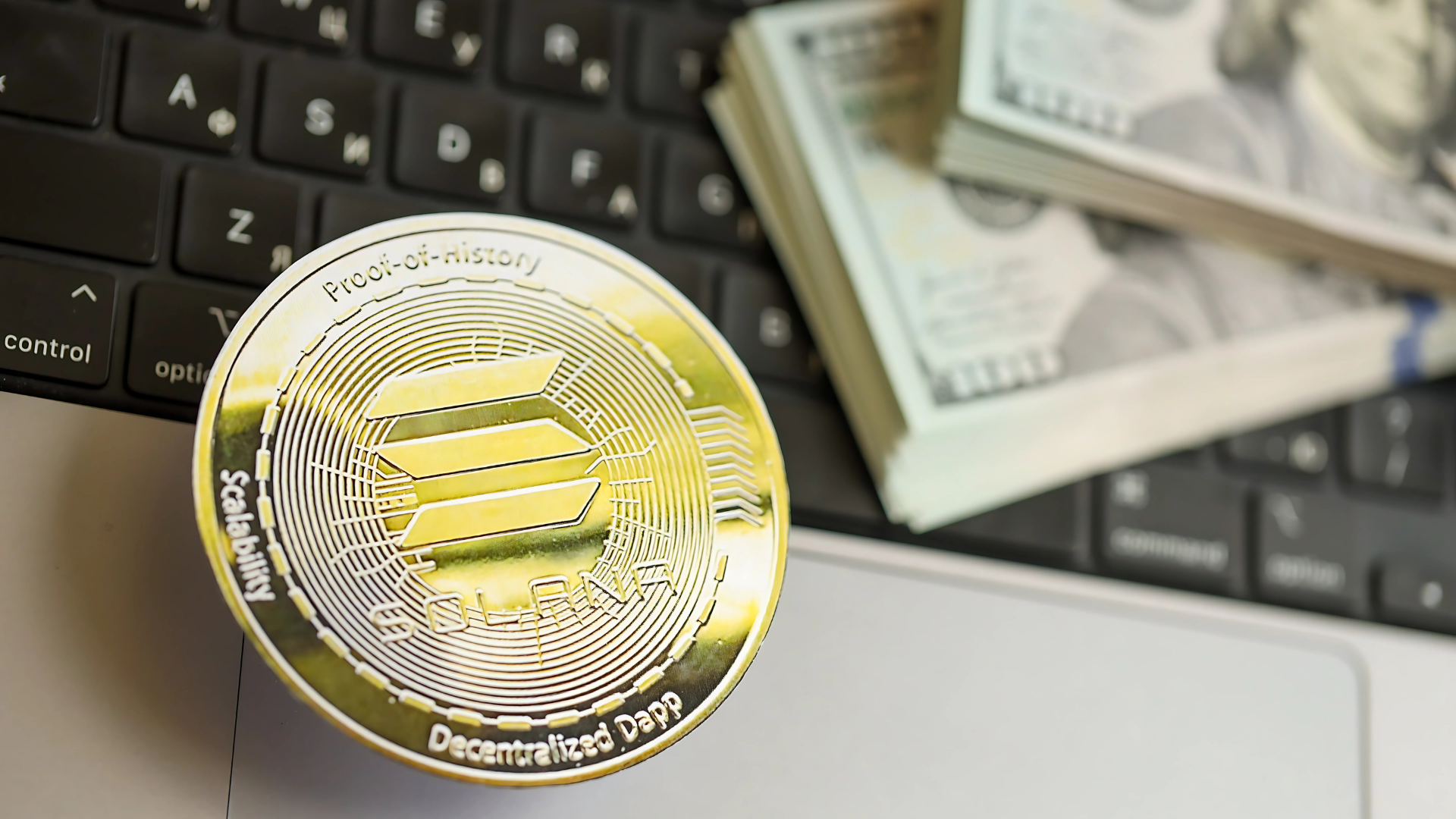


SBI Holdings has taken a major step toward building more of Japan’s financial infrastructure on Solana, giving the blockchain one of its strongest institutional endorsements in Asia.
On July 13, SBI announced that the Solana Foundation would take an equity stake in SBI R3 Japan, the joint venture currently backed by SBI Holdings and Sumitomo Mitsui Financial Group.
The company is also set to be renamed SBI Solana Global.
The new venture will focus on a wide range of digital finance services, including yen stablecoins, tokenized bonds, commercial paper, funds, real estate, cross-border settlement and institutional blockchain infrastructure.
For Solana, the deal is significant because it goes beyond a typical partnership announcement.
The Solana Foundation is not simply providing technology or joining a pilot. It is becoming a shareholder in a regulated Japanese financial venture backed by major financial institutions.
However, SOL’s price reaction was surprisingly muted.
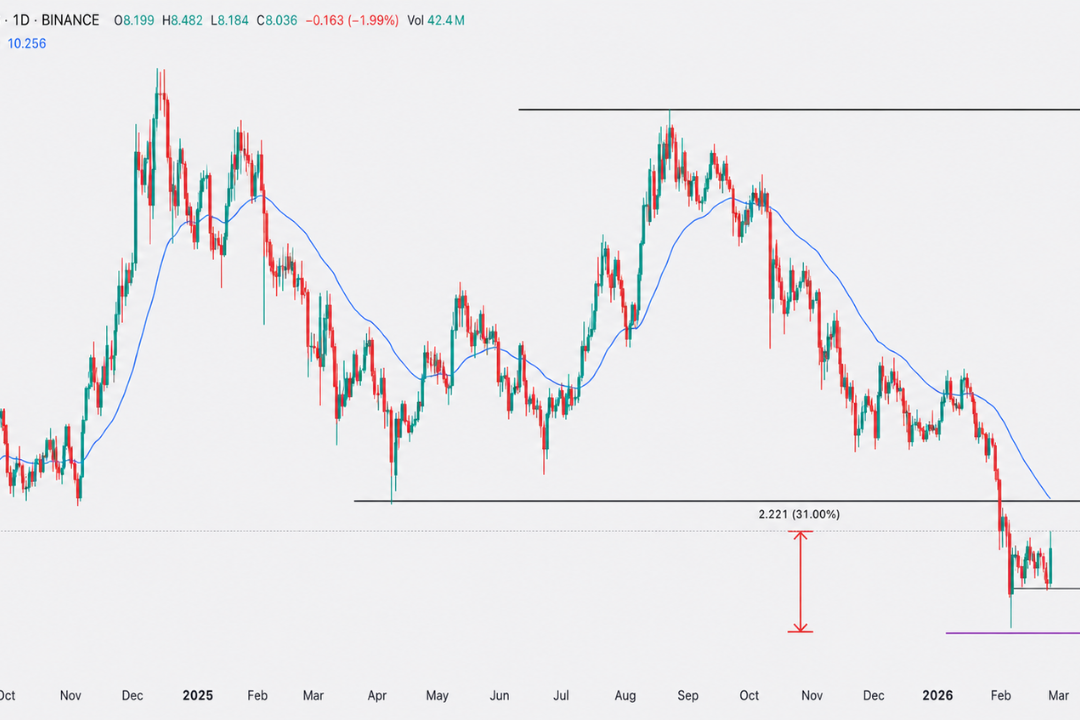
The token traded near $76 as the news circulated and fell around 3.5% alongside the broader crypto market.
That lack of immediate excitement highlights an important shift in investor behavior.
Markets are increasingly waiting for institutional partnerships to produce real products, users and on-chain activity before assigning them significant value.
SBI Solana Global is more than a standard blockchain partnership
Many blockchain partnerships begin with memorandums of understanding, pilot projects or technology agreements.
This deal is different.
The Solana Foundation will take an ownership position in SBI R3 Japan alongside SBI Holdings and Sumitomo Mitsui Financial Group.
Once corporate procedures are completed, the entity is expected to operate under the name SBI Solana Global.
That gives the Solana Foundation direct financial exposure to the success of the venture.
It also places Solana much closer to the internal operations of a major Japanese financial group.
The new company’s mandate covers five major areas.
The first is stablecoins, including support for the issuance and circulation of JPYSC, SBI’s yen-denominated stablecoin.
The second is tokenized real-world assets such as corporate bonds, commercial paper, investment funds and real estate.
The third is cross-border payments and settlement.
The fourth involves broader on-chain financial services for institutional investors.
The fifth focuses on payment systems for AI agents and automated digital commerce.
Together, these areas point to something much larger than a simple crypto product.
SBI appears to be positioning the venture as infrastructure for a future tokenized financial system.
Important commercial details are still missing
Despite the strategic importance of the announcement, several major details remain unknown.
SBI has not disclosed how large the Solana Foundation’s equity stake will be.
There are also no confirmed product launch dates.
Revenue models, fee structures and distribution channels remain undisclosed.
It is also unclear which SBI businesses will distribute future tokenized products.
Possible channels could include SBI VC Trade, Bitbank or other companies within the group.
Most importantly, SBI has not yet confirmed that JPYSC will operate primarily on Solana.
That distinction matters.
If the yen stablecoin becomes Solana-native, it could generate direct transaction activity on the network.
If JPYSC instead follows a multi-chain model, Solana may capture only part of that activity.
For now, SBI Solana Global is a structure with a clear strategic mandate, but the commercial products still need to be built.
JPYSC could become a key part of the strategy
The new venture builds on another major SBI initiative launched just weeks earlier.
On June 24, SBI Group and Web3 infrastructure company Startale Group launched JPYSC, described as Japan’s first trust-backed yen stablecoin.
SBI Shinsei Trust Bank serves as the issuer, while SBI VC Trade handles primary distribution.
JPYSC operates under Japan’s regulatory framework as a Type III Electronic Payment Instrument.
That legal classification is particularly important for institutional adoption.
It provides defined rules around reserves, redemption and disclosure.
For banks, asset managers and other regulated companies, that type of legal clarity reduces the uncertainty that often surrounds stablecoins in other markets.
JPYSC could eventually act as the cash settlement layer for many of the products SBI Solana Global plans to build.
Tokenized bonds need a settlement asset.
Cross-border payment systems need a regulated yen rail.
Institutional DeFi products need a digital cash instrument that compliance departments can understand.
JPYSC could potentially fill all of those roles.
Japan already has a strong regulatory foundation for tokenization
Japan may seem like an unexpected place for a major public blockchain push, but its regulatory structure makes the country particularly attractive for tokenization.
The country moved earlier than many major economies to establish clear legal frameworks for digital assets.
Stablecoins are covered under the Payment Services Act.
Tokenized securities can operate within existing securities regulations.
Japanese financial institutions have already experimented with tokenized bonds, real estate and other digital securities.
That gives SBI an important advantage.
The company does not have to wait for lawmakers to decide whether these products are legally permitted.
It can focus more directly on licensing, infrastructure and distribution.
That is very different from markets where the basic regulatory status of tokenized assets remains uncertain.
Competition for Japan’s tokenization market is increasing
SBI is not alone in trying to build blockchain infrastructure for Japan’s financial system.
SMBC Group has explored stablecoin issuance with Ava Labs, Fireblocks and TIS.
Progmat, backed by several major Japanese banks, has been developing infrastructure for tokenized bonds and other securities.
Japan Open Chain is also targeting institutional blockchain use cases.
SBI itself has worked with Chainlink on tokenized asset infrastructure and has invested heavily in institutional DeFi capabilities.
The competition suggests that Japan’s financial sector increasingly sees tokenization as more than an experiment.
The major question is which blockchain or infrastructure provider will become the preferred settlement layer.
By bringing the Solana Foundation directly into an equity structure, SBI is taking a more aggressive approach than many of its competitors.
Why Solana became an institutional candidate
Only a few years ago, Solana was more commonly associated with retail trading, NFTs and memecoins than regulated financial markets.
The network also faced criticism over periods of instability and outages.
Since then, its institutional story has changed considerably.
Network reliability has improved.
Validator infrastructure has matured.
Developer activity has remained strong.
And Solana’s core architecture offers characteristics that can be attractive for financial settlement.
The network is designed around high throughput and low transaction fees.
For institutional markets processing large numbers of transactions, that can be valuable.
Bond settlement, stablecoin transfers and tokenized asset activity may involve high transaction volumes.
If every transaction costs very little, blockchain fees become a much smaller part of the overall operating expense.
Solana offers a different model from Ethereum
Ethereum remains the largest ecosystem for tokenized financial assets.
However, much of Ethereum’s scaling activity now takes place across Layer 2 networks.
That architecture provides significant advantages in terms of security and ecosystem depth, but it can also introduce fragmentation.
Assets may exist across different rollups.
Different Layer 2 networks can have different operational assumptions.
Moving assets between them may require bridges or interoperability infrastructure.
Solana offers a different approach.
Its activity primarily takes place on one integrated base layer.
For a regulated financial institution building infrastructure from scratch, that can make the system simpler to document, monitor and operate.
This does not mean Solana is automatically better for every institutional use case.
But it helps explain why SBI may see the network as attractive for a new tokenization platform.
Japan’s traditional financial markets create a huge opportunity
The real opportunity behind SBI Solana Global is not crypto trading.
It is the tokenization of traditional assets.
Japan has one of the largest bond markets in the world.
It also has a deep commercial paper market and enormous household financial wealth.
Much of that financial infrastructure still relies on settlement systems that can take days and involve multiple intermediaries.
Tokenization promises to reduce some of that friction.
Assets could potentially settle in minutes instead of days.
Collateral could move more easily across institutions.
Large assets such as real estate could be divided into smaller digital units.
Different financial ledgers could also be connected more efficiently.
If even a small percentage of Japan’s traditional financial assets eventually move onto public blockchain infrastructure, the resulting market could be much larger than most existing crypto-native real-world asset projects.
That is likely the opportunity SBI is targeting.
The deal raises questions about SBI’s long relationship with Ripple
One of the biggest questions surrounding the announcement is what it means for Ripple.
SBI has spent nearly a decade as one of Ripple’s strongest institutional partners in Asia.
The companies have worked together on remittances, payments and XRP-related infrastructure.
SBI has also supported the distribution of Ripple’s RLUSD stablecoin in Japan.
Because of that history, some observers interpreted the Solana announcement as SBI moving away from Ripple.
The available evidence does not necessarily support that conclusion.
SBI still appears to be working with Ripple.
The RLUSD distribution agreement remains in place.
Ripple-related payment corridors continue operating.
A more likely interpretation is that SBI is building a multi-chain strategy.
SBI appears to be choosing multiple networks instead of one
SBI increasingly looks less interested in selecting one blockchain winner.
Instead, it appears to be building different networks and stablecoins for different purposes.
USDC can provide global dollar liquidity.
RLUSD can support enterprise payment and settlement corridors connected to Ripple.
JPYSC can provide the domestic yen settlement layer.
Solana can potentially provide high-throughput public blockchain infrastructure for tokenized assets and institutional settlement.
That strategy reduces SBI’s dependence on any single ecosystem.
It also sends a clear message to blockchain foundations.
Major financial institutions may not choose one network exclusively.
They may use several blockchains depending on the product, geography and customer.
SBI R3 Japan’s rebrand also says something about Corda
The existing entity being transformed into SBI Solana Global was originally built around R3 and its Corda technology.
Corda became one of the most prominent enterprise blockchain platforms during the previous wave of institutional blockchain development.
Banks and financial institutions frequently preferred private or permissioned blockchains because they believed public networks were too volatile or difficult to regulate.
The decision to rename SBI R3 Japan around Solana is therefore symbolic.
It suggests that SBI increasingly sees public blockchain infrastructure as part of the next phase of institutional adoption.
That does not mean the company is abandoning every Corda system it already uses.
However, the branding change offers a strong indication of where future growth investment may be directed.
The structure could become a model for other institutions
The equity structure is also important beyond Japan.
Banks and blockchain companies have worked together for years.
Most relationships, however, have been relatively easy to end.
They often involve pilots, vendor contracts or consortium memberships.
A joint venture with a blockchain foundation directly on the shareholder register is a deeper commitment.
If SBI Solana Global succeeds, other blockchain foundations could try to replicate the model with financial institutions in different markets.
Instead of simply selling technology to banks, blockchain ecosystems could become equity partners in regulated financial infrastructure companies.
That would represent a meaningful shift in the relationship between traditional finance and public blockchains.
A regional stablecoin network is beginning to emerge
SBI’s various stablecoin relationships also suggest a wider Asian settlement strategy.
The company now has exposure to several digital currency rails.
JPYSC provides a regulated yen instrument.
USDC connects SBI with global dollar liquidity.
RLUSD provides another dollar-based settlement option linked to Ripple’s enterprise ecosystem.
Meanwhile, Solana has been expanding its stablecoin infrastructure throughout Asia.
If multiple regulated currency tokens operate on compatible public blockchain infrastructure, cross-border transactions could become more efficient.
Instead of relying entirely on correspondent banks, businesses could potentially settle transactions directly using tokenized currencies.
That is especially relevant for trade between Japan, South Korea and Southeast Asia.
The AI agent payment plan remains speculative
One part of the SBI Solana Global mandate stands out from the others: payments for AI agents.
The idea involves software systems that can make authorized payments automatically.
An AI procurement agent, for example, could purchase services or settle an invoice without requiring a human to manually approve every individual transaction.
Machine-to-machine payments could also support areas such as cloud computing, digital content and automated data services.
For these systems to work efficiently, payment infrastructure would need to be fast, inexpensive and programmable.
Stablecoins on high-throughput blockchains could potentially meet those requirements.
However, the AI payment market is still highly experimental.
For SBI, including it in the venture’s mandate is essentially a long-term option.
The stablecoin and tokenization businesses can justify the project even if AI agent payments remain small.
The bullish case for SOL
The strongest bullish interpretation of the deal is that Solana is gaining institutional access that is extremely difficult to replicate.
The Solana Foundation is becoming an equity partner in a regulated Japanese financial venture.
Sumitomo Mitsui Financial Group is involved.
The venture has a mandate covering some of Japan’s largest financial markets.
Japan already has regulations that allow many of these products to exist.
This means the project does not depend entirely on future legislation.
If JPYSC launches meaningfully on Solana and tokenized assets begin settling on the network, the partnership could generate real institutional blockchain activity.
The deal also strengthens Solana’s broader institutional narrative in Asia.
The bearish case is simple: products still have to launch
The strongest bearish argument is that almost every important commercial detail remains unknown.
There is no disclosed stake size.
There are no firm launch dates.
There are no revenue targets.
There is no confirmation that JPYSC will primarily use Solana.
And there is no guarantee that Japan’s largest bond issuers will move meaningful volumes onto the network.
Institutional blockchain projects often take years to reach meaningful scale.
Some never move beyond pilots.
SBI itself has experience with previous blockchain ventures that generated significant attention before producing limited commercial impact.
That makes execution the most important factor.
A successful venture may not immediately translate into a higher SOL price
There is also an important distinction between Solana the network and SOL the token.
Institutional adoption can increase network activity without creating an immediate proportional increase in SOL’s price.
Tokenized bonds would likely settle using stablecoins rather than SOL.
Transaction fees on Solana are intentionally very low.
That means even large transaction volumes may initially generate relatively modest fee revenue.
The venture could therefore succeed operationally without creating dramatic short-term demand for SOL.
That helps explain why the announcement did not immediately produce a large price rally.
SOL’s muted reaction reflects the wider market
SOL was trading near $76 as the announcement circulated.
The token slipped approximately 3.5%, broadly following a risk-off move across the crypto market.
That price action suggests macroeconomic factors remain more important to short-term SOL trading than institutional partnership announcements.
Crypto markets have increasingly become sensitive to interest rates, Federal Reserve expectations and broader investor risk appetite.
In that environment, even strategically important blockchain announcements may struggle to move prices immediately.
The longer-term effect depends on whether partnerships eventually create measurable activity.
What would prove the SBI Solana strategy is working?
Several milestones would turn the current announcement into a more concrete institutional adoption story.
The first is completion of the SBI Solana Global rebrand and the Solana Foundation’s equity investment.
The second is confirmation that JPYSC will be issued on Solana or operate through a meaningful Solana-native distribution channel.
The third would be the launch of an actual tokenized financial product.
Commercial paper or an investment fund could potentially arrive before a major corporate bond because those products may be easier to bring to market.
Another important milestone would be disclosure of how much equity the Solana Foundation owns.
That would show how financially committed the foundation is to the venture.
Finally, a live cross-border settlement corridor would provide some of the strongest evidence that the strategy has moved beyond experimentation.
The timeline could be measured in years, not weeks
Investors expecting immediate results may need patience.
Corporate restructuring and the equity transaction could potentially be completed within one or two quarters.
A first product announcement before the end of 2026 would represent relatively fast execution for the institutions involved.
A tokenized asset reaching external investors during 2027 could still be considered meaningful progress.
That timeline matters because the strategic value of the partnership and the short-term price behavior of SOL operate on very different schedules.
Institutional infrastructure takes time to build.
Crypto markets can reprice in minutes.
The gap between those two timelines is often why major partnership announcements initially disappoint traders.
What SBI’s Solana pivot ultimately means
The biggest takeaway may not be what happens to SOL tomorrow or even next month.
The more important development is that a major Japanese financial group is becoming more comfortable building regulated financial products on public blockchain infrastructure.
The previous generation of institutional blockchain projects largely focused on private networks.
Now, public chains are increasingly being considered for production financial infrastructure.
SBI Solana Global represents one of the clearest examples of that shift in Asia.
For Solana, the deal provides institutional credibility and access to one of the world’s largest financial markets.
For SBI, it provides another blockchain option as the company expands its multi-chain strategy.
For SOL holders, however, the key question remains execution.
If stablecoins, tokenized securities and cross-border settlement volumes actually begin flowing through Solana, the announcement could eventually become an important milestone in the network’s institutional adoption.
If the venture remains largely a corporate structure with limited products, the market’s muted initial reaction may prove justified.
The partnership has created the opportunity.
Now SBI and Solana have to turn that opportunity into measurable activity.