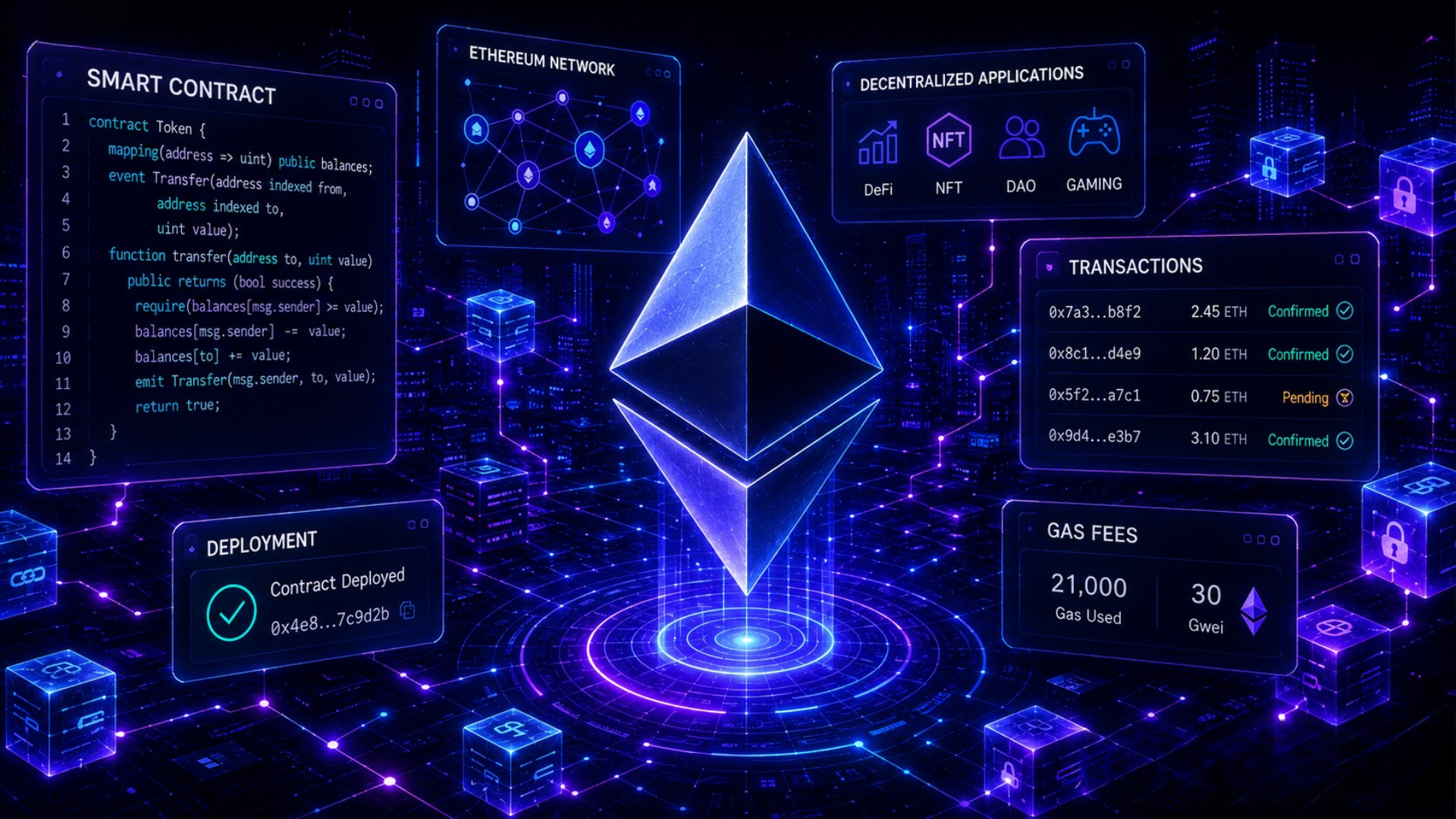


Ethereum could become faster under a new proposal that would reduce the network’s block time from 12 seconds to 10 seconds.
Ethereum Institutional has backed EIP-8198, also known as Quick Slots, as developers consider including the proposal in the upcoming Hegotá upgrade.
The proposal would make Ethereum’s slot duration configurable, allowing developers to gradually shorten the time between blocks instead of introducing a major reduction all at once.
Ethlabs is currently pushing for an initial reduction from 12 seconds to 10 seconds. Further reductions could follow if testing shows that Ethereum can maintain network stability and performance.
However, EIP-8198 has not yet been approved for Hegotá and still requires additional development, testing, and agreement among Ethereum’s core development teams.
Ethereum Institutional backs faster block times
Ethereum Institutional publicly supported the Quick Slots proposal as institutional adoption of Ethereum continues to grow.
The nonprofit argued that Ethereum needs faster confirmation times as more financial activity moves onto public blockchains.
Shorter block times would allow Ethereum to produce blocks more frequently, potentially improving the speed at which transactions are included and confirmed.
Ethereum currently operates with 12-second slots.
Under EIP-8198, developers would be able to adjust the slot duration over time rather than locking the network into one permanent timing configuration.
The first target being discussed is 10 seconds.
If the change performs well, developers could consider reducing slot times further in future upgrades.
EIP-8198 could become part of Hegotá
EIP-8198 was introduced in March and formally proposed for consideration in the Hegotá upgrade during an Ethereum core developer meeting on Aug. 6.
Since then, Ethlabs has been working to integrate the proposal’s specifications into Ethereum’s main codebase.
The organization is also studying technical dependencies that could affect implementation.
This work is intended to move Quick Slots closer to serious consideration for Hegotá.
Hegotá is expected to follow Ethereum’s Glamsterdam upgrade and could include several major changes affecting Layer 1 scalability, validator economics, privacy, account abstraction, and block production.
Quick Slots is one of several proposals currently being considered.
However, its inclusion is not guaranteed.
Ethereum could initially move to 10-second slots
Earlier versions of EIP-8198 used an eight-second slot duration as a placeholder.
Ethlabs has since suggested that Ethereum could take a more gradual approach by first reducing block times from 12 seconds to 10 seconds.
A smaller initial change would give developers and validators an opportunity to observe how shorter slots affect network performance.
If Ethereum continues to operate reliably, additional reductions could potentially follow.
This staged approach may help developers avoid introducing excessive pressure on validators, networking infrastructure, and block propagation.
The final slot duration would still depend on testing and agreement among Ethereum client teams.
What shorter Ethereum block times could mean
Reducing Ethereum’s block time would increase how frequently the network produces new blocks.
This could improve transaction responsiveness and reduce the amount of time users wait for transactions to appear onchain.
Ethereum currently uses 32 slots in each epoch.
If the number of slots per epoch remains unchanged while individual slots become shorter, the total duration of an epoch would also decrease.
Faster slots could potentially benefit applications where quick transaction confirmation is important, including decentralized exchanges, payments, stablecoin transfers, and institutional financial applications.
However, faster block production also creates technical challenges.
Validators need enough time to receive, verify, and propagate data across the network before the next slot begins.
Reducing that window too aggressively could increase the risk of network inefficiencies or place greater demands on infrastructure.
That is one reason developers are considering a gradual reduction.
DeFi founders show support for Quick Slots
Support for EIP-8198 is not limited to Ethereum Institutional.
Ethlabs gathered feedback from 20 decentralized finance founders about the Quick Slots proposal.
According to the organization, the responses showed broad support for reducing Ethereum’s slot duration and potentially including the proposal in Hegotá.
DeFi applications could benefit from faster block production because many protocols depend on rapid updates to prices, liquidity, trades, collateral positions, and other onchain activity.
Even a relatively small reduction from 12 seconds to 10 seconds could make interactions feel faster for users.
However, developer support alone does not guarantee that the proposal will reach Ethereum mainnet.
EIP-8198 must still go through implementation work, testing, and Ethereum’s core development process.
Institutional Ethereum adoption adds pressure for faster execution
Ethereum Institutional’s involvement adds another dimension to the discussion.
The organization launched in July as an independent nonprofit focused on helping financial institutions adopt Ethereum and its Layer 2 ecosystem.
Its target audience includes banks, asset managers, custodians, fintech companies, market infrastructure providers, and sovereign institutions.
Its work covers areas such as institutional education, technical requirements, market intelligence, standards, and industry events.
The organization has argued that Ethereum’s performance will become increasingly important as more traditional financial activity moves onto public blockchain networks.
Ethereum already supports significant stablecoin and tokenized real-world asset activity.
As that activity grows, institutions may place greater importance on faster settlement, predictable infrastructure, and improved transaction confirmation times.
Ethereum researchers are also improving data propagation
Quick Slots is not the only proposal aimed at making Ethereum faster.
Researchers have also been testing EIP-8411, which focuses on improving execution payload propagation.
The proposal breaks larger execution payloads into smaller pieces that nodes can verify and forward before receiving the entire payload.
In simulated testing involving 500 nodes, researchers reported execution payload propagation times of less than one second for a 1 MiB payload.
By comparison, transmitting the same payload as a single message took around five seconds in the test environment.
These were simulated results using prototype client software rather than measurements taken directly from Ethereum mainnet.
EIP-8411 and Quick Slots address different parts of Ethereum’s performance.
Quick Slots focuses on reducing the time between blocks, while EIP-8411 aims to move block-related data across the network more efficiently.
Both could become important if Ethereum continues pushing toward faster Layer 1 performance.
Glamsterdam comes before Hegotá
Before developers can focus fully on Hegotá, Ethereum is preparing for the Glamsterdam upgrade.
Glamsterdam is expected to introduce changes designed to increase Ethereum Layer 1 capacity and improve parts of the network’s block construction system.
The upgrade is scheduled to activate on the Sepolia testnet on Oct. 6.
Ethereum developers have asked client teams to release Sepolia-compatible software ahead of the testnet activation.
Testing has already been taking place on development networks.
One Glamsterdam development network reportedly increased its gas limit from 60 million to 200 million as developers examined how the network behaves under higher-capacity conditions.
A mainnet activation date for Glamsterdam has not yet been finalized.
Earlier discussions considered a possible December rollout, but the final timing remains subject to testing and developer coordination.
Hegotá development would follow Glamsterdam.
That means EIP-8198 still has time to undergo further evaluation before developers decide whether it should become part of the next upgrade.
Solana is already reducing slot times
Ethereum’s discussion comes as other major blockchain networks work to reduce transaction confirmation times.
Solana reduced its target slot time from 300 milliseconds to 250 milliseconds on Sept. 18.
The change increased targeted slot production from roughly 3.3 slots per second to around four.
The latest reduction is part of a staged rollout under SIMD-0525.
Solana initially operated with a 400-millisecond target before moving to 350 milliseconds, then 300 milliseconds, and now 250 milliseconds.
The longer-term goal is to eventually reach 200-millisecond slots.
Each reduction is being activated separately so developers and validators can monitor network behavior before moving to the next stage.
The approach is similar in principle to Ethereum’s Quick Slots proposal, where developers want to reduce block times gradually instead of making one large change.
Zcash is also considering faster blocks
Zcash is exploring an even larger reduction in its block time.
ZEC holders recently backed a proposal to reduce the network’s target block time from 75 seconds to 25 seconds as part of discussions around the NU7 upgrade.
The proposal would significantly shorten confirmation times while adjusting block rewards so that the network’s overall issuance schedule remains consistent.
Ethereum’s potential move from 12 seconds to 10 seconds is much smaller by comparison.
However, even modest improvements can become important on a network handling large amounts of decentralized finance, stablecoin transfers, tokenized assets, and Layer 2 settlement.
What happens next for EIP-8198?
Quick Slots remains a draft proposal and has not yet been confirmed for Ethereum’s Hegotá upgrade.
Developers still need to complete implementation work, test the proposal across Ethereum clients, and determine how shorter slots affect network stability.
The initial 10-second target could also change depending on test results.
If developers eventually approve EIP-8198 for Hegotá, Ethereum would take another step toward faster Layer 1 transaction confirmation.
For now, the proposal represents part of Ethereum’s broader effort to increase performance while preserving decentralization and network reliability.
With institutional adoption, DeFi activity, and competition among Layer 1 networks continuing to grow, reducing block times could become an increasingly important part of Ethereum’s long-term scaling roadmap.