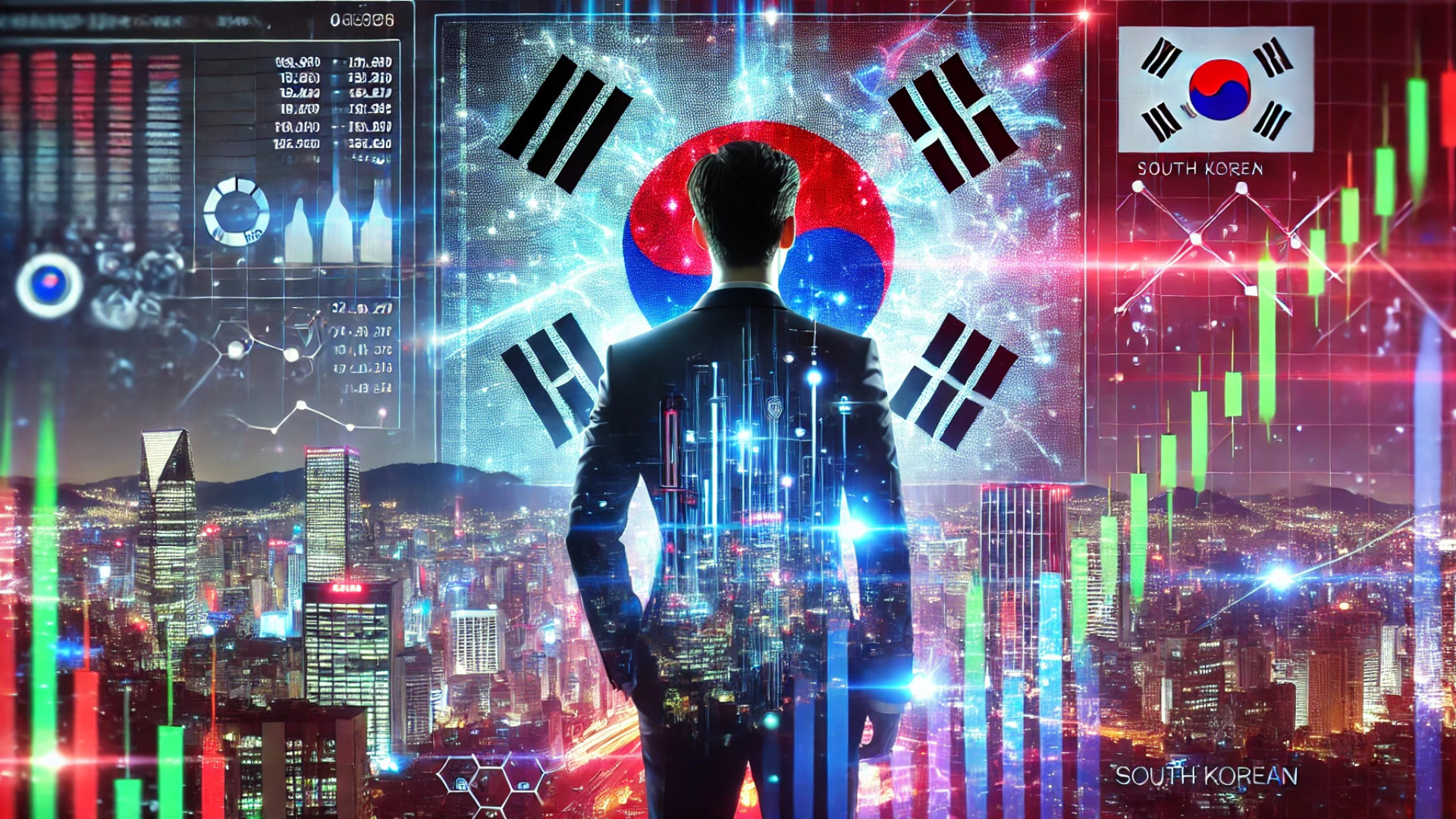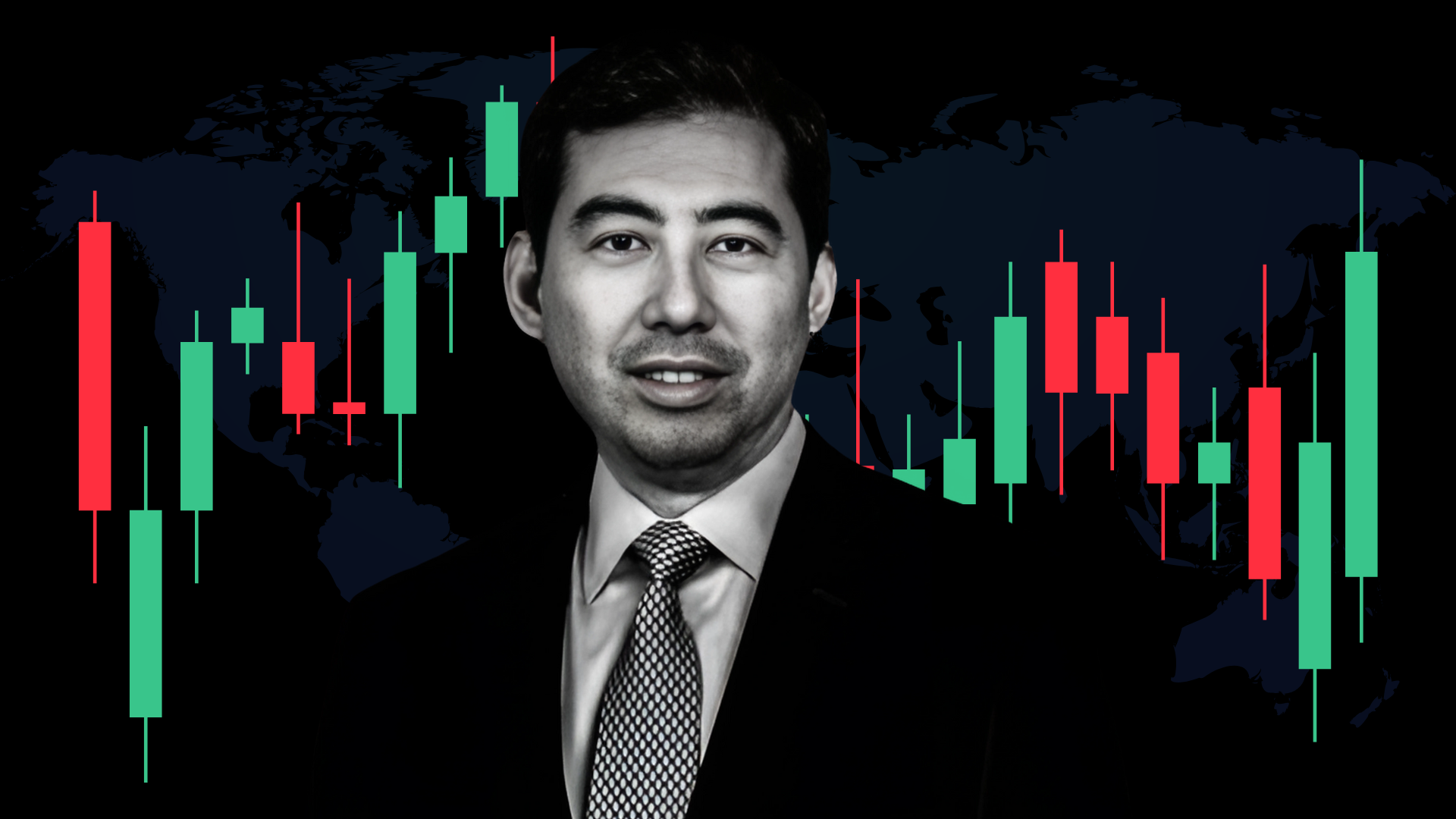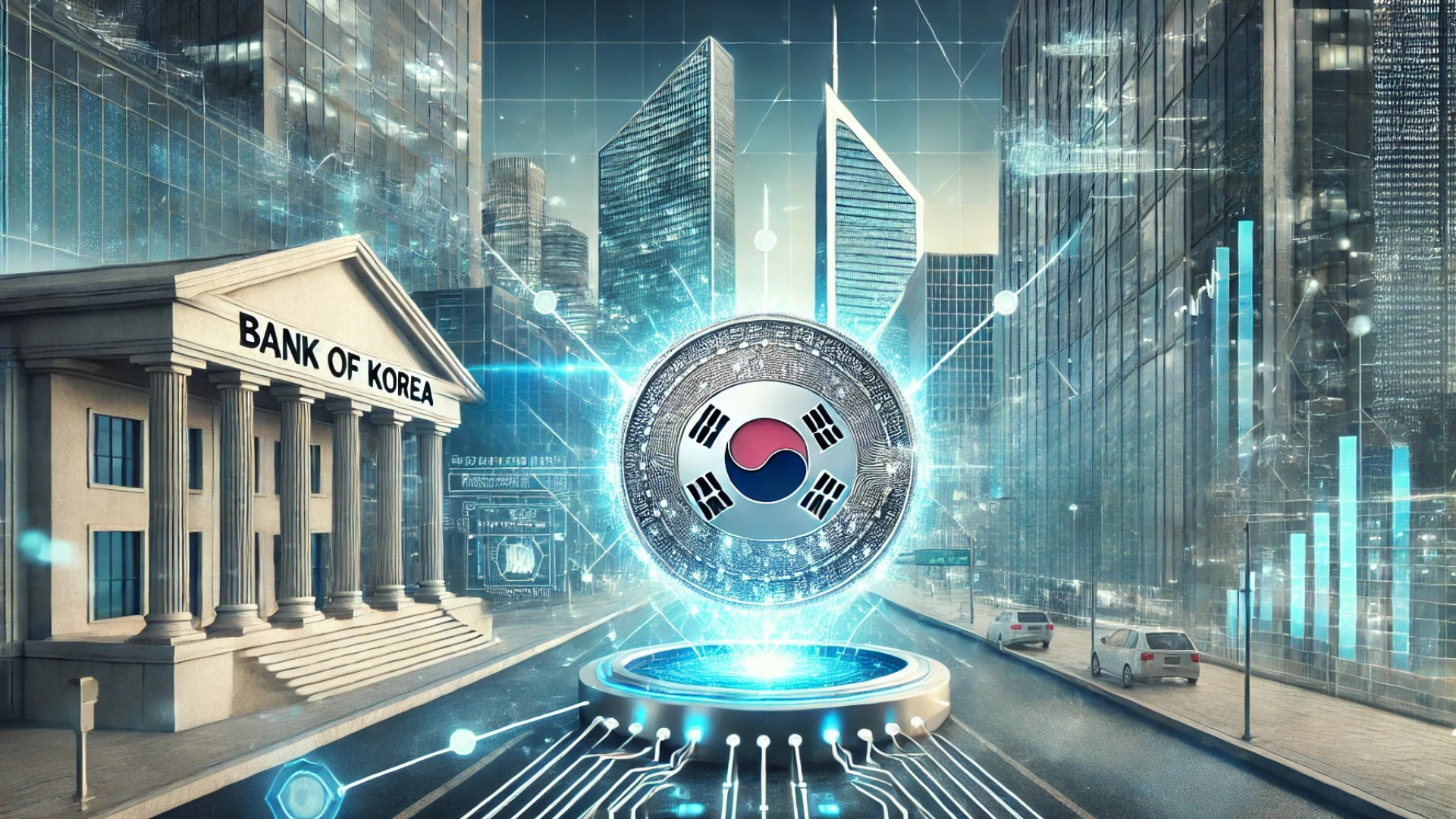


The Bank of Korea has raised concerns about growing financial-market risks linked to leveraged investments in major artificial intelligence chip stocks, particularly Samsung Electronics and SK Hynix.
South Korea’s semiconductor industry has benefited heavily from the global artificial intelligence boom, but the country’s central bank believes that high market concentration and increasingly leveraged trading could make financial markets more vulnerable if AI-related demand suddenly weakens.
Samsung Electronics and SK Hynix now represent nearly half of the benchmark Kospi’s total market capitalization. At the same time, leveraged investment products linked to the two companies have expanded rapidly outside South Korea.
The Bank of Korea is therefore paying close attention to how a reversal in AI investment could affect semiconductor stocks, South Korean exports and broader financial markets.
Bank of Korea Links AI Chip Trading to Market Risk
The Bank of Korea examined the risks surrounding South Korea’s semiconductor-driven economy in its September monetary policy report.
Samsung Electronics and SK Hynix have become increasingly important to both the Kospi and South Korea’s wider economic performance.
Because the two companies account for such a large share of the country’s stock market, major price movements in either company can have an outsized impact on the benchmark index.
Their performance can also affect index-tracking funds, derivatives, retirement portfolios and structured investment products.
This concentration becomes more significant when leverage is added.
Leveraged exchange-traded products linked to Samsung and SK Hynix that are listed in Hong Kong reportedly increased in value by more than twentyfold during the first half of 2026.
Some of these products can magnify the daily performance of the underlying shares.
For example, a two-times leveraged product may attempt to deliver twice the daily return of a stock, while inverse products are designed to gain when the referenced asset declines.
That structure can increase volatility during sharp market moves.
Leveraged Products Could Amplify Stock Market Swings
One of the Bank of Korea’s concerns involves the daily rebalancing required by leveraged investment products.
When markets rise, fund operators may need to increase their exposure.
When markets fall, they may have to reduce positions.
If large amounts of money are involved, this process can reinforce existing market movements.
A strong rally may attract additional buying, while a sharp decline could trigger even more selling.
According to the report, some products have used leverage as high as four times while trading positions connected to major global memory-chip companies.
The Bank of Korea did not identify an immediate financial failure or announce enforcement measures against a specific product.
Instead, its warning focuses on how leverage and concentrated positions could increase financial instability if market conditions deteriorate quickly.
South Korean authorities have already proposed measures aimed at reducing some of these risks.
In July, the government announced proposed restrictions that could limit an individual investor’s allocation to leveraged single-stock ETFs to 20% of investment assets.
However, such restrictions may not eliminate risks created by products traded in overseas markets.
South Korea Is Increasingly Dependent on Semiconductor Demand
The significance of Samsung and SK Hynix extends far beyond the stock market.
South Korea is one of the world’s most important suppliers of advanced memory chips used in artificial intelligence infrastructure.
Samsung, SK Hynix and US-based Micron are among the major suppliers of advanced memory products, including high-bandwidth memory, commonly known as HBM.
HBM has become particularly important for powerful AI accelerators and data-center hardware.
Technology companies such as Nvidia and AMD rely on advanced memory components for AI systems, while major cloud providers including Microsoft, Alphabet, Amazon, Meta and Oracle continue investing heavily in AI infrastructure.
That demand has helped support Korean semiconductor exports, factory investment and corporate profits.
During some months of 2026, semiconductors reportedly accounted for more than 40% of South Korea’s merchandise exports.
The exact percentage changes depending on chip prices, shipment volumes and the performance of other export industries.
This means a slowdown in global AI investment could have consequences well beyond semiconductor share prices.
SK Hynix and Samsung Benefit From the AI Memory Boom
SK Hynix has benefited significantly from strong demand for high-bandwidth memory.
Samsung has also been expanding production while working to secure approvals for newer AI-focused memory products.
However, the outlook for both companies remains dependent on several factors, including customer orders, manufacturing yields and memory-chip prices.
Samsung and SK Hynix have announced shareholder-return plans worth more than 130 trillion won, equivalent to roughly $97 billion, for 2026.
Those plans have been supported by the strong cash generation produced during the AI-related memory boom.
However, some investors have remained cautious.
Part of that caution reflects concerns that semiconductor earnings can be highly cyclical.
A sharp slowdown in AI infrastructure spending or memory prices could therefore reduce the exceptional earnings growth currently supporting the sector.
Chipmakers Reject Major Power Infrastructure Proposal
South Korea’s expanding semiconductor industry also requires enormous amounts of electricity.
Korea Electric Power Corp. reportedly proposed that Samsung and SK Hynix provide approximately 25 trillion won, or roughly $18.7 billion, in advance payments to support electricity infrastructure for planned semiconductor manufacturing clusters.
The two chipmakers rejected the proposed financing arrangement.
The proposal was designed to help secure the power capacity required by future semiconductor facilities.
The disagreement highlights another challenge facing South Korea’s effort to expand its advanced chip manufacturing capacity.
Building additional semiconductor factories requires not only capital and advanced equipment but also significant long-term electricity infrastructure.
South Korea’s Real GDP Did Not Grow 21.9%
An important distinction in South Korea’s economic data involves the difference between real GDP and nominal economic measurements.
A figure of 21.9% mentioned in some reports does not represent South Korea’s inflation-adjusted economic growth.
South Korea’s real GDP increased 0.6% quarter over quarter during the second quarter of 2026.
Real GDP adjusts for changes in prices and is therefore a better measure of changes in actual economic output.
By comparison, nominal GDP increased much more sharply on a year-over-year basis.
Nominal GDP reportedly rose 26.4% from a year earlier, largely because higher semiconductor export prices improved South Korea’s terms of trade.
The GDP deflator increased 21.9%.
The GDP deflator measures changes in prices across domestically produced goods and services.
Higher export prices can therefore cause nominal GDP and national income to rise substantially without implying that the actual volume of goods and services produced increased by the same amount.
Bank of Korea Raises 2026 Growth Forecast
Despite the financial risks surrounding the semiconductor boom, South Korea’s economic outlook has improved.
The Bank of Korea raised its 2026 real GDP growth forecast from 2% to 2.6%.
The central bank attributed much of the improvement to stronger semiconductor exports supported by global AI investment.
This means projections of approximately 3.3% to 3.5% growth mentioned elsewhere should not be treated as the Bank of Korea’s current official annual forecast.
The central bank currently expects South Korea’s economy to remain robust, with official full-year real GDP growth forecast at 2.6%.
The Bank of Korea also raised its inflation forecast.
The inflation outlook increased from 2.2% to 2.7%, while core inflation is forecast at approximately 2.4%.
South Korea’s Interest Rate Stands at 3%
The Bank of Korea has also tightened monetary policy.
Following consecutive increases, South Korea’s policy interest rate stands at 3%.
The central bank raised the rate from 2.5% through its July and August meetings as policymakers responded to stronger inflation and financial-stability concerns.
The combination of rising interest rates, increasing household borrowing and strong asset prices creates another challenge for policymakers.
Higher rates can help control inflation and borrowing, but they can also increase financing costs for households and businesses.
This makes the strength of South Korea’s semiconductor sector increasingly important to the wider economy.
What Happens if Global AI Spending Slows?
The Bank of Korea is also examining what could happen if the global artificial intelligence investment boom begins to weaken.
A slowdown in AI spending could reduce semiconductor orders.
That, in turn, could hurt Korean exports, corporate earnings and domestic asset prices.
The central bank has not predicted a specific date for such a downturn.
Instead, it is treating an AI investment slowdown as a financial-risk scenario.
Some central-bank analysis suggests that growth in global AI investment could reach its fastest pace before the end of 2026.
If investment growth subsequently slows, companies and investors that have built highly leveraged positions around continued AI expansion could face greater pressure.
Vendor Financing Adds Another Layer of Risk
Vendor financing is another area being watched by policymakers.
Under these arrangements, hardware manufacturers or related financing companies may help customers purchase chips and computing equipment.
This can support sales and accelerate infrastructure investment.
However, it can also increase credit exposure.
The Bank of Korea compared certain financing structures with practices that appeared during the dot-com era.
Another concern involves the use of special-purpose vehicles for data-center investments.
Depending on how these entities are structured legally and financially, debt connected to projects may not appear directly alongside the main operating company’s reported borrowings.
The central bank did not suggest that all AI financing arrangements are dangerous.
Its concern is primarily focused on the combination of leverage, market concentration and potentially lower future returns.
If lenders and investors simultaneously decide to reduce exposure, market stress could spread quickly.
Chinese Semiconductor Competition Is Another Risk
South Korean chipmakers also face growing competition from China.
Chinese semiconductor manufacturers continue investing in both memory chips and chipmaking equipment.
Their production capabilities and technological performance differ significantly between companies, but faster development could eventually pressure Korean semiconductor prices and global market share.
There is currently no verified evidence showing that Chinese producers have displaced Samsung or SK Hynix as major large-scale suppliers of advanced HBM.
However, increasing competition remains a long-term risk for South Korea’s semiconductor industry.
Concerns over AI spending and Chinese semiconductor progress have already contributed to periods of significant market volatility.
During a sharp Kospi selloff in July, SK Hynix fell as much as 14%, while Samsung dropped as much as 13.4%.
Such moves demonstrate how quickly sentiment surrounding AI and semiconductor demand can affect South Korean markets.
Crypto Markets Add Another Connection to Korean Stocks
The relationship between Korean stocks and leveraged trading is also expanding into crypto markets.
On-chain trading platform Lighter previously introduced perpetual contracts linked to Samsung Electronics, SK Hynix and other Korean assets.
Those products reportedly offered leverage of up to 10 times.
Perpetual contracts do not give traders ownership of the underlying Korean stocks.
Instead, the contracts track referenced asset prices while traders provide collateral and settle profits or losses through the trading platform.
The emergence of such products creates another route through which leveraged global trading can become connected to major Korean companies.
It also illustrates why the Bank of Korea is paying increasing attention to financial-market links outside traditional domestic exchanges.
Bank of Korea Will Consider Further Rate Hikes
The Bank of Korea says it will continue evaluating whether additional interest-rate increases are necessary.
Policymakers will examine inflation, economic growth and financial-stability conditions before deciding the timing and pace of additional tightening.
The central bank’s next scheduled monetary policy decision is October 22.
Officials have indicated that they first want to assess the impact of the previous two rate increases.
Housing prices and household borrowing remain important parts of that assessment.
The September monetary policy report said that home-price growth in the Seoul metropolitan area and household loan growth were accelerating.
Exchange-rate conditions are also important.
Changes in US interest rates can influence the South Korean won, imported inflation and international investment flows.
As a result, the Bank of Korea says future monetary-policy decisions will remain dependent on incoming economic and market data.
Why the Bank of Korea’s AI Chip Warning Matters
South Korea has become one of the biggest beneficiaries of the global AI investment boom.
Strong demand for advanced memory chips has supported exports, corporate earnings and economic growth.
However, the same trend has also created greater concentration.
Samsung Electronics and SK Hynix now have enormous influence over the Kospi, while leveraged investment products tied to their shares have expanded rapidly.
If global AI investment continues growing, South Korea’s semiconductor sector could remain a major source of economic strength.
But if demand slows sharply, leveraged positions and concentrated exposure could amplify the resulting market decline.
The Bank of Korea is therefore not arguing that an AI downturn is inevitable.
Its warning is that today’s combination of high leverage, market concentration and heavy economic dependence on semiconductors could make any future reversal more disruptive.
For investors and policymakers, the key question is no longer simply how much the AI boom can grow.
It is also how resilient financial markets will be if that growth eventually slows.
FAQs
Did South Korea’s economy grow 21.9%?
No. The 21.9% figure relates to changes in prices measured through the GDP deflator rather than inflation-adjusted real economic growth.
South Korea’s real GDP increased 0.6% quarter over quarter in the second quarter of 2026.
Why is the Bank of Korea concerned about AI chip stocks?
Samsung Electronics and SK Hynix account for nearly half of the Kospi’s market capitalization.
Because leveraged investment products are increasingly tied to their shares, sharp price movements could be intensified by automated buying, selling and daily rebalancing.
Are Samsung and SK Hynix the only major HBM suppliers?
No.
US-based Micron is also a major supplier of advanced memory products.
Samsung, SK Hynix and Micron are among the primary large-scale companies competing in the advanced memory market.
What is the Bank of Korea’s 2026 GDP forecast?
The Bank of Korea currently expects South Korea’s real GDP to grow 2.6% in 2026, up from its previous forecast of 2%.
What is South Korea’s current policy rate?
South Korea’s policy rate stands at 3% following consecutive rate increases by the Bank of Korea.
Disclaimer: This article is for informational and educational purposes only and should not be considered financial or investment advice.