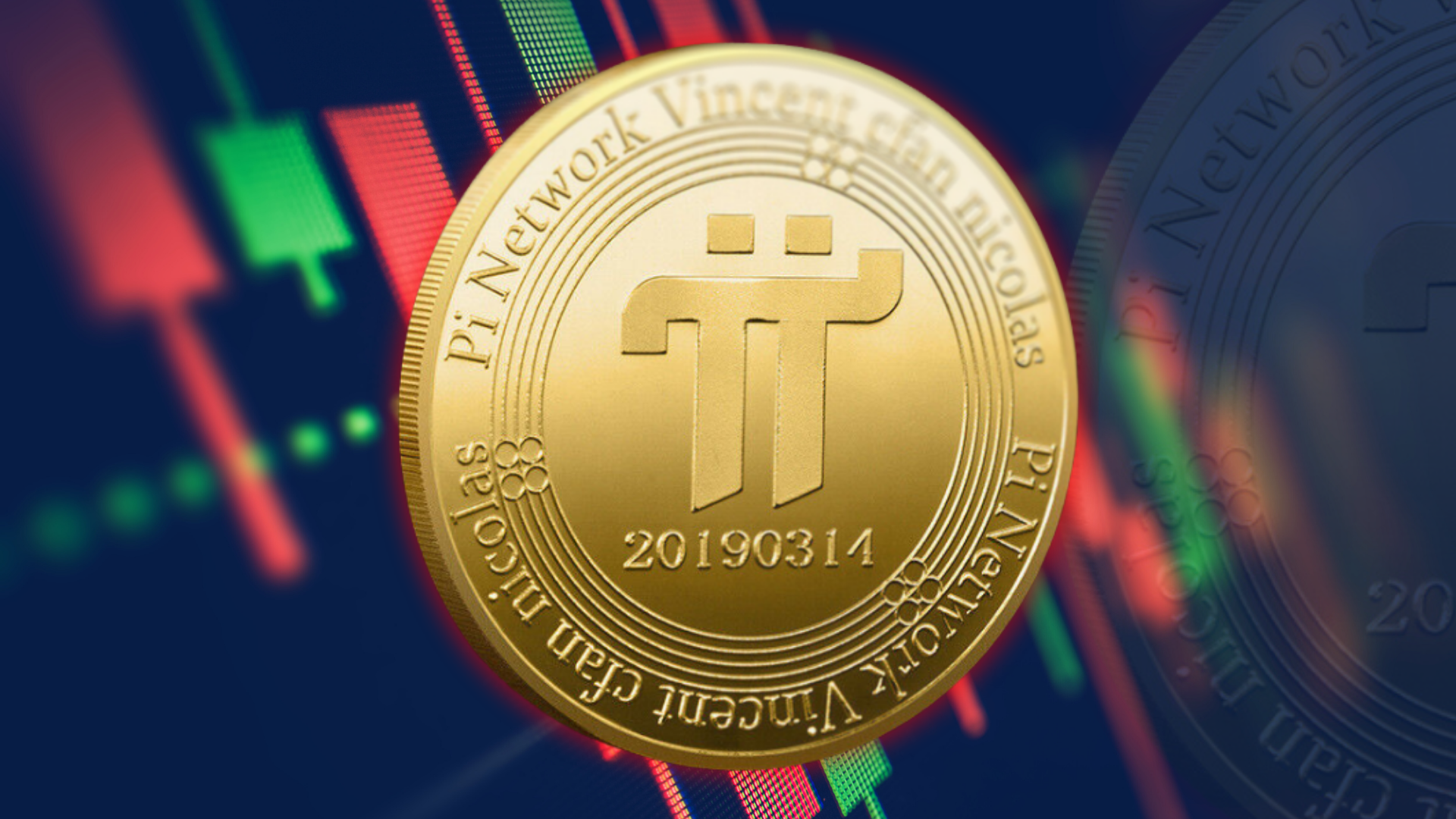


Pi Network price moved toward $0.093 on Aug. 6 as buyers attempted to confirm a bullish double-bottom pattern ahead of the network’s Protocol 26 upgrade deadline.
PI gained approximately 12% over the previous seven days, outperforming the broader cryptocurrency market. Trading activity also increased sharply, suggesting that investors were paying closer attention to the token’s improving short-term structure.
However, the recovery has not yet produced a confirmed breakout. PI must first overcome resistance between $0.095 and $0.102 before traders can consider the double-bottom pattern complete.
Pi Network Price Extends Its Weekly Recovery
Pi Network traded near $0.093 after reaching an intraday high of approximately $0.096.
The token recovered from its July all-time low near $0.071 and gained around 12% during the week.
Trading volume rose alongside the price. CoinGecko data showed approximately $14.3 million in activity over 24 hours, representing an increase of about 88% from the previous day.
PI’s market capitalization also climbed above $1 billion.
The increase in both price and trading volume suggests that the recovery attracted more market participation rather than developing during a period of extremely limited activity.
PI Breaks Above a Descending Channel
The daily chart showed Pi Network price moving above the upper boundary of a descending channel.
That bearish channel had controlled the market since late April, when PI traded near $0.20.
A descending channel forms when an asset repeatedly produces lower highs and lower lows between two downward-sloping trendlines.
Breaking above the channel can indicate that selling pressure is weakening. However, the move must hold above former resistance before it can be treated as a reliable trend change.
For PI, the important former channel resistance sits between approximately $0.088 and $0.090.
A daily close above this zone would strengthen the bullish setup. Falling back below it could turn the breakout into another short-lived recovery within the wider downtrend.
Long-Term Trend Remains Weak
Despite the latest weekly gain, PI remains more than 96% below its February 2025 record high.
This means the recent rally has improved the short-term outlook but has not reversed the token’s broader bearish structure.
A meaningful long-term recovery would require PI to reclaim several higher resistance levels and begin producing a consistent pattern of higher highs and higher lows.
Until that happens, the current movement should be viewed as an early recovery attempt rather than confirmation of a new long-term bull market.
Double Bottom Develops on the Four-Hour Chart
The four-hour chart shows PI forming a potential double-bottom pattern.
The first low developed around July 14, while the second appeared near July 28. Buyers defended the region between approximately $0.072 and $0.075 during both declines.
A double bottom resembles the letter “W” and can signal that sellers have failed twice to push an asset below the same support area.
The pattern becomes valid only when the price breaks and closes above the resistance level between the two lows, known as the neckline.
For Pi Network, the neckline sits near $0.102.
Because PI was still trading around $0.093, the pattern remained incomplete at the time of the analysis.
A Confirmed Breakout Could Target $0.132
A decisive close above $0.102 could confirm the double-bottom pattern.
The estimated depth of the formation is approximately $0.030. Adding that distance to the $0.102 neckline produces a measured target near $0.132.
That target would represent an increase of roughly 42% from the price recorded during the analysis.
The $0.132 region also matches an earlier consolidation area that served as support in June before PI’s decline accelerated.
However, measured targets are technical projections rather than guarantees. PI would still need sufficient demand and trading volume to move through several resistance levels before reaching that area.
Bulls Must First Clear $0.095
Before PI can challenge the main neckline, buyers must overcome immediate resistance between $0.094 and $0.096.
The token briefly approached this area during the session but had not yet established a sustained breakout.
Market analyst Crypto With Gopal also identified a smaller falling-wedge pattern on the intraday chart.
According to the analyst, a move above approximately $0.094 to $0.095 could open the way toward $0.098 and $0.10.
The psychologically important $0.10 level could attract additional selling because traders often place orders around major round-number prices.
Even if PI moves above $0.10, it must still close beyond $0.102 to confirm the larger double-bottom setup.
Trading Volume Will Be Important
A breakout supported by expanding volume would carry more significance than a brief move above resistance during weak trading activity.
Higher volume can indicate that a larger number of buyers are participating and that the movement has stronger market support.
If PI breaks above $0.102 with rising volume, traders may begin focusing on intermediate resistance near $0.115 before the measured target at $0.132.
A low-volume breakout would be more vulnerable to failure and could pull the token back below the neckline.
Aroon Indicator Supports the Recovery
Several technical indicators showed improving momentum.
The daily Aroon Up reading reached 100%, compared with an Aroon Down reading of approximately 35.71%.
The Aroon indicator measures how recently an asset has recorded a new high or low within a specific period.
A high Aroon Up reading indicates that recent highs are forming frequently. A lower Aroon Down reading suggests that new lows are appearing less often.
The difference between the two indicators supports the view that buyers have gained short-term control.
However, the signal does not guarantee that PI will break through the resistance zone.
Capital Flow Turns Positive
Pi Network’s Chaikin Money Flow indicator moved above zero to approximately 0.07.
A positive CMF reading generally suggests that buying pressure is beginning to exceed selling pressure.
This is an encouraging development because it shows that money flow has improved alongside the price recovery.
However, a reading of 0.07 remains relatively modest.
It signals improving accumulation but does not indicate overwhelming buying demand. Stronger and more sustained positive readings would provide greater confidence in the breakout attempt.
Supertrend Flips Bullish
The four-hour Supertrend indicator also turned bullish.
The indicator placed dynamic support near $0.086, while the previous bearish threshold remained around $0.083.
Supertrend uses price volatility to identify potential changes in market direction and provide dynamic support or resistance levels.
As long as PI stays above the bullish Supertrend line, the short-term recovery structure remains intact.
A fall below $0.086 could weaken momentum and bring the $0.082 to $0.083 support region back into focus.
Stochastic RSI Warns of Overheating
Although several indicators support buyers, the four-hour Stochastic RSI moved into overbought territory.
Its two lines stood near 82 and 87.
An overbought reading does not automatically mean that PI must decline. Strong rallies can remain overbought for extended periods.
However, the elevated reading increases the chance of a short-term pullback, sideways consolidation or reduced momentum before another breakout attempt.
A temporary retreat toward $0.090 would not necessarily invalidate the bullish setup if buyers successfully defend that level.
Key Support Levels for Pi Network
The first important support sits near $0.090.
This area is close to the former upper boundary of the descending channel and may now act as support following the breakout.
If PI falls below $0.090, the next level to watch is the four-hour Supertrend support near $0.086.
Further weakness could bring the $0.082 to $0.083 region into focus.
The double-bottom structure would remain broadly valid as long as the token stays above the two July lows.
A confirmed breakdown below $0.075 would invalidate the pattern and suggest that sellers had regained control.
Protocol 26 Deadline Supports Market Interest
The price recovery comes as Pi Network continues deploying Protocol 26 across its Mainnet infrastructure.
According to the project’s official node information, all Mainnet operators must upgrade their software to version 26.
Node operators face an Aug. 11 deadline to complete the transition.
Protocol 26 is therefore already being rolled out rather than waiting for an initial release.
The approaching deadline may be supporting investor interest because network upgrades can attract attention to a cryptocurrency’s technical development.
However, the upgrade also creates execution risks if a significant number of node operators fail to complete the transition on time.
What Protocol 26 Could Mean for Pi Network
Network protocol upgrades generally introduce technical improvements, compatibility changes or new infrastructure requirements.
For Pi Network, successful deployment could demonstrate that the project can coordinate upgrades across its node ecosystem.
A smooth transition may improve confidence among users and developers.
Technical difficulties, delays or node disruptions could weaken sentiment, particularly if the upgrade affects network performance.
The price impact will ultimately depend on whether Protocol 26 produces meaningful improvements and encourages greater use of the Pi ecosystem.
Launchpad Test Attracts Over 242,000 Participants
Pi Network recently completed its second Launchpad test involving the SLICE test token.
The project said more than 242,000 participants committed approximately 15.92 million Test-Pi between June 11 and June 28.
Participants competed to acquire 10 million SLICE tokens during the test.
The experiment focused on Launchpad allocations, automated token pricing and liquidity-pool mechanics.
The high participation figure shows interest in Pi Network’s developing ecosystem.
However, the assets involved were testnet tokens and did not represent real purchases of PI on the spot market.
Launchpad Test Does Not Confirm PI Demand
The Launchpad trial should not be treated as direct evidence that investors are buying the main PI token.
Test-Pi does not carry the same market value as PI traded on cryptocurrency exchanges.
The event was designed to examine technical functions and user participation rather than generate real investment demand.
The trial may still be valuable for the ecosystem because it allows Pi Network to identify technical problems before introducing similar products on Mainnet.
Its effect on PI’s price will depend on whether the project eventually launches useful applications that create real demand for the token.
RoboPay Partnership Adds to Positive Sentiment
Fabric Foundation also announced that Pi Network had joined RoboPay as a payment partner.
The planned integration is intended to allow PI holders to pay for robot-related services across the Fabric network.
The announcement gives Pi Network another potential real-world use case.
Supporters may view the partnership as evidence that the project is attempting to expand beyond peer-to-peer transfers and speculative trading.
However, the implementation timeline and future transaction volume remain unclear.
Until the service launches and attracts real users, its impact on demand for PI cannot be confirmed.
Ecosystem Announcements Still Need Adoption
Partnerships and protocol upgrades can improve market sentiment, but they do not automatically create sustainable token demand.
For PI to establish a stronger long-term value proposition, users must actively use the token for payments, applications, fees or other services.
The network will also need developers, merchants and infrastructure providers to build products that attract continued activity.
Without measurable adoption, positive announcements may create only temporary price rallies.
Investors will therefore watch whether Protocol 26, Launchpad development and RoboPay lead to meaningful onchain usage.
Can PI Price Break Above $0.10?
PI’s immediate outlook depends on whether buyers can maintain the breakout above the descending channel.
A sustained move through $0.095 could expose resistance near $0.098 and then the psychological $0.10 level.
The decisive technical barrier remains $0.102.
A close above that neckline, especially with rising volume, would confirm the double-bottom pattern and bring $0.115 and $0.132 into view.
Rejection between $0.095 and $0.102 could send the token back toward $0.090.
If that support fails, PI may test $0.086 and the lower $0.082 to $0.083 region.
Token Unlocks Remain a Risk
Future token supply growth remains an important risk for Pi Network.
When additional tokens enter circulation, existing demand must increase enough to absorb the new supply.
If demand remains weak while token unlocks continue, the added supply can create selling pressure.
This may make it more difficult for PI to sustain a breakout even when technical indicators improve.
Investors should therefore consider both chart patterns and changes in circulating supply when evaluating the token’s outlook.
Limited Exchange Access May Increase Volatility
PI remains less widely available than larger cryptocurrencies such as Bitcoin, Ethereum and XRP.
CoinGecko lists exchanges including OKX, Gate and Bitget among its main trading venues.
Access may vary depending on the trader’s country and local regulations.
Limited availability can reduce liquidity and make price discovery more dependent on a small number of offshore exchanges.
That can result in greater volatility, wider price differences between platforms and sharper reactions to changes in trading activity.
PI Approaches a Critical Breakout Test
Pi Network has built its strongest short-term recovery since falling to a record low in July.
The token has broken above a descending channel, trading volume has increased and several momentum indicators now favor buyers.
The developing double bottom provides a potentially bullish structure, but it remains unconfirmed while PI trades below the $0.102 neckline.
A breakout above that level with strong volume could expose $0.115 and the measured target near $0.132.
Failure to overcome resistance between $0.095 and $0.102 could lead to another pullback toward $0.090 or $0.086.
Protocol 26 and the RoboPay partnership have improved sentiment, but Pi Network still needs stronger adoption and sustained market demand to support a lasting recovery.