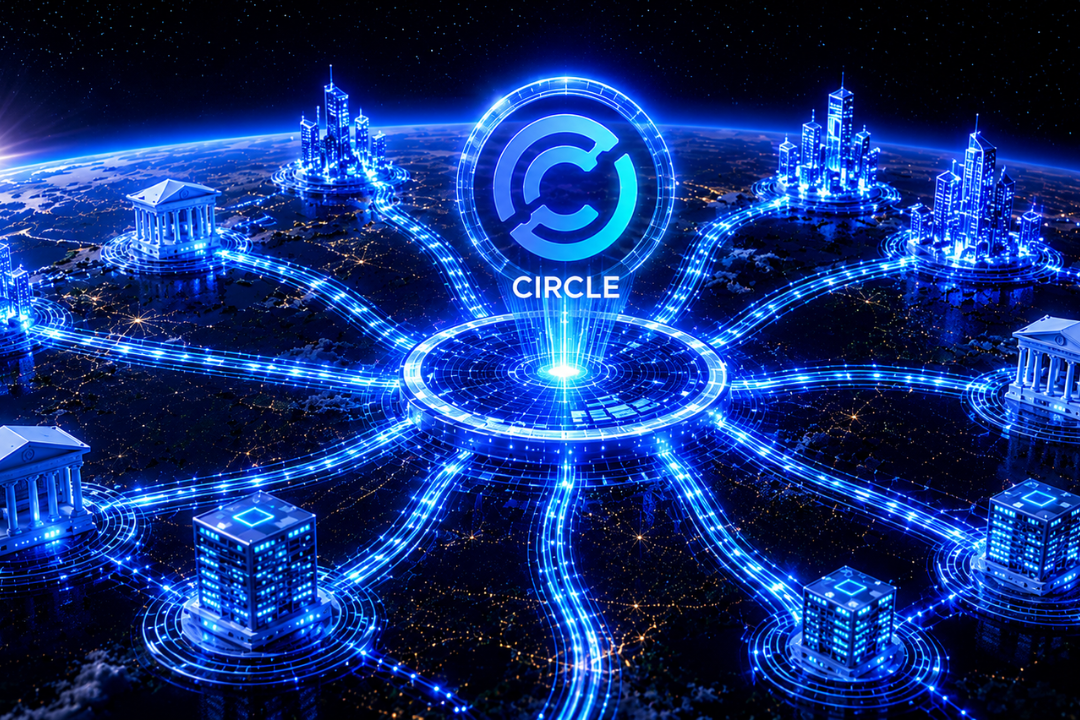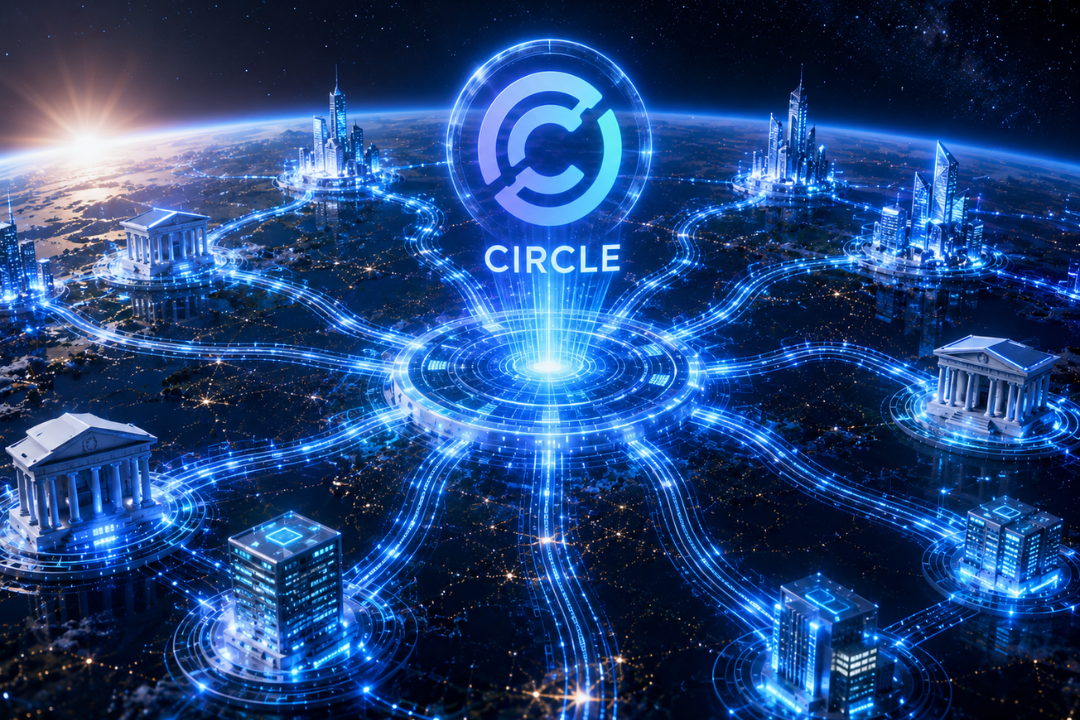

Circle has officially launched the public mainnet of Arc, its new Layer 1 blockchain designed for stablecoin payments, tokenized assets and institutional financial applications.
The network went live on Sep. 16 with USDC serving as the native gas asset, allowing users to pay transaction fees directly in the stablecoin instead of relying on a separate volatile token.
Arc also launches with more than 20 fiat-backed stablecoins, several tokenized financial products and a group of major institutional validators that includes BlackRock, Visa, Mastercard, DTCC and Standard Chartered.
Circle says the network is designed to provide deterministic settlement in under one second while remaining compatible with Ethereum tools and Solidity-based applications.
Arc uses USDC to pay transaction fees
One of Arc’s main features is its use of USDC for gas fees.
Rather than forcing users to purchase and hold another cryptocurrency just to make transactions, Arc allows network fees to be paid directly in USDC.
This approach is intended to make transaction costs easier to understand and more predictable for businesses, developers and institutional users.
Arc also offers deterministic sub-second finality.
This means that once a transaction has been finalized, users do not have to wait through multiple probabilistic confirmation periods like they may on some other blockchain networks.
At launch, Arc operates under a permissioned Proof-of-Authority model.
The network is also compatible with the Ethereum Virtual Machine, allowing developers to use Solidity smart contracts and familiar Ethereum development tools without rebuilding their applications from scratch.
Arc uses chain ID 5042, while USDC acts as the network’s native currency for gas calculations.
Arc testnet processed more than 700 million transactions
Circle said Arc’s testnet processed more than 700 million transactions before the public mainnet launch.
Earlier figures from Circle’s second-quarter SEC filing showed that the network had already processed around 502 million cumulative testnet transactions and had approximately 2.8 million transacting wallets as of June 30.
The increase suggests that activity continued growing ahead of the September mainnet rollout.
Circle also confirmed that Arc’s private mainnet had started operating in May, with more than 100 partners participating by July across payments, capital markets, digital assets and technology.
BlackRock, Visa and Mastercard join Arc validators
Arc launched with Circle and 11 named institutional founding validators.
The group includes BlackRock, DTCC, Galaxy, ICE, Mastercard, MoneyGram, SBI Group, Standard Chartered, Sumitomo Corporation, Visa and Worldpay.
The validator structure gives Arc a notably institutional focus compared with many public blockchain networks.
Several banks are also working with or building around Arc, including BNY, BTG Pactual, HSBC, Lead Bank, Societe Generale, Standard Chartered and State Street.
Major payment companies involved in the ecosystem include Mastercard, MoneyGram, Visa, JCB, Global Payments and Thunes.
Circle CEO Jeremy Allaire has described Arc as one of the company’s most important products since the introduction of USDC.
However, participation from large financial institutions does not guarantee that the network will achieve widespread adoption.
More than 20 stablecoins launch on Arc
Arc’s launch lineup includes 22 fiat-linked stablecoins.
The supported assets include USDC, EURC, AUDD, AUDF, BRLA, CADD, CHFAU, EURAU, GBPA, JPYC, KRW1, MXNB, QCAD, SEKAU, TRYB and several other local-currency stablecoins.
Circle StableFX has also launched on Arc to support programmable foreign-exchange transactions across more than 20 fully reserved stablecoins.
The service is designed to support atomic payment-versus-payment settlement, while market makers provide foreign-exchange liquidity.
This could make Arc particularly relevant for international payments, treasury operations and cross-border settlement.
Tokenized funds arrive on Arc from day one
Arc is also launching with several tokenized financial products.
These include BlackRock’s BUIDL fund, tokenized by Securitize, Circle’s USYC product and Janus Henderson’s JAAA and JTRSY products.
Circle says these tokenized assets can interact with lending, trading and collateral applications built on the network.
However, access restrictions continue to apply to individual products.
For example, Circle states that USYC is available only to certain non-U.S. persons and may be subject to additional eligibility requirements.
Arc therefore provides blockchain infrastructure for the assets but does not remove legal or regulatory restrictions associated with them.
Arc introduces programmable Bitcoin through cirBTC
Circle has also introduced cirBTC on Arc.
The asset is designed as a programmable representation of Bitcoin for use in collateral and liquidity applications.
According to Circle, users can convert BTC, cbBTC or WBTC into cirBTC on a 1:1 basis without conversion fees.
The product could allow Bitcoin liquidity to interact more directly with lending, trading and other financial applications operating on Arc.
Aave, Morpho and Uniswap support the network
Several major decentralized finance applications are available or supporting Arc from launch.
Aave and Morpho are providing lending infrastructure, while Aero and Uniswap are among the platforms supporting trading.
Circle has also named applications focused on swaps, perpetual trading, NFTs and cross-chain activity.
Major cryptocurrency exchanges listed as access points include Binance, Bybit, Kraken, KuCoin, OKX and Upbit.
Coinbase is expected to support Arc later, meaning it was not yet listed as a live launch-day access point.
Arc connects to more than 20 blockchains
Circle has integrated Arc with its Cross-Chain Transfer Protocol and Circle Gateway.
These services allow supported assets and liquidity to move between Arc and more than 20 blockchain networks.
Developers can use burn-and-mint and lock-and-mint mechanisms to move supported assets between Arc and other ecosystems.
The integration strengthens Arc’s position as infrastructure intended to connect stablecoin activity across multiple blockchain networks rather than operate as an isolated chain.
Circle targets AI agents and automated payments
Circle has also placed automated financial transactions and AI agents at the center of Arc’s design.
Circle Agent Stack supports policy-controlled wallets and small USDC payments, while Arc Portal allows users to create agent wallets and define spending limits.
Businesses and developers can use these tools to authorize automated software to carry out specific financial tasks.
Arc Studio also uses natural-language prompts to help developers generate application components and smart contracts for deployment.
Circle cited Dune data indicating that USDC represented 98.8% of agent-driven transaction volume in the specific dataset it referenced.
The figure applies to that dataset and should not be interpreted as USDC representing 98.8% of all AI-agent payments globally.
Arc adds developer tools and optional security features
Arc App Kits provide developers with ready-made components for building applications.
The Onramp Kit can support fiat-to-USDC purchases through payment methods including debit cards and Apple Pay.
Earn Kit allows applications to connect users with lending opportunities such as Morpho without requiring them to leave the original interface.
Circle is also working on privacy features for Arc, although network-wide opt-in privacy is still under development.
The company has additionally proposed confidential smart-contract infrastructure for institutional applications.
Arc currently supports optional post-quantum signatures, though Circle has cautioned that quantum-resistant cryptography is still an evolving field and cannot guarantee permanent protection against future threats.
Circle mints 10 billion ARC tokens
Circle has completed the genesis mint of 10 billion ARC tokens, creating the network’s planned initial token supply.
However, the company has emphasized that this does not mean an ARC token has been publicly launched.
Transaction fees on Arc continue to be paid in USDC.
According to the ARC whitepaper, the token could eventually be used for network coordination, security, governance and other functions if Arc transitions from Proof of Authority to Proof of Stake.
Circle is currently considering a possible transition beginning in 2027, although the timeline and final design remain subject to change.
Circle already agreed to private ARC token sales
While ARC is not publicly available, Circle has already entered into private token-sale agreements with institutional investors.
According to the company’s June 30 Form 10-Q, Circle agreed to sell 807.5 million ARC tokens at $0.30 each.
The agreements represented approximately $242.2 million in gross contracted proceeds.
Circle had received around $222 million by June 30 and recorded the proceeds as deferred revenue.
The private sale implied a fully diluted network valuation of approximately $3 billion.
Investors in the round included a16z crypto, BlackRock, Apollo Funds, ARK Invest, ICE, Janus Henderson and Standard Chartered Ventures.
The tokens are subject to lockup and transfer restrictions linked to Arc’s potential future transition to a Proof-of-Stake system.
What the Arc mainnet launch means
Arc’s public launch marks a major expansion of Circle’s strategy beyond issuing USDC.
The company is positioning Arc as infrastructure for stablecoin payments, tokenized financial assets, institutional settlement and automated software transactions.
Its use of USDC for gas could make the network easier for businesses and financial institutions to use, while its validator group gives the blockchain a strong institutional profile.
At the same time, important parts of Arc’s long-term roadmap remain unfinished.
A possible move to Proof of Stake, broader privacy features and the future role of the ARC token are still under development and could change.
For now, Arc enters the market as a USDC-powered blockchain focused on connecting stablecoins, tokenized assets and traditional financial institutions within a single network.