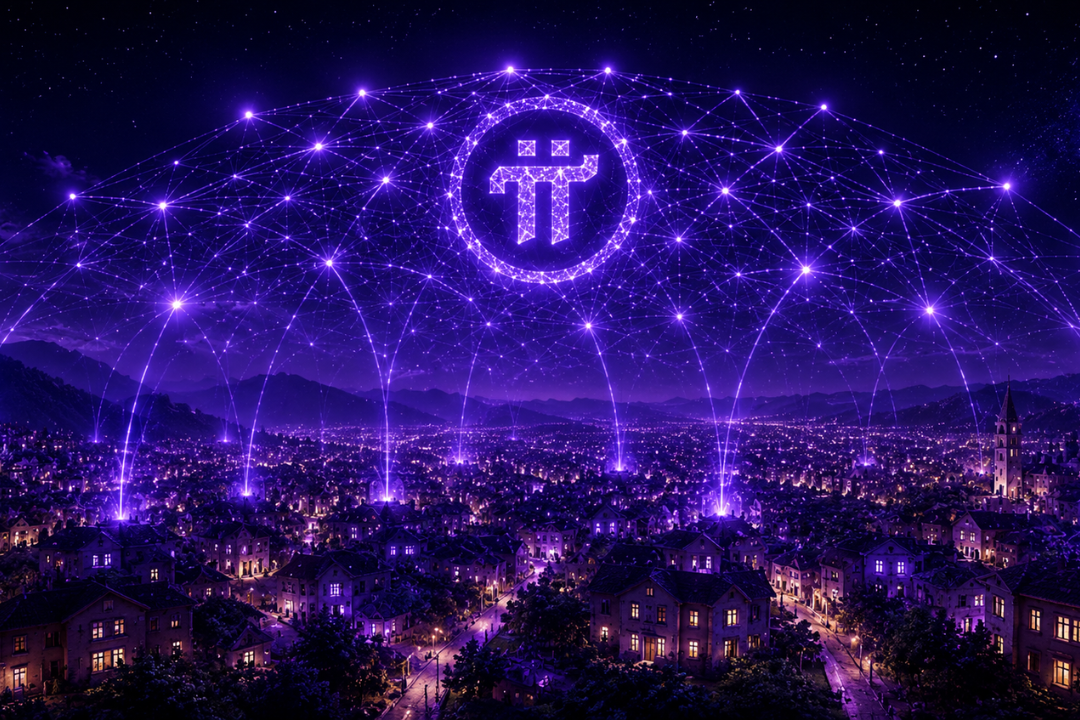


Pi Network is preparing for one of its most important upgrades yet.
Protocol 27, scheduled for September 15, introduces smart contract authentication, an automated market maker (AMM) decentralized exchange, and public RPC infrastructure.
The upgrade could transform Pi from a mobile mining experiment into a functional Layer 1 blockchain.
However, the network faces a major challenge: building real usage on top of infrastructure that has never processed meaningful DeFi activity.
What Pi Network Protocol 27 Actually Introduces
Protocol 27 delivers three major components designed to expand Pi’s capabilities.
Smart Contract Authentication
Pi mainnet launched without programmable smart contracts.
The new authentication layer allows contracts to operate on-chain while maintaining SocialChain’s control over which contracts are approved.
This means developers can technically build decentralized applications, but permissionless deployment remains uncertain.
AMM Decentralized Exchange
The upgrade brings an automated market maker DEX from Pi’s testnet to mainnet.
However, the biggest question is whether the exchange will launch with open trading pairs and real liquidity.
The DEX has never processed a mainnet swap, meaning actual demand remains unproven.
Public RPC Infrastructure
RPC infrastructure allows external developers and applications to communicate with the blockchain.
Without public RPC access, developers cannot easily build wallets, analytics tools, or decentralized applications.
Protocol 27 adds this missing technical foundation.
The Biggest Challenge: Pi’s Migration Problem
Pi Network claims around 60 million engaged users, but only 16.6 million users have completed mainnet migration.
That represents approximately 27.6% conversion, leaving most of the claimed user base unable to access Protocol 27 features.
Migration requires:
- KYC verification
- Wallet creation
- Confirmation steps
Pi has built a large verification network with more than 1 million KYC validators and hundreds of millions of completed verification tasks.
The issue is not verification capacity but user willingness to migrate.
The result is that Protocol 27 launches with a much smaller active user base than Pi’s headline numbers suggest.
Pi’s DeFi Challenge: A DEX Without Proven Demand
A decentralized exchange needs three things:
- Liquidity providers
- Traders
- Applications generating demand
Pi currently lacks evidence of strong activity in all three areas.
The AMM DEX has existed only on testnet, with no production swaps and no real liquidity pools.
Pi’s Launchpad test involved:
- 242,000 participants
- 15.92 million Test-Pi commitments
However, testnet participation does not prove users will commit real capital after launch.
The challenge is converting millions of mobile miners into active DeFi participants who understand:
- Liquidity pools
- Impermanent loss
- Yield strategies
- Market-making
Pi Token Price Shows Market Concerns
Pi currently trades around $0.098, with a market capitalization near $1.09 billion.
The token remains approximately 96.7% below its all-time high of $2.99.
Although exchanges such as Kraken and OKX added Pi support, listings did not reverse the decline.
The market is now watching whether Protocol 27 can create real demand through:
- DeFi applications
- Staking
- Liquidity provision
- On-chain activity
Pi’s Hidden Opportunity: AI Data Infrastructure
While most attention focuses on DeFi, Pi may have another potential advantage.
SocialChain has started positioning its KYC network as “human infrastructure for AI.”
The network’s validators have already completed:
- Identity verification tasks
- Document reviews
- Human classification work
This resembles the distributed data-labeling workforce used by AI companies.
The AI training data market is expected to expand significantly, and verified human-generated data is becoming increasingly valuable.
If Pi successfully converts this network into a commercial AI data service, its value proposition could shift from a speculative cryptocurrency into an identity and labor infrastructure platform.
However, no major enterprise partnerships have yet confirmed this strategy.
The Centralization Debate
Pi Network remains heavily controlled by SocialChain.
The company:
- Controls protocol upgrades
- Approves contracts
- Manages migration systems
- Operates core infrastructure
Critics argue this makes Pi closer to a centralized software platform than a traditional decentralized blockchain.
Supporters argue that centralized coordination helped Pi achieve massive user distribution.
The debate remains unresolved.
Developer Adoption Will Decide Pi’s Future
A blockchain ecosystem depends on developers building useful applications.
Pi released developer documentation shortly before Protocol 27’s launch.
However, major ecosystems like Ethereum and Solana spent years building developer communities before reaching large-scale adoption.
Pi currently has around 110 applications showcased through SoloHost, but most were built around existing transfer functionality rather than smart contracts.
The key question is whether developers choose Pi over established ecosystems such as:
- Ethereum
- Solana
- Base
- Arbitrum
What to Watch After Protocol 27 Launch
Important indicators after September 15 include:
1. DEX Liquidity Growth
A successful launch requires meaningful liquidity and trading activity.
2. Migration Growth
More users must complete KYC and move to mainnet.
3. AI Partnerships
Pi needs enterprise adoption to validate its AI infrastructure strategy.
4. Token Unlock Pressure
The market must absorb new Pi supply without continued price weakness.
5. Developer Activity
The number of smart contracts deployed will reveal whether developers are truly adopting Pi.
Conclusion
Pi Network Protocol 27 is a critical turning point.
The upgrade provides the technical foundation for:
- Smart contracts
- DeFi applications
- Developer tools
- Decentralized exchanges
But infrastructure alone does not create an ecosystem.
Pi must prove that millions of mobile miners can become active blockchain users, developers will build on the network, and real economic activity can replace speculation.
The next phase will determine whether Pi becomes a functioning Layer 1 or remains one of crypto’s largest unrealized experiments.