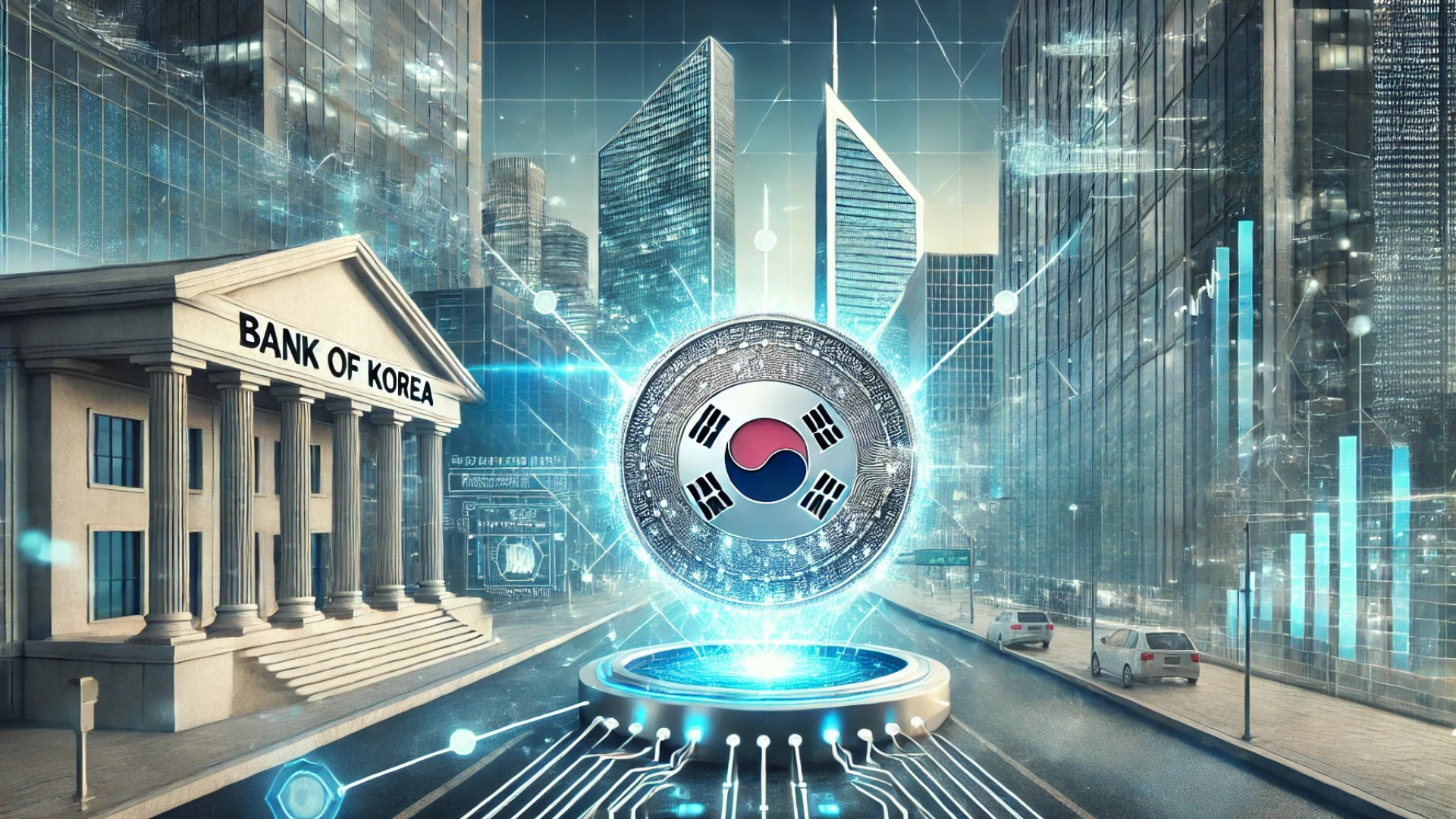


South Korea is preparing to take a major step toward blockchain-based capital markets, with regulators outlining a three-stage roadmap for introducing tokenized securities beginning in February 2027.
The plan will gradually allow traditional financial assets, including stocks, bonds and funds, to be issued and managed through distributed ledger technology. In the final phase, regulators aim to connect tokenized securities with stablecoin-based onchain payments, potentially bringing both the asset and settlement sides of transactions onto digital infrastructure.
The Financial Services Commission plans to begin the rollout when amendments to the Electronic Registration Act take effect on Feb. 4, 2027.
Key Takeaways
- South Korea plans to begin expanding its tokenized securities market in February 2027.
- The first phase will cover selected funds, institutional bonds, unlisted stocks and fractional investment products.
- The second phase is expected to expand tokenization to all publicly offered securities.
- The final stage will introduce onchain payment infrastructure connected to stablecoins.
- Existing licensed financial firms will generally be able to handle tokenized securities under their current licenses.
- Retail investment limits will apply to certain tokenized securities and OTC transactions.
South Korea Tokenized Securities Market Starts in 2027
South Korea’s Financial Services Commission has laid out a phased roadmap for bringing conventional financial securities onto blockchain-based infrastructure.
The program is scheduled to begin when amendments to the Electronic Registration Act take effect on Feb. 4, 2027.
The changes will expand tokenization beyond fractional investment products and create a legal framework allowing conventional securities to be issued and managed through distributed ledgers.
FSC Vice Chairman Kwon Dae-young presented the roadmap during the third meeting of a public-private consultative group involving the Financial Supervisory Service, financial institutions, industry organizations and private-sector experts.
Rather than opening the entire securities market to tokenization immediately, regulators plan to introduce the system gradually.
The first stage will focus on a limited selection of securities and institutional products. The second stage will expand access to publicly offered securities, while the final phase is expected to connect tokenized assets with stablecoin-based settlement infrastructure.
The broader objective is to modernize South Korea’s capital markets while keeping tokenized assets within the country’s existing securities regulatory framework.
First Phase Will Cover Funds, Bonds and Unlisted Stocks
South Korea’s first phase will introduce tokenization across several selected categories of securities.
Privately pooled money market funds and bonds available to institutional investors will become eligible for tokenization.
Unlisted shares issued through trust structures will also be included, along with publicly offered fractional investment securities.
The framework builds on amendments approved by South Korea’s National Assembly in January.
Those changes recognize distributed ledgers as legitimate securities registries while continuing to classify tokenized instruments under existing securities laws.
This approach means South Korea is not creating an entirely separate financial system for tokenized assets.
Instead, blockchain infrastructure will be integrated into the existing regulated securities market.
Korea Securities Depository Prepares Blockchain Infrastructure
South Korea is also building the technical infrastructure needed to support the new market.
Samsung SDS was selected earlier in 2026 to develop a token securities platform for the Korea Securities Depository.
The project is expected to be completed around the time the amended legislation comes into force in February 2027.
The platform is expected to connect the Korea Securities Depository’s existing electronic securities account infrastructure with blockchain-based records.
It will support important functions such as issuance, circulation monitoring, investor rights management and compliance checks.
Building this infrastructure ahead of the legal rollout could allow securities companies and other financial institutions to begin operating tokenized products soon after the new rules take effect.
Second Phase Will Expand Tokenization
The second stage of South Korea’s roadmap will significantly expand the market.
Once regulators evaluate the results of the initial rollout, tokenization is expected to become available for all publicly offered securities.
However, authorities have not announced a specific date for the second phase.
Its timing will depend partly on how successfully the first stage operates and how quickly financial institutions adopt the technology needed to issue, manage and trade tokenized assets.
This gradual approach gives regulators time to identify technical, cybersecurity and market-structure problems before blockchain-based securities become available more widely.
Stablecoins Could Become the Final Settlement Layer
The third phase is potentially the most significant part of South Korea’s long-term plan.
Regulators eventually want to introduce onchain payment infrastructure connected to stablecoins.
Doing so could bring the payment side of securities transactions onto blockchain infrastructure alongside the tokenized securities themselves.
In a fully developed system, digital securities and digital settlement assets could potentially move across compatible infrastructure, making settlement faster and potentially reducing some of the friction associated with traditional financial systems.
However, this stage depends heavily on South Korea finalizing its stablecoin regulations.
Lawmakers have separately been working on a Digital Asset Framework Act expected to establish rules covering stablecoin issuance and other areas of the country’s digital asset market.
Stablecoin regulation remains one of the major unresolved components of South Korea’s broader crypto regulatory framework.
For that reason, regulators have not established a firm launch date for the final tokenized settlement phase.
South Korean Banks Are Already Testing Tokenized Payments
Some of the technology required for blockchain settlement is already being tested.
A separate South Korean initiative has expanded deposit-token trials to nine banks.
The Bank of Korea has also examined how tokenized bank deposits could potentially serve as settlement assets for tokenized bonds and shares.
Private financial institutions are running their own experiments ahead of the 2027 rollout.
Shinhan Asset Management, for example, recently agreed to test a Korean won-denominated tokenized fund using Solana.
The proof of concept covers several parts of the investment process, including investor verification, issuance, distribution and onchain liquidity.
These experiments could provide useful information before tokenized securities become part of South Korea’s regulated financial infrastructure.
Retail Investors Will Face Investment Limits
South Korea’s roadmap also introduces limits designed to protect retail investors as tokenized securities become more widely available.
For non-monetary trust beneficiary certificates, an individual’s maximum subscription will be limited to whichever is lower: 30 million won, roughly $22,000, or 5% of the total issuance.
Regulators also want publicly offered allocations to include a portion specifically reserved for retail investors.
A minimum amount within those allocations is expected to be distributed equally.
Retail investors using over-the-counter exchanges will face additional restrictions.
Annual net purchases will be capped at 100 million won, approximately $74,000, on each OTC platform.
These limits are designed to allow retail participation while controlling exposure during the early development of the tokenized securities market.
Existing Financial Firms Won’t Need Completely New Licenses
South Korea also intends to reduce unnecessary regulatory duplication for established financial companies.
Existing financial investment firms will generally not need a separate license simply because they begin handling tokenized securities.
Companies already authorized to perform the relevant financial activity will be able to operate tokenized products within their existing permitted business areas.
However, firms acting as intermediaries for tokenized securities on OTC markets will need to consult with the Financial Supervisory Service beforehand.
Authorities also plan to create another OTC licensing category specifically for debt securities.
Existing categories already cover unlisted stocks and non-monetary trust beneficiary certificates.
The FSC expects debt-security activity to increase as tokenization becomes more widely adopted.
Companies Could Manage Their Own Tokenized Securities Accounts
Issuers will also have another option under the new framework.
South Korea plans to introduce an “issuer account management entity” structure.
Companies approved under this system will be able to manage securities accounts themselves rather than depending entirely on traditional financial institutions.
However, companies seeking approval will need to meet financial, staffing and technology requirements.
Applicants must maintain at least 4 billion won, or close to $3 million, in equity capital.
They will also need employees responsible for account management and internal controls, along with at least two staff members assigned to computer and IT systems.
Cybersecurity and technology requirements will also apply.
These conditions are intended to ensure that companies directly managing tokenized securities have sufficient financial and technical resources to protect investors.
Blockchain Platforms Will Face Technical Screening
The Korea Securities Depository has prepared criteria for assessing distributed ledger systems used by securities companies.
The screening process will evaluate core functions related to securities issuance and circulation.
Regulators will also examine contingency procedures for technology failures and other disruptions.
These safeguards will be particularly important as blockchain systems become connected with existing capital-market infrastructure.
A technical failure involving tokenized securities could affect ownership records, trading or settlement, making operational resilience a major part of the regulatory framework.
Asian Markets Explore Blockchain-Based Settlement
South Korea is not alone in exploring blockchain technology for traditional financial markets.
Japan is studying infrastructure that could eventually support around-the-clock blockchain settlement for publicly traded stocks and Japanese government bonds.
The country’s Financial Services Agency, Ministry of Finance, Bank of Japan and financial institutions are expected to participate in the project.
An initial development plan is targeted for early 2027, although full operations may not arrive until the 2030s.
Japanese financial institutions have already begun testing parts of this model.
Four Mitsubishi UFJ Financial Group companies launched a proof of concept in August to test Japanese government bond repo settlement using Canton Network.
The experiment is examining automated processing and 24-hour settlement, while tokenized deposits and stablecoins are being considered for the payment side.
Asia’s Stablecoin Market Continues to Grow
The development of tokenized securities comes as stablecoin and cryptocurrency activity continues expanding across Asia.
According to an OECD report cited in the source material, Asia accounted for approximately 30% of global stablecoin trading activity in 2025 and recorded the highest regional growth rate in crypto activity.
South Korea already has a substantial domestic cryptocurrency market.
FSC data showed approximately 11.3 million verified crypto users in the country.
That existing user base, combined with South Korea’s advanced financial infrastructure, could make the country an important testing ground for regulated tokenized capital markets.
What’s Next for South Korea’s Tokenized Securities Market?
The next major milestone will be the implementation of the amended Electronic Registration Act on Feb. 4, 2027.
Before then, the FSC plans to publish proposed revisions to subordinate regulations under the Financial Investment Services and Capital Markets Act and Electronic Registration Act by the end of September.
Financial institutions and the Korea Securities Depository will use the remaining period to prepare the infrastructure needed for the first phase.
The initial rollout will remain relatively limited, but South Korea’s longer-term objective is much broader.
If the first stage succeeds, tokenization could expand across publicly offered securities before eventually connecting with stablecoin-based onchain settlement.
That would move South Korea closer to a financial system where traditional stocks, bonds and funds can be issued, managed and potentially settled through blockchain infrastructure while remaining inside the regulated capital-market framework.